



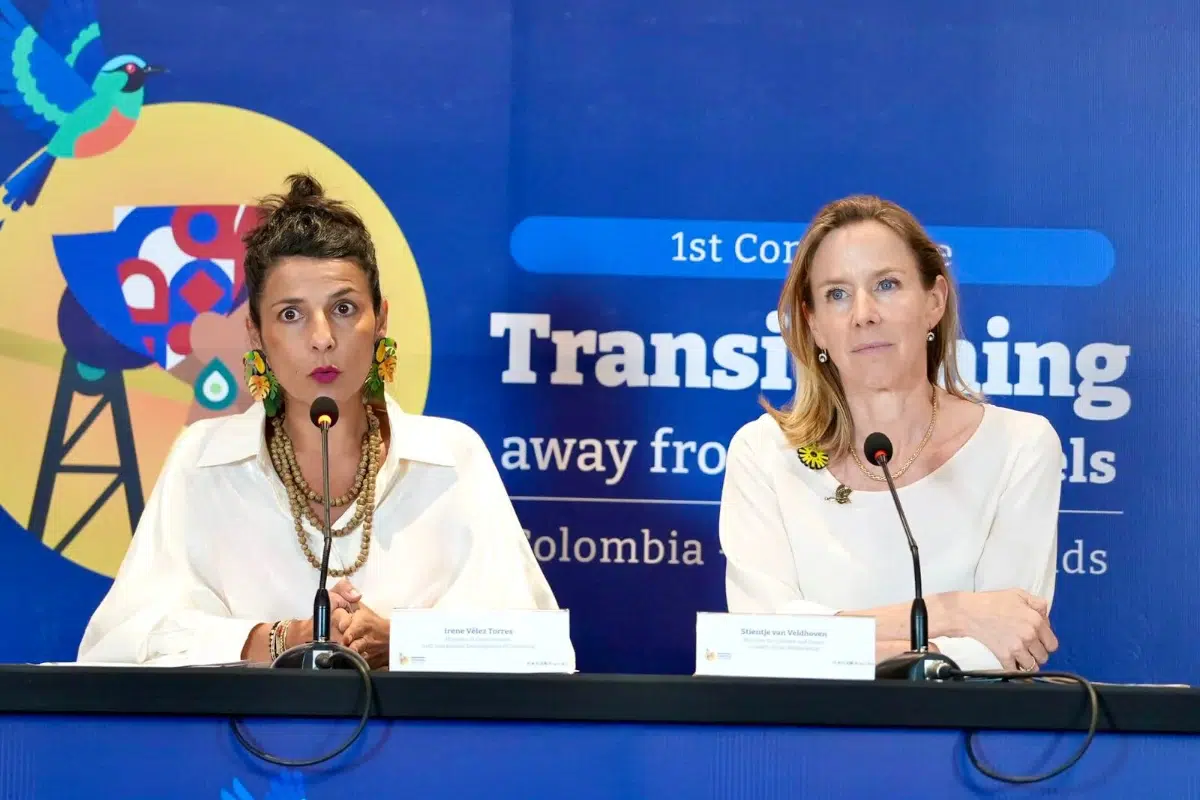
The First Conference on the Transition to Abandon Fossil Fuels, organized by the governments of Colombia and the Netherlands in Santa Marta, brought together nearly 60 countries to discuss concrete policies to accelerate the abandonment of fossil fuels.
Greenpeace described the meeting as “a milestone towards long-term climate and energy stability”, highlighting that for the first time the international community gathered to directly address the cause of climate change: fossil fuels.
Greenpeace Evaluations
Pedro Zorrilla Miras, coordinator of the climate change campaign at Greenpeace Spain, celebrated the expressed political will but warned: “we need Santa Marta to translate into actions, ensuring that the transition is fair, swift, and well-funded”. He pointed out that Spain must lead with a national plan to abandon fossil fuels, including goals with deadlines, permanent taxes on the fossil industry, cessation of subsidies, and additional climate financing.
Laura Caicedo, coordinator of Greenpeace Colombia, emphasized that the conference placed the just energy transition on the public agenda ahead of the COP31 in Turkey, though she warned it should not become an excuse to delay already assumed commitments.
Highlighted Results
Among the main achievements of the Santa Marta Summit, Greenpeace highlights:
- The creation of the Scientific Panel for Global Energy Transition, which will advise political bodies on the implementation of clean energies.
- The diversity of voices present: national and subnational governments, scientists, indigenous peoples, Afro-descendant communities, and civil society.
- The consensus on the need to permanently tax the profits of large fossil companies to finance the just transition.
International Voices
- Anna Cárcamo, climate policy specialist at Greenpeace Brazil, highlighted the importance of listening to diverse communities demanding real solutions.
- Rodrigo Estrada, advisor at Greenpeace International, warned that the war in the Middle East is boosting the profits of the fossil industry and called for urgent measures to replace this system with renewable energies.
- Shiva Gounden, director of Greenpeace Australia-Pacific, celebrated the momentum from Santa Marta but insisted that the transition remains too slow for the most vulnerable communities in the Pacific.
Looking to the Future
The coalition of countries emerging from Santa Marta must now lead ambitious national measures and advance in international spaces such as the United Nations Framework Convention on Climate Change. The next meeting will be in Tuvalu in April 2027, organized together with Ireland, where Greenpeace hopes the momentum will translate into real implementation.
The Santa Marta Summit marks a turning point: for the first time, the international community directly debated how to abandon fossil fuels. Greenpeace celebrates the progress but insists that commitments must transform into concrete policies and fair financing to ensure an energy transition that protects both biodiversity and human communities.



