



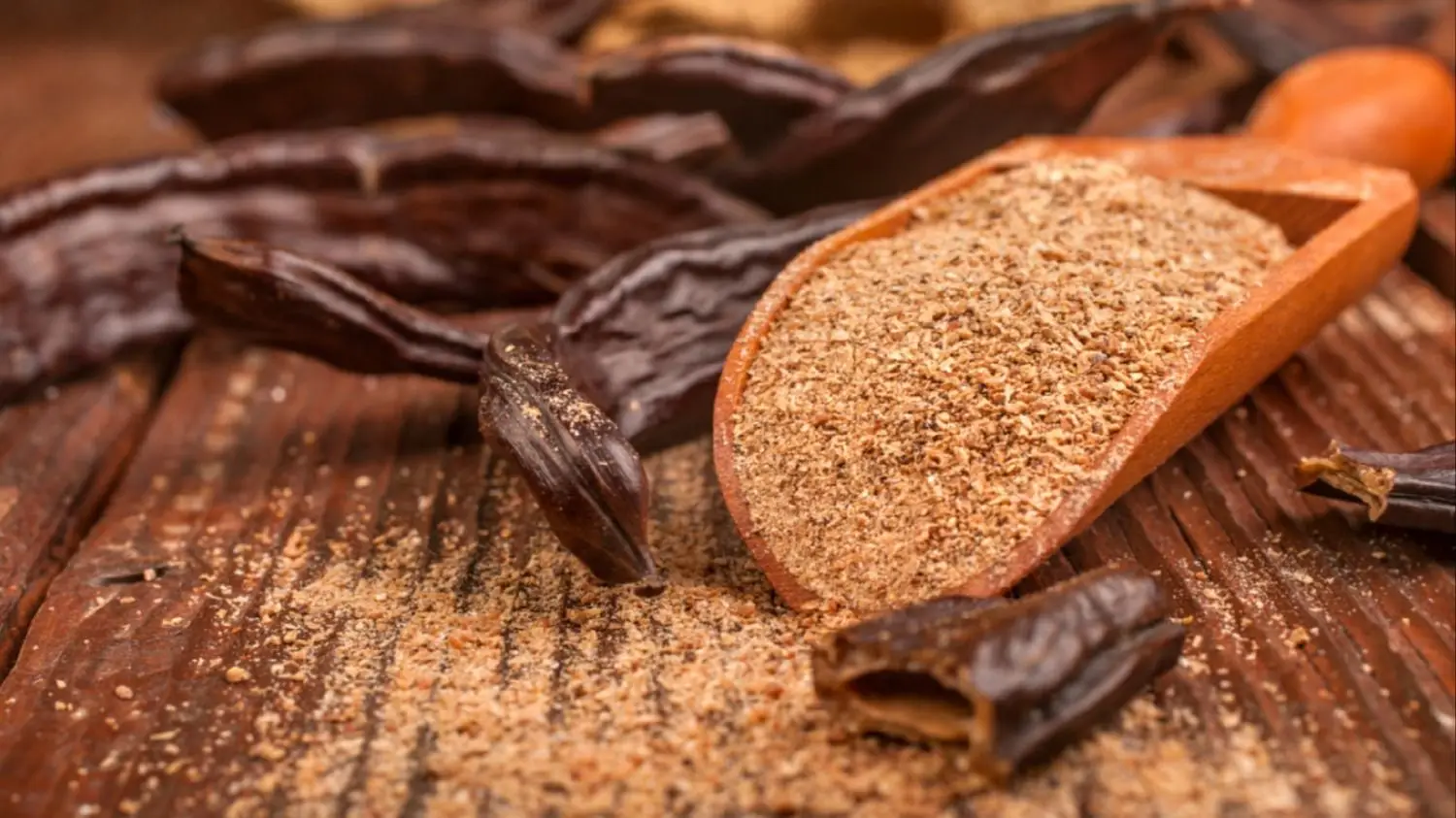
The carob flour production in the west of Formosa has established itself as a true engine of development. What was once just an ancestral ingredient has now transformed into a productive and social policy involving more than 4,500 families, protecting the native forest and placing Formosa on the national map of healthy foods.
With the support of Nutrifor and the leadership of the indigenous communities, this food emerges as a key piece for food sovereignty and the productive future of the province, standing out as a production with 100% Formosan added value.
From ancestral tradition to development policy
The process begins in the indigenous communities and culminates in the Nutrifor industrial plant. There, carob pods collected manually are sun-dried, sorted, and turned into flour using mills installed with state support.
Nutrifor acquires the production, controls quality with laboratory analysis, and transforms the raw material into fortified foods that are then distributed in programs like the Nutrir Plan and the Nutritional Strengthening Program for Schools, in addition to being marketed in Formosan Food Sovereignty.
It is a virtuous circle: what the territory produces returns to the territory in the form of nutrition.
Social and economic impact
According to Guillermo Escobar, a member of the Nutrifor Board, the project went from 300 initial kilos to 10,000 current kilos, directly benefiting thousands of families.
The carob, which for decades was for domestic use, now drives genuine and stable income that complements other traditional practices like fishing and honey production.
Additionally, technicians and specialists work in the field training associations in food handling, raw material classification, and continuous quality improvement, professionalizing the process and positioning carob flour as a provincial identity mark.
Preservation of the forest and sustainability
The collection of the pod maintains its ancestral character, respecting the natural cycles of the tree. Escobar summarizes it:
“One of the factors we want to achieve with the carob product is to prevent the trees from being cut down, avoid desertification, and have the possibility of a tree standing. The idea is to make use of the fruits, not destroy the forest.”
This production model aligns with environmental preservation, demonstrating that it is possible to generate development without sacrificing natural resources.
A product with national demand
Carob flour is gluten-free, rich in fiber, vitamins, minerals, and antioxidants, and has a low glycemic index, making it a highly valued food by the dietary sector and the food industry.
Local entrepreneurs are already using it in gourmet preparations like alfajores, and its demand has transcended the provincial level, generating interest in national markets. Large companies in the dietary area consider it a healthy ingredient with enormous potential.
Projection and future
Nutrifor projects new product lines: premixes for pastries, beverages, and gourmet preparations that could reach Córdoba, Buenos Aires, and other markets.
Carob flour thus becomes a symbol of Formosa, a food that is born in the forest and travels across the country as an example of how an ancestral fruit can transform into a sustainable development tool.
The experience of western Formosa shows that when state, community, and ancestral knowledge are articulated, the results exceed the productive. Carob flour not only feeds: it preserves, dignifies, and projects the future.
In times of environmental crisis and weakening rural roots, Formosa offers a clear lesson: true wealth lies in the territory, in its people, and in the ability to turn tradition into opportunity.


