



The province achieved a 108% growth in the recovery of phytosanitary containers compared to 2023, consolidating a circular economy scheme that included closures of clandestine centers and million-dollar fines for environmental violations.
The Government of Entre Ríos, under the management of the Ministry of Economic Development, announced a historic figure in terms of agricultural sustainability by collecting 398,881 kilograms of empty phytosanitary containers during the last year.
This figure not only represents a milestone for the provincial administration in the management of phytosanitary containers in Entre Ríos, but also reflects a 57% operational increase compared to the 2024 cycle and an extraordinary rise of 108% when taking 2023 as a reference.
This progress is the result of a strategic plan that seeks to integrate agro-industrial production with the protection of the local ecosystem.
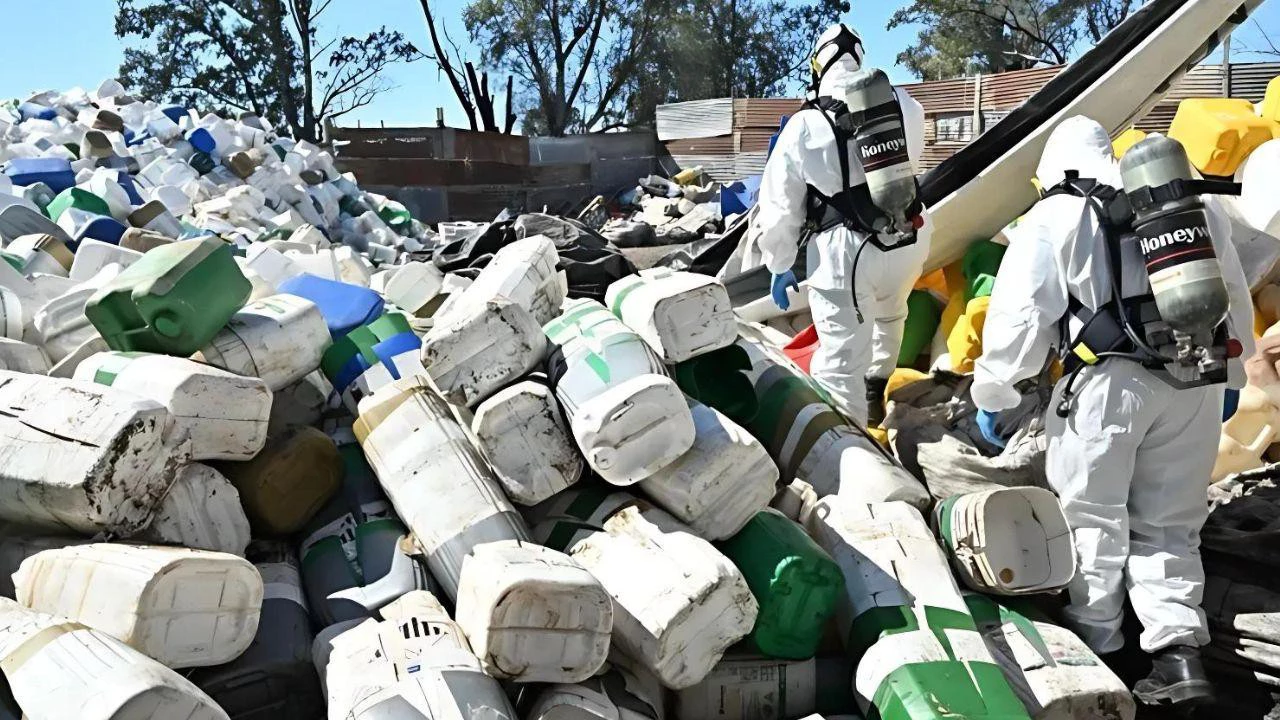
Management of phytosanitary containers
Through the network of Temporary Storage Centers (CAT), operated jointly with the Campo Limpio Association, the province has managed to safely channel the plastic waste from the field, preventing it from ending up in open-air burns or being reused in a dangerous way for public health.
Control and sanctions on irregular storage Beyond the collection logistics, the provincial government tightened inspection tasks to dismantle circuits of illegal trade of agricultural plastics.
During the 2025 period, the authorities proceeded with the closure of two clandestine warehouses located on the Paraná and Uruguay coasts.
The most impactful operation took place on National Route 12, near Aranguren, where a site that had been operating irregularly for more than a decade was dismantled.
As a result of these actions, those responsible for these illegal centers received an economic sanction exceeding 46 million pesos. Additionally, they were legally obliged to carry out environmental remediation tasks on the affected sites, ensuring the restoration of the contaminated soil due to the improper storage of phytosanitary containers.
Towards a circular economy model Gabriela Joubert, coordinator of Good Agricultural Practices, highlighted that the key to success lies in territorial strengthening.
The program has included constant training for municipalities, communes, and government boards to raise awareness about the current regulations.
The central objective of the management of phytosanitary containers in Entre Ríos is to eradicate harmful practices such as incineration of containers and promote their reintegration into controlled industrial processes, thus protecting the natural heritage of the people of Entre Ríos and leading the sustainability indices at the national level.



