



Mercedes-Benz is often associated with technological innovation, increasingly larger screens, and smart assistants. However, its latest environmental strategy shows that sometimes moving forward means reclaiming simple principles that the industry had set aside.
Instead of permanent adhesives, the company is rethinking assembly processes so that components can be easily separated at the end of their life cycle, facilitating repair, extending the life of parts, and improving recycling.
Detachable headlights: less waste and more efficiency
One of the most revealing examples is in the headlights. Currently, many brands —including Mercedes— glue their internal components, turning a minor malfunction into complex waste. If a lens is damaged by a stone impact, the usual practice is to replace the entire assembly.
Within its sustainability initiative Tomorrow XX, Mercedes proposes something more logical: replacing glue with screws. This allows the headlight to be disassembled, only the damaged part to be replaced, and then reassembled. The result:
- Less waste.
- Lower costs.
- Fewer emissions associated with manufacturing a new headlight from scratch.
Headlights are constantly exposed to impacts, solar radiation, and wear. Being able to replace a lens or a specific module can double its lifespan and directly reduce the demand for new parts.
Simpler materials, more useful recycling
The redesign is not limited to assembly. Mercedes is also reviewing the materials, aiming for each component to be made of a single material, avoiding difficult-to-separate mixtures like composite plastics.
This approach makes it easier for parts, once disassembled, to be recycled and turned into quality raw materials. According to the company, this change would allow doubling the use of recycled materials in the headlights compared to the current ones, with an emission reduction of nearly 50% in that component.
It’s not just recycling; it’s useful recycling, re-entering the production chain without losing value.
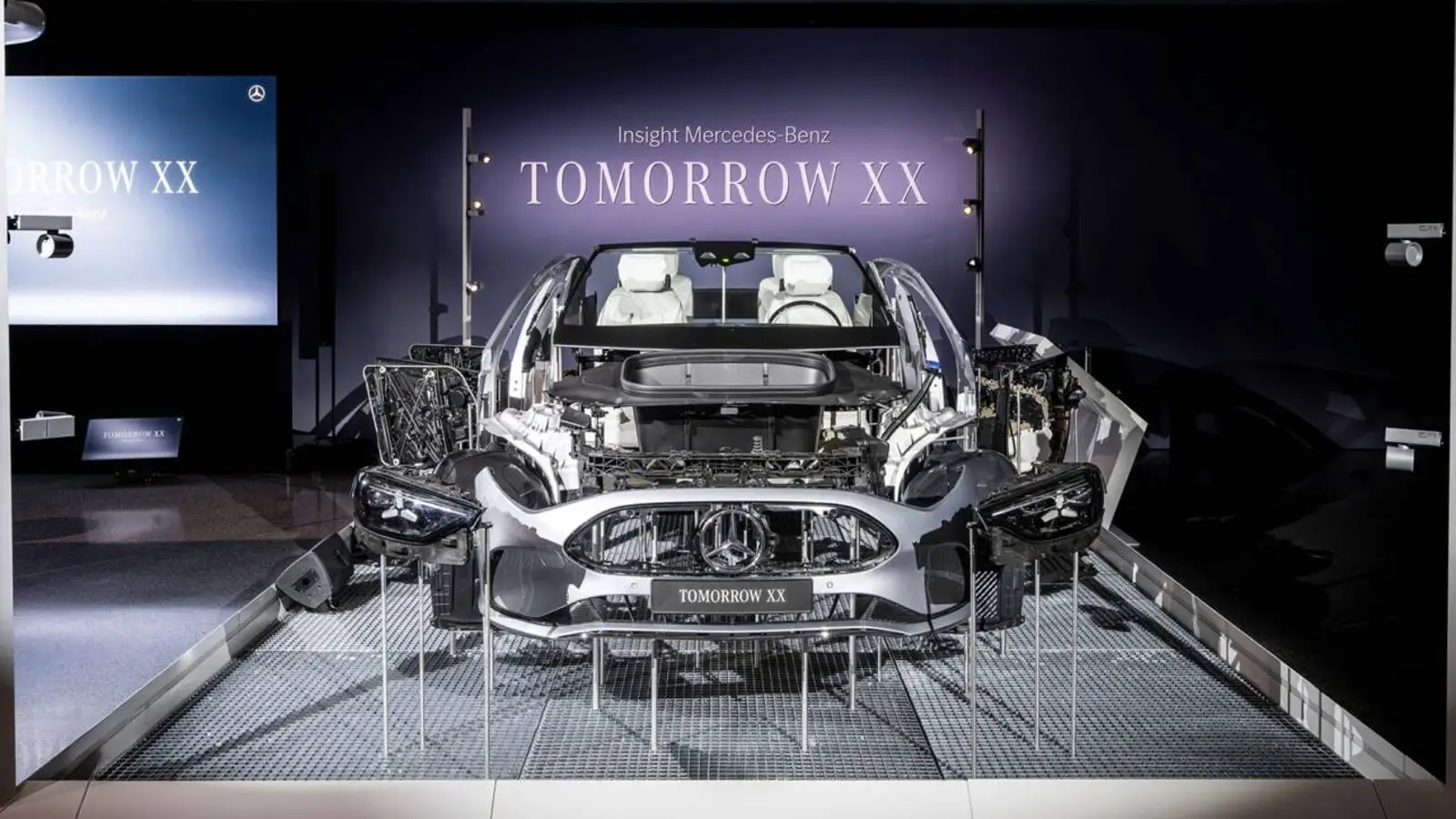
Extending the logic of “disassemble without destroying”
The philosophy is being applied to other parts of the vehicle. In the interior door panels, Mercedes is studying replacing ultrasonic welding —irreversible— with detachable thermoplastic rivets. This allows fabrics, plastics, and reinforcements to be separated when the car reaches the end of its life cycle, turning recycling into a process planned from the initial design.
Some ideas have already moved from the laboratory to commercial models:
- The new CLA features a windshield washer reservoir made from 100% recycled polypropylene.
- Bumpers with 25% recycled material.
The brand is also exploring more ambitious uses: used tires turned into synthetic leather, recycled sound-absorbing materials, or engine mounts made from recovered airbags.
Environmental strategy applied to automotive
All this approach responds to the same framework of environmental strategy: the circular economy. Manufacturing new cars from materials recovered from old cars, reducing dependence on virgin raw materials, and decreasing environmental impact even before the vehicle starts rolling.
The climate impact of the automobile is not limited to the exhaust pipe: resource extraction, manufacturing, and logistics weigh heavily on the total footprint. Here, a well-placed screw can be more transformative than a new electronic gadget.
The shift from adhesives to detachable systems has effects that go beyond a single piece. It allows reducing complex waste, lowering the demand for new raw materials, and decreasing emissions associated with the manufacturing of complete components.
Moreover, it favors repair over replacement, key in a sector where the environmental cost of production is often greater than that of use. It also opens the door to new business models, such as systematic parts recovery or industrial refurbishment, with a positive impact on employment and resources.
Mercedes-Benz demonstrates that innovation is not always digital: sometimes, a screw can be the key to a more sustainable future.


