



The Lake Titicaca is much more than a tourist destination. Considered the cradle of the Incas, this navigable body of water —the highest in the world, at over 3,800 meters above sea level— stretches between Peru and Bolivia and is one of the largest in South America.
Its appeal combines natural beauty, cultural richness, and spiritual significance, making it an experience hard to match.
A Dreamlike Landscape
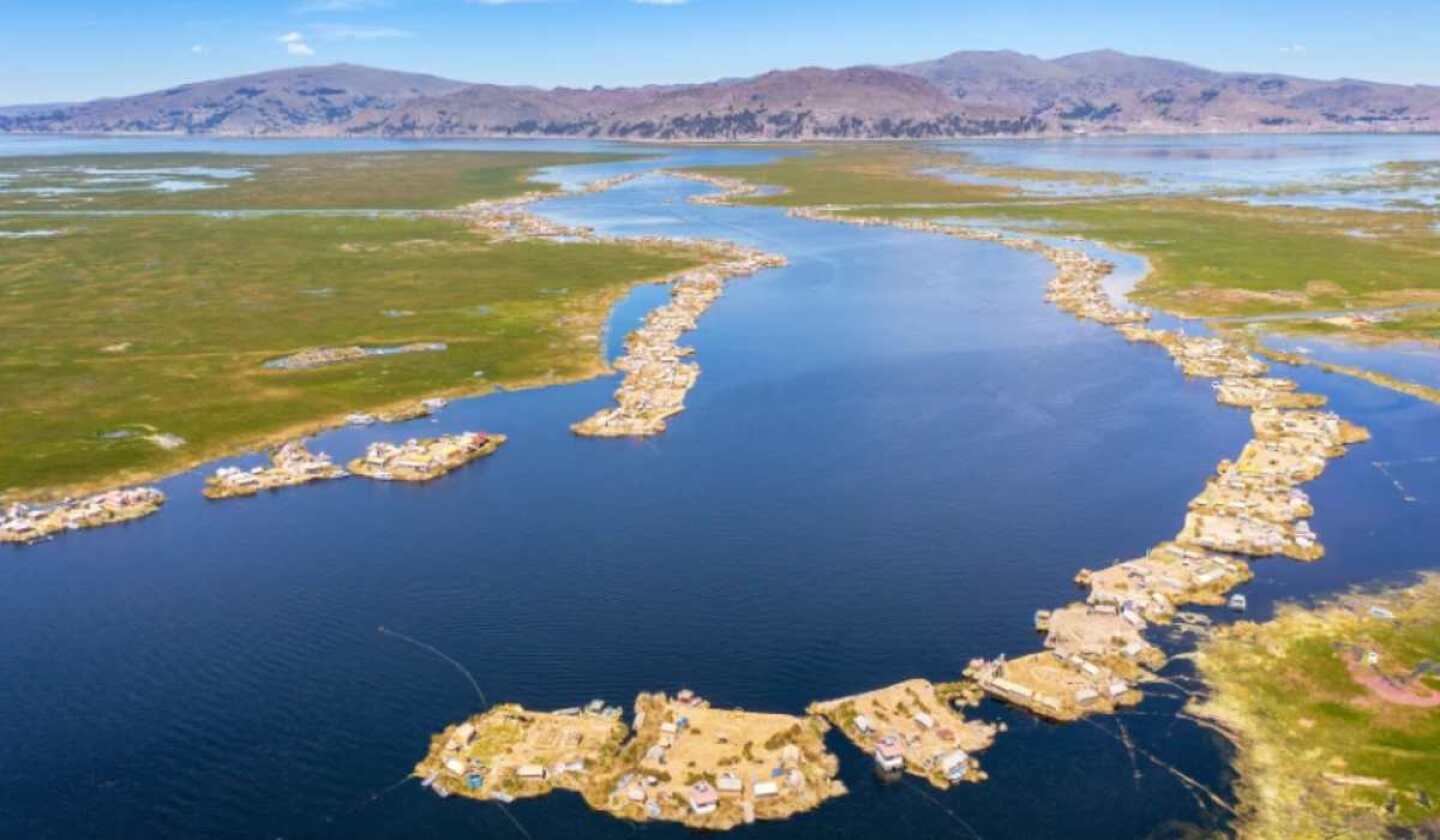
The calm waters of the lake reflect the Andean mountains in an almost surreal image. Surrounding it is the Titicaca National Reserve, home to unique species such as the giant frogs and various migratory birds.
Photography and contemplation find a perfect setting here, especially at sunrise and sunset, when the colors of the sky and water blend into a natural spectacle.
How to Get to Lake Titicaca
The most recommended route for travelers wishing to explore Lake Titicaca is to do so as part of a tour through Peru:
- Arrival in Lima, the main international gateway.
- Visit to Machu Picchu, a wonder of the modern world, accessible from Cusco.
- Direct flight from Cusco to Juliaca (Inca Manco Cápac International Airport).
- Quick transfer to Puno, the base city for exploring the lake.
From Puno, access to the lake is easy, and tours or private excursions with specialized guides can be arranged.
Unmissable Experiences
- Islands of the Uros and Taquile: floating platforms made of totora, inhabited by communities that maintain ancestral traditions. The Uros build houses and boats with this aquatic plant, while in Taquile, visitors learn about local weaving and customs.
- Sunrise and Sunset in Puno: ideal moments to appreciate the serenity of the lake and the mountains.
- Kuntur Wasi Viewpoint: offers panoramic views and archaeological value as a pre-Inca ceremonial center.
- Chullpas of Sillustani: pre-Inca funerary towers of the Colla civilization, surrounded by stunning landscapes.
- Copacabana and Isla del Sol (Bolivia): picturesque town and sacred Inca site with ruins and panoramic trails.
- Bird Watching: species like the huallata (Andean flamingo), the Andean duck, and migratory birds.
Practical Tips
- Sunscreen: the altitude increases solar radiation, so it is essential to apply it frequently.
- Layered Clothing: mild days and cold nights require adaptable clothing.
- Acclimatization: it is advisable to rest on the first day to avoid altitude sickness.
- Best Time: austral summer (December to March), with green landscapes and excellent light for photography, although with occasional rains.
Beyond Tourism
Lake Titicaca is not only a visual and cultural attraction but also a space of spirituality and tradition.
For local communities, the lake is a sacred place that connects with the Andean worldview. Its waters and islands have been the setting for foundational myths, such as the birth of Manco Cápac and Mama Ocllo, the first Incas.
Visiting Lake Titicaca is to immerse oneself in a universe where nature, history, and culture intertwine. From its floating islands to its viewpoints and archaeological sites, every corner offers a unique experience that connects the traveler with the richness of the Andes and the living traditions of its communities.

