



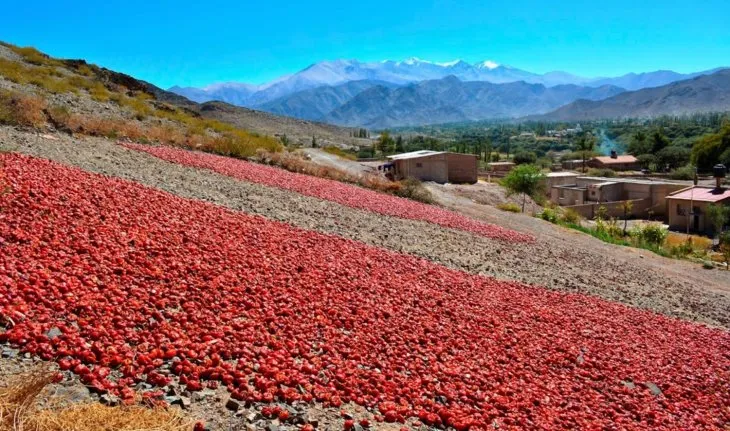
Each autumn, the Calchaquí Valleys offer one of the most stunning postcards of northern Argentina. For about 20 days, vast fields of intense red color cover various localities in Salta thanks to the traditional natural drying of peppers for paprika production.
The phenomenon occurs between late March and May, when hundreds of producers manually spread the fruits over large surfaces known as “conchones.” Under the dry sun of northwestern Argentina, the peppers begin an artisanal dehydration process that completely transforms the regional landscape.
Besides its productive value, this ancestral practice has become a tourist and cultural attraction that annually draws travelers, photographers, and lovers of regional cuisine.

The climate and tradition create a unique postcard
The transformation of the Calchaquí Valleys is due to a combination of natural and cultural factors that have been maintained for generations. The dry climate, low humidity, and intense solar radiation allow the fruits to dry without industrial processes.
For approximately two weeks, the peppers remain exposed to the sun until they reach the ideal point for grinding. This natural method helps to preserve the aroma, flavor, and color characteristic of Salta paprika.
The contrast between the red blankets and the arid mountains creates an iconic image of autumn in northern Argentina. Moreover, the activity represents a key source of income for numerous producer families in the region.
The tourist route passes through traditional localities such as Cachi, Payogasta, Seclantás, Molinos, San Carlos, and Angastaco, where pepper cultivation is part of the cultural and economic identity of the communities.
Rural tourism and experiences in the Calchaquí Valleys
Each season, visitors from different parts of the country arrive at the so-called Paprika Route to learn about the artisanal production process up close. Many family farms and cooperatives open their doors to show how the fruit is cleaned, dried, and ground once dehydrated.
Additionally, the circuit includes gastronomic fairs, regional tastings, and popular celebrations linked to the harvest. In Payogasta, for example, the Pepper Festival brings together folk music, typical foods, and cultural activities related to local agricultural production.
The main access is usually from the city of Salta, crossing the Quebrada del Escoipe and the Cuesta del Obispo, one of the most recognized scenic routes in the country. Then, the route crosses the Los Cardones National Park before connecting with National Route 40 and the producing towns.
On the other hand, the rise of rural tourism has made it possible to highlight traditional agricultural practices that preserve manual methods and promote regional economies with less environmental impact.
How to enjoy these landscapes without affecting the environment?
Experts in sustainable tourism recommend touring the Paprika Route while respecting both the natural spaces and the productive activities of local communities. Many of the visited areas are part of fragile ecosystems adapted to extreme arid conditions.
For this reason, it is advised not to enter fields without authorization, avoid stepping on the conchones where the fruits are dried, and respect the authorized trails. It is also essential not to leave waste and reduce the use of disposable plastics during the tour.
Furthermore, prioritizing purchases from cooperatives and family businesses helps strengthen local economies and promotes more sustainable forms of tourism. Responsible consumption of regional products also favors the continuity of traditional agricultural practices with less industrial intervention.
Finally, those visiting the Los Cardones National Park must respect the conservation rules of the protected area, avoiding extracting flora, disturbing fauna, or traveling outside permitted paths. In this way, tourism can become a tool to protect both the natural heritage and the cultural traditions of the Calchaquí Valleys.


