



On the central coast of Chile, there are territories that resist mass tourism. While thousands choose urbanized beaches, other landscapes remain silent. Thus, between the open sea and the moist land, a coastal refuge emerges, ideal for nature lovers.
In this area, the Pacific Ocean mixes with an active wetland. Additionally, the coastal fog envelops the landscape and softens the temperatures. As a result, a microclimate forms that shapes flora, soil, and wildlife.
The low human intervention reinforces the ecological character of the place. Therefore, the environment preserves its natural dynamics throughout the year. Tranquility becomes an essential part of the experience.

Tunquén, where the sea meets the wetland
The town is Tunquén and is located in the commune of Algarrobo, Valparaíso Region. It is about 100 kilometers from Santiago and near the Casablanca Valley. Its identity is marked by the coexistence of beach, dunes, and wetland.
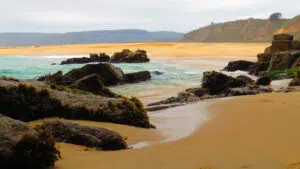
Tunquén beach stretches for more than two kilometers. Its golden sands and cold waters maintain an almost virgin appearance. Access includes a short walk along trails surrounded by native vegetation.
On both sides of the coastline, there are hills, cliffs, and wet areas. This natural mosaic favors a high biodiversity. The landscape changes with the light, mist, and tides.
An ecosystem that regulates the landscape and climate
The wetland plays a key role in the environmental balance of the town. During the summer, it maintains humidity and cools the environment. Thus, it mitigates the impact of heat and protects the soil.
This environment favors the presence of birds and endemic plants. Additionally, it functions as a natural refuge against urban expansion. The conservation allows ecological cycles to remain active.
Tunquén chose to grow in a limited way. Constructions are scarce and of low impact. Nature continues to be the protagonist of the territory.
Ecotourism activities and contact with nature
The area invites you to take walks along coastal and wetland trails. Bird watching is one of the most notable activities. Each season offers different species and behaviors.
It is also possible to practice surfing and responsible fishing. However, the strong waves require caution for swimming. The rocky areas and cliffs provide natural viewpoints.
Tourism here prioritizes contemplation and environmental respect. Ecological cabins and day visits allow for a sustainable experience. Rest integrates with the landscape without altering it.
How to get to this coastal sanctuary
From Santiago, access is via Route 68 towards Valparaíso. Then, take the detour towards Casablanca and Algarrobo. Tunquén is located a few kilometers from these towns.
The last stretch leads to a parking area near the wetland. From there, continue on foot along marked trails. Entering on foot reinforces the feeling of natural isolation.
Reaching Tunquén is also a way to change the pace. The journey anticipates the calm the place offers. A destination where the sea and the wetland continue to converse without noise.


