



In an unusual scenario, the drop in the flow of the Iguazú River revealed a persistent issue at the Iguazú Falls. However, what seemed like an operational opportunity highlighted the accumulation of waste in key areas.
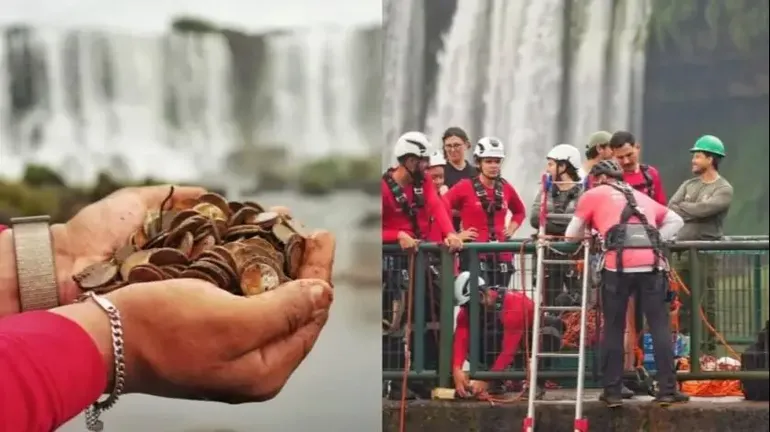
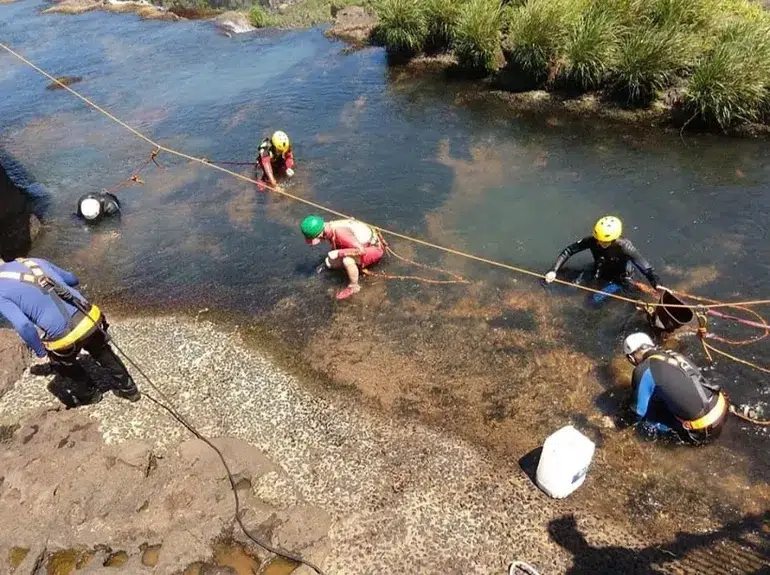
Additionally, the flow dropped to about 500,000 liters per second, well below the average of 1.5 million. Therefore, teams from the Iguazú National Park deployed a clean-up operation in areas inaccessible under normal conditions.
Consequently, this intervention allowed for the removal of large volumes of waste discarded by visitors. Even so, the situation raised alarms about practices that persist despite awareness campaigns.
Waste that disrupts the ecological balance of the river ecosystem
Firstly, the coins thrown into the water represent the main detected problem. Although many tourists consider it a ritual, this action causes chemical and biological impacts.
On one hand, the metals oxidize and release substances that alter the water quality. On the other hand, aquatic species may ingest these objects, mistaking them for food.
Furthermore, during the operations bottles, caps, plastics, batteries, and electronic devices were also removed. Consequently, the accumulation of waste evidences a constant pressure on the ecosystem.
Thus, pollution not only affects biodiversity but also the natural dynamics of the river. Therefore, it reinforces the need to change tourist behaviors in protected areas.
Binational operations and figures reflecting the magnitude of the environmental problem
In the Argentine sector, guides, park rangers, and operational staff worked in the area of the Devil’s Throat. As a result, they managed to remove around 90 kilos of coins.
Meanwhile, on the Brazilian side, in Foz do Iguaçu, the tasks yielded even higher figures. In one single day, more than 300 kilos of coins were extracted from under the walkways.
Moreover, these operations are carried out periodically due to the persistence of the problem. However, the river’s low level allowed for a better understanding of the real extent of the accumulated pollution.
Consequently, authorities insist on strengthening environmental education. In this way, they aim to prevent practices that compromise the integrity of the site.
Regulations that protect national parks and limit harmful activities
In Argentina, national parks are regulated by legal frameworks that prioritize conservation. Among them, the National Parks Law establishes clear restrictions on human activities.
Additionally, these regulations prohibit actions that alter the environment, such as throwing waste or harming wildlife. Therefore, behaviors like tossing coins constitute environmental infractions.
At an international level, the recognition as a World Natural Heritage reinforces these obligations. Consequently, a sustainable management that preserves the ecosystems is required.
Likewise, park rangers play a key role in visitor control and education. In this way, the aim is to ensure that tourism is compatible with conservation.
Environmental awareness: key to preserving one of the planet’s most iconic landscapes
In this context, the repetition of polluting behaviors reflects a cultural challenge. Although there are informative campaigns, their impact is still insufficient.
Therefore, authorities highlight the importance of individual responsibility. Each visitor, consequently, has a direct role in protecting the environment.
Moreover, promoting sustainable practices helps reduce the pressure on fragile ecosystems. Thus, tourism can become an ally of conservation.
Finally, the situation at the falls exposes a broader reality. Even in protected areas, human intervention continues to leave visible marks on nature.


