



The growing accumulation of tires in the world poses an urgent environmental challenge. Every year, almost two billion tires become waste that, without proper treatment, end up polluting soils, rivers, or accumulating in landfills. Faced with this scenario, initiatives emerge that seek to give these materials a new life.
An example is the development of an ecological waterproofing, which uses recycled rubber combined with acrylic and polyurethane resins. This innovative product not only extends the lifespan of surfaces but also contributes to reducing the environmental footprint of construction.
Thanks to a process that includes the recovery, micro-shredding, and homogenization of rubber, this waterproofing becomes a resistant barrier for roofs and exposed surfaces. For every 100 square meters treated, between 150 and 200 kilos of tires are reused, which would have otherwise ended up polluting the environment.
The result is a durable, walkable material with great adhesion, meeting the needs of sustainable construction without compromising quality or efficiency.
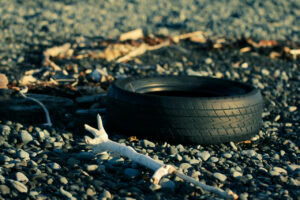 Recycled tires.
From hazardous waste to valuable resource
Tire recycling brings multiple benefits to the environment. On the one hand, it prevents the release of toxic substances generated during the decomposition or burning of tires. On the other hand, it reduces the proliferation of disease-transmitting vectors, such as mosquitoes, which often take refuge in abandoned tires.
On an energy level, this waterproofing also makes a difference. Applied on roofs —especially in light tones— it can reduce indoor temperatures by 15% to 20%, favoring thermal efficiency and reducing energy consumption for climate control.
Its flexibility and resistance make it ideal for withstanding structural movements and extreme weather conditions. Its durability, estimated at over ten years, makes it a profitable investment for homes and industries.
Tires: an environmental risk that can be avoided
Tire rubber, if not managed properly, becomes a highly polluting waste. By remaining outdoors, it releases heavy metals and toxic organic compounds that affect the soil, water, and air.
In addition, tire combustion —whether accidental or intentional— generates emissions of polluting gases and suspended particles, worsening air pollution and posing a direct risk to human health and ecosystems.
Therefore, recycling and valorizing this material not only reduce its negative impact but also allow for the development of practical and sustainable solutions that meet real needs.
 Tire recycling plant.
Innovation in the service of architecture
The waterproofing made with recycled rubber represents around 7% of the market products. Its application is simple and versatile: it can be used on concrete, metal, wood, and membranes, forming a seamless film that prevents leaks.
It is applied with a brush, roller, or trowel, with a yield of up to 1.5 kg per square meter, and its drying time ranges from 4 to 24 hours. Once dry, it offers a non-slip, water-resistant, sun-resistant, and wear-resistant surface, suitable for both homes and industrial facilities.
This proposal demonstrates that the circular economy is key to transforming environmental problems into concrete solutions. Turning tires into protection for homes is a tangible example of how innovation can make a real difference in construction and planet care.



