



More and more people in **Argentina** are adopting **recycling as a [daily practice](https://noticiasambientales.com/residuos/alianza-por-el-reciclaje-en-santa-fe-una-clave-para-optimizar-la-logistica-de-los-recuperadores-urbanos/)**, but they feel that their commitment lacks **real support from brands** and a **solid regulatory framework**.
This is indicated by the latest report prepared by [**Ecoplas**](https://ecoplas.org.ar/), a civil association specializing in plastics and the environment, together with the consulting firm **Opinaia**.
## Rising cultural change: more separation, more awareness
The study —the third carried out by Ecoplas and Opinaia— shows a **steady growth in waste separation**: **82% of Argentinians** do it at least occasionally, compared to **64% in 2022** and **60% in 2019**.
In addition, **9 out of 10 people** believe that **brands should actively contribute** to recycling, facilitating the return of materials to the **production cycle**.
## REP Law: key to an effective circular economy
Citizen demand aligns with the need to implement the **Extended Producer Responsibility (REP) Law**, which obliges companies to **manage the post-consumer phase of their packaging**, incorporating **eco-design, reuse, recycling, and valorization**.
**87% of respondents** believe that there is **a lack of coordination between governments, companies, and citizens**, and that the REP would be a concrete tool to **turn social commitment into systemic results**.
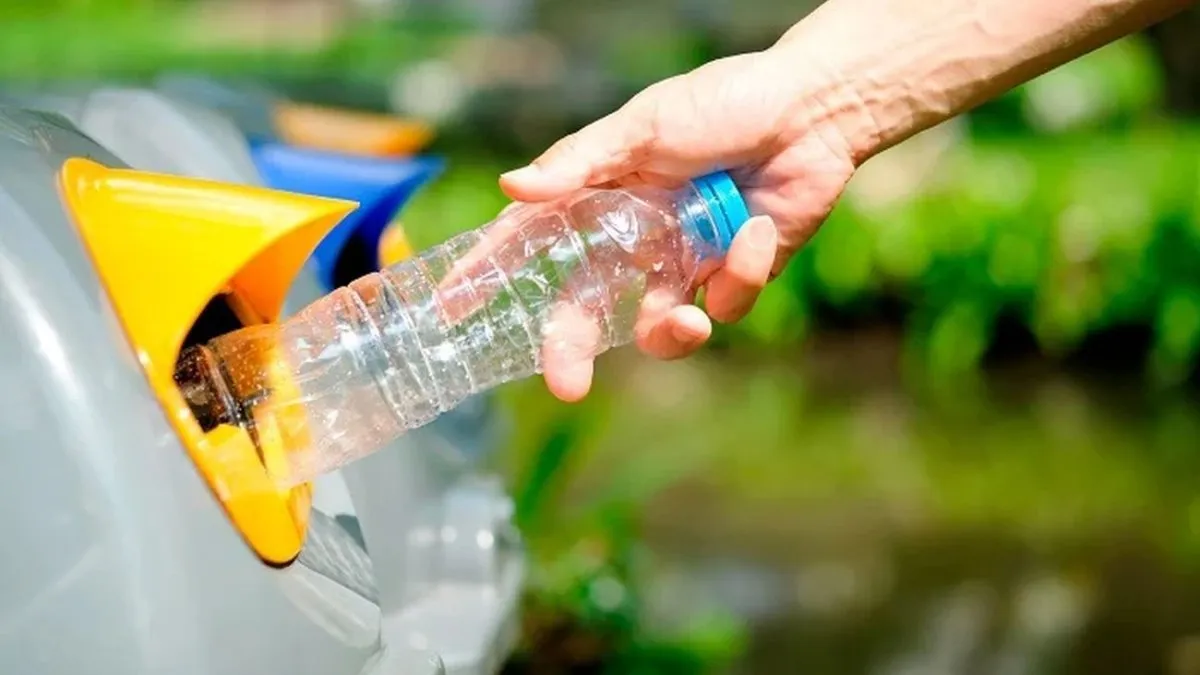 The importance of recycling in Argentina
## Post-consumer and conscious consumption: plastic as a resource
63% are interested in the fate of products and 44% value their recyclability.
The study reveals that Argentinians recognize the **functional value of plastic** in sectors such as **health, hygiene, and food safety**, and that **its recyclability** is one of the most valued attributes.
In 2024, **233,200 tons of plastics were mechanically recycled** and another **30,300 tons were valorized** in cement kilns, although the industry still operates with **50% idle capacity** due to a lack of separation and demand.
## Certifications and traceability: consumer confidence
**52% would pay more for products with recycled plastic and 45% value environmental seals**.
**Ecological awareness** is growing: more than half of the population is willing to **pay more for recycled products**, and almost half considers **environmental seals** decisive when making a purchase.
Ecoplas, along with **INTI**, promotes the **Certification of Recycled Plastic Content**, which guarantees a **minimum of 15% recycled material**, verifiable traceability, and a **QR code with environmental benefits**.
## Environmental education: the cornerstone to consolidate change
**93% believe it should be mandatory and 52% ask for recycling to be included in schools**.
The report highlights that **environmental education is a priority for citizens**.
Most consider it should be **mandatory** and that **plastic recycling** should be part of school curricula, strengthening knowledge about **circular economy from childhood**.



