



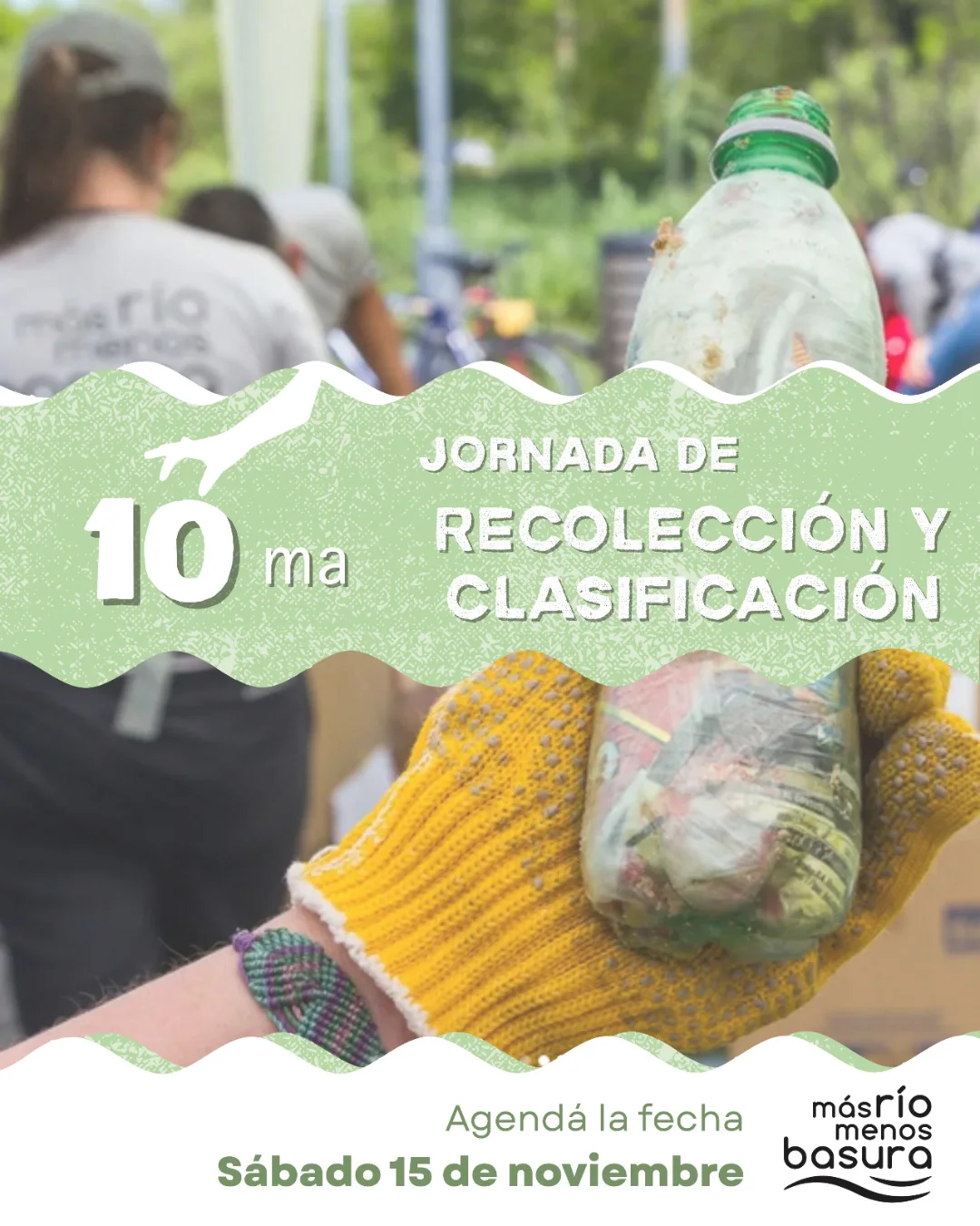
On the upcoming November 15, the organization Más río, menos basura will once again gather volunteers to clean the public beaches of northern Rosario. The event, which extends from the Paraná Aquarium to Costa Alta, aims to tackle a growing problem: the accumulation of waste, especially plastics, on the riverbanks and islands of the river.
Far from decreasing, the waste collected each year increases. In the last edition, more than a ton and a half of waste was gathered, seven times more than the previous year. Most of it consists of bottles, wrappers, disposable cups, and cigarette butts.
This reality reflects a pattern of accelerated and disposable consumption, where single-use products have become a persistent threat to aquatic ecosystems.
Ten years of environmental commitment
Since 2016, the collective Más río, menos basura has been bringing together volunteers, institutions, and NGOs that work in a coordinated manner to clean, classify, and analyze the collected waste. In this new edition, the event will include the participation of kayakers who will add waste removed from the islands.
The activity will begin at 8:30 at the Catalunya promenade and will take place at various points along the coast. After the collection, the materials will be classified to determine which types of waste predominate and which brands are most frequent.
The meeting will end with a sustainable fair and cultural activities, celebrating a decade of collective work in defense of the river and its wetlands.
The consequences of plastic pollution
Plastic represents 90% of the waste found in the Paraná. Its accumulation alters the natural dynamics of the ecosystem, reduces water quality, and directly affects fauna.
Birds and fish mistake plastic fragments for food, which can lead to their death or the introduction of microplastics into the food chain. These materials, which take centuries to degrade, also interfere with the transport of nutrients and the oxygenation of the water.
Moreover, plastic pollution exacerbates the impact of floods, as waste blocks waterways and increases the risk of flooding in urban and rural areas.

Measures in Argentina to curb plastic pollution
Although the country lacks a national law limiting single-use plastics, there are municipal ordinances and legislative projects aimed at reducing the problem. Several cities have banned plastic bags in stores or disposable straws in bars and restaurants.
In parallel, some provinces promote circular economy policies, encouraging recycling, household separation, and material reuse. However, the implementation of these measures remains uneven and limited in scope.
The lack of a comprehensive strategy at the national level prevents progress towards a real reduction in the production and consumption of plastics, leaving much of the responsibility in the hands of citizens and civil organizations.
How to reduce pollution from home
Every daily action can contribute to stopping plastic pollution. Adopting responsible consumption habits is a fundamental first step. Using reusable bottles, cloth bags, and durable containers helps reduce the use of disposable packaging.
Separating recyclable waste and delivering it to local cooperatives helps ensure that recoverable materials do not end up in rivers or landfills. It is also important to avoid products with excessive packaging and opt for bulk purchases or local markets.
Environmental education and community participation are key. Small changes at home can have a collective impact when sustained consistently.

A possible future for the Paraná
The cleanup campaigns have shown that citizen action can make a difference. Each event recovers valuable data that guides public policies and strengthens environmental awareness.
However, the definitive solution requires a structural transformation of the production and consumption model, with greater state and corporate commitment. Rivers cannot continue to be the final destination for human waste.
The Paraná, a vital source of water and biodiversity, needs sustained policies and an active citizenry to restore its balance. On its banks, each piece of waste collected symbolizes a hope for change and an urgent reminder: caring for the river is caring for life.


