



Although drinking bottled water in plastic is a widespread practice worldwide, the scientific community warns about its invisible risks.
Recent research has detected high concentrations of microplastics and nanoplastics in the water contained in these containers, raising alarms about their possible effects on human health.
What do scientific studies say?
Plastic bottles release microscopic particles that can enter the body and accumulate in vital organs.
A study published in Proceedings of the National Academy of Sciences identified up to 240,000 particles per liter of bottled water, many of them nanoplastics, smaller than a micron.
Another study, conducted by Chinese scientists and published in Communications Biology, concluded that plastic bottles are the main source of microplastic intake in humans and that they also carry benzo[a]pyrene, a toxic compound.
“Bottles are designed for single use,” warned Merja Virtanen, an expert from the Finnish Food Authority. Their prolonged reuse can increase the release of particles, especially if exposed to heat, humidity, or sunlight.
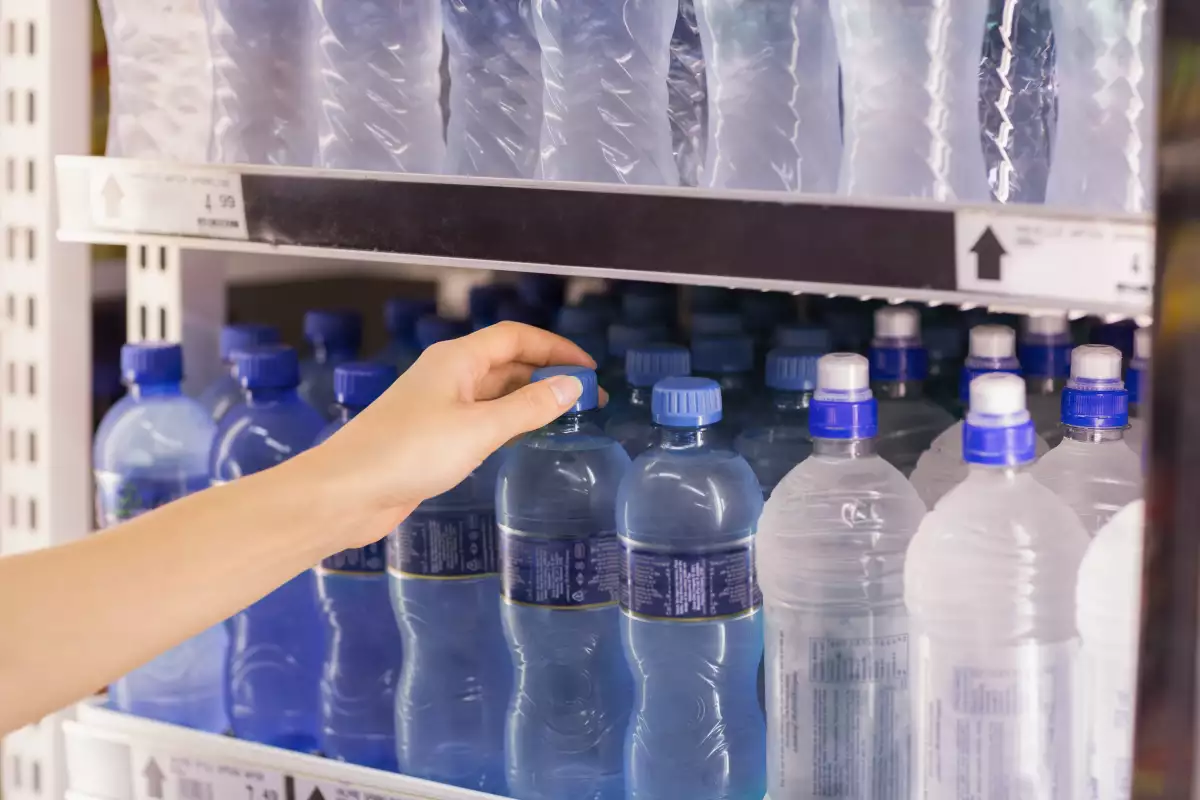
How do microplastics get into the water?
From the container to the filtration process, multiple factors contribute to contamination.
- Plastic container: During manufacturing and use, the material degrades and releases fragments
- Industrial filtration: Some purification processes can increase particle concentration
- PET-coated caps: Even in glass bottles, caps can release more microplastics than the entire plastic container
Health risks: a growing concern
Inflammation, hormonal alterations, and cellular damage among the potential effects of nanoplastics.
Microplastics can cross biological barriers, enter the bloodstream, and accumulate in organs. Studies link them to oxidative stress, chronic inflammation, hormonal alterations, reproductive problems, and neurological damage.
Although research is ongoing, experts agree that prolonged exposure poses a real risk.
How to reduce exposure to microplastics?
Filtering, boiling, and choosing tap water are simple and effective measures.
- Filter and boil water: Whether from the tap or sealed bottles, this process reduces the presence of particles
- Prefer public network water: It contains much fewer particles than bottled water
- Frequent cleaning: If a bottle is reused, it is key to wash it regularly to avoid the accumulation of bacteria and residues
A necessary change of habit
The emergence of thermal bottles and domestic filters opens new alternatives for safer and more sustainable consumption.
Scientific evidence suggests it is time to review our daily practices. Opting for BPA-free reusable bottles, filtered water, and proper storage can make a significant difference in personal and environmental health.




