



In a world facing increasing challenges due to climate change, food security, and biodiversity loss, discussing sustainable fishing and the blue economy emerges as a pressing need.
This is a model aligned with global initiatives such as the United Nations Ocean Conference (UNOC 2025) that will take place in Nice from June 9 to 13.
It promotes the sustainable use of marine resources for economic development, social well-being, and environmental conservation.
Sustainable fishing: what is the blue economy
The blue economy, according to the Food and Agriculture Organization of the United Nations (FAO), seeks to maximize the economic benefits of the ocean without compromising its health.
This includes activities such as fishing, coastal tourism, aquaculture, maritime transport, and marine biotechnology.
 What is the blue economy.
However, its approach goes beyond economic growth: it promotes a balance between productivity, social equity, and sustainability.
This principle is reflected in the preparations for UNOC 2025, which emphasizes the need to integrate governments, the private sector, and local communities in strategies that ensure oceanic resilience and climate justice.
Blue foods: nutritious, sustainable, and undervalued
Blue foods —fish, seafood, mollusks, algae, and other aquatic products— represent one of the most efficient and sustainable sources of protein on the planet.
In line with UNOC 2025, which seeks to scale solutions based on science and local tradition, Mexico has the opportunity to position its blue foods as sustainability models.
Species such as shrimp, tuna, sardines, or oysters are not only part of the national gastronomic heritage but their responsible production can reduce pressure on marine ecosystems, as demanded by the global conservation agenda.
Artisanal fishing: the social heart of the blue economy
According to the FAO, over 90% of the people worldwide who rely on fishing belong to small-scale fishing.
Artisanal fishing, when properly managed, has a lower environmental impact than industrial fishing and maintains traditional practices that respect natural cycles and their connection with communities.
Why support initiatives like Future Fishing?
“At Future Fishing, we work to connect consumers with sustainable aquatic products, empower coastal and inland water communities, to raise awareness about the value of our oceans,” they explained at the organization.
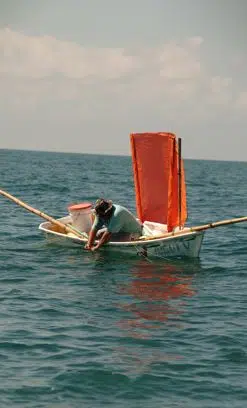
 Sustainable fishing.
“We are an authorized donor, which allows companies, foundations, and committed citizens to deduct taxes while contributing to a more fair and resilient food model,” they added.
Investing in the blue economy is not just an environmental commitment: it is a strategic decision for Mexico’s future. Strengthening artisanal fishing and aquaculture and promoting responsible consumption of blue foods leads us to a healthier ocean, a more equitable society, and a country with a long-term vision.



