



Years go by and the crisis worsens. The accumulation of garbage and pollution in Valle Calchaquí, in Salta, is a constant concern for the population.
The regional landfill that serves Cafayate, San Carlos, and Animaná is collapsed and, as reported, with no solutions in sight.
Open-air landfill: risk and pollution in Valle Calchaquí
Consortium workers recently alerted local media that the site operates without any treatment.
They directly dump waste, becoming fire hazards, emitting smoke and exposing to toxic substances that jeopardize the health of communities and local wine production.
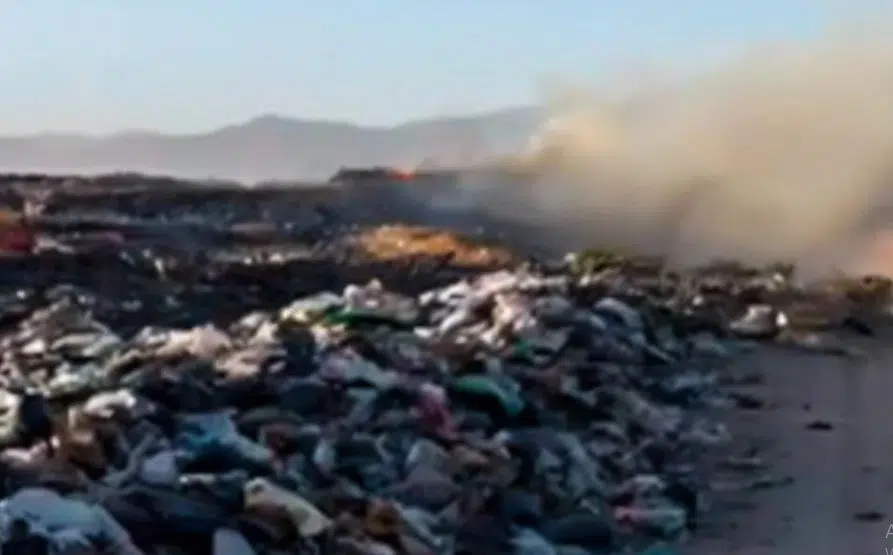 The landfill of concern in Valle Calchaquí. (Photo: El Tribuno).
Additionally, aside from the health impact, landfill staff reported critical working conditions, as indicated.
They list the lack of drinking water, clothing, supplies, and with machinery in poor condition. This, combined with delays in payments and contributions to social security.
Faced with this crisis, the workers decided to close the landfill until there are answers.
Indebted Municipalities and Inadequate Infrastructure
The root of the problem involves the three municipalities involved: Cafayate, San Carlos, and Animaná have debts with the consortium. This prevents investment in new trenches or efficient treatment plants.
While it all started with a model “ecoplant,” today it is an overflowing landfill after years of lack of maintenance.
Authorities acknowledge that the garbage disperses by the wind, contaminating natural and agro-industrial areas, directly affecting the success of tourism and winemaking.
Tourism and an Unsolved Problem
Open-air landfills are an unresolved issue in several municipalities of the province. However, this case of high contamination in Valle Calchaquí gains notoriety frequently because it is a point of high tourist movement.
The situation of the open-air landfill in the Cafayate area, which includes waste generated in Animaná and San Carlos, remains in a cone of uncertainty, while environmental damage becomes increasingly evident in an area with high concentration.
What are open-air landfills?
These are sites where solid waste is disposed of indiscriminately, without operational control and with limited environmental protection measures.
When not managed properly, this poses a risk to people’s health, as resources such as water become contaminated, as well as soil and air.
Argentina has at least 5000 open-air landfills
In Argentina, there are at least 5000 cases of open-air landfills. One-third of the urban waste generated in Latin America and the Caribbean ends up in these spaces, according to the United Nations.
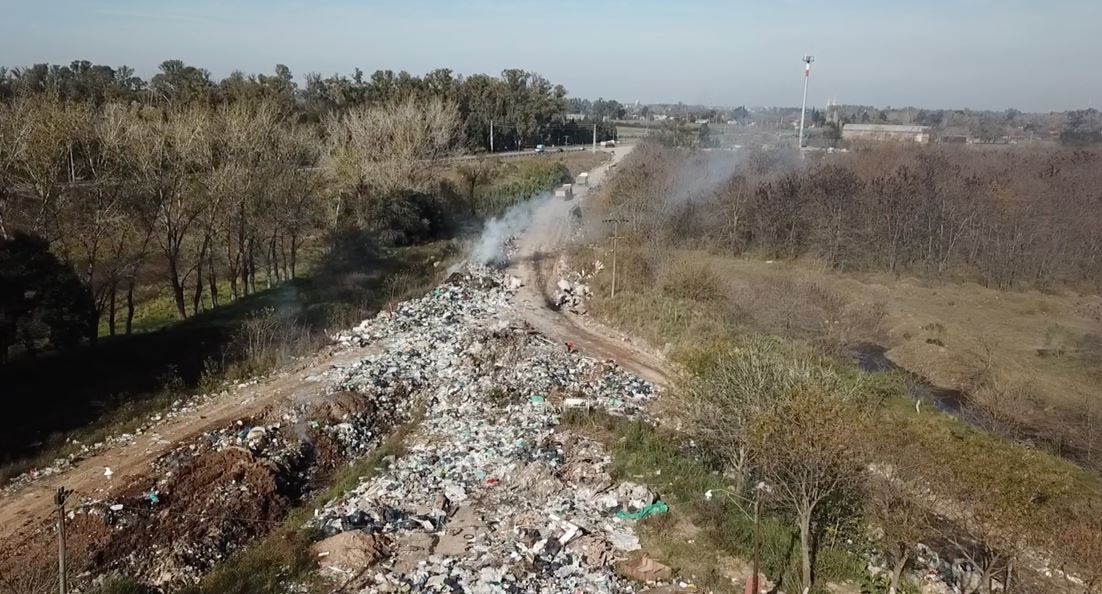 Open-air landfills: consequences on health. (Photo: National Government).
And the consequences are devastating, both for the environment in general and for human health.
The decomposition process that waste undergoes when stagnant in landfills leads to the emission of toxic gases. Thus, they generate 5% of global emissions of greenhouse gases (GHG), responsible for global warming.
Additionally, not having impermeable soil, they become a source of contamination, also due to the generation of leachate.
Leachate is produced when waste undergoes the decomposition process, and water (from rain, surface drainage, or groundwater) percolates through the decomposing solid waste.
This liquid contains dissolved and suspended materials that, if not properly controlled, can seep through the base floor and contaminate sources of drinking water or surface waters.


