During several weeks, thousands of people both in Argentina and around the world had the opportunity to observe the invisible biodiversity in a territory never seen before: the Mar del Plata Canyon.
This deep-sea ecosystem was live-streamed for the first time thanks to the expedition “Submarine Oases of the Mar del Plata Canyon: Continental Slope IV”.
The mission was led by a group of scientists from CONICET, who used the remotely operated vehicle (ROV) SuBastian, capable of diving down to 4,500 meters.
The images, broadcasted in ultra-high definition on YouTube until August 10, managed to captivate tens of thousands of viewers, showing everything from cold-water corals and carnivorous sponges to abyssal rays and other unique creatures moving in their natural habitat.
However, this window into the seafloor not only offered a visual spectacle, but also revealed signs of human influence. In one of the recordings, a boot typically used by workers in the fishing industry can be seen.
 Boot in Mar del Plata Canyon[/caption>
A pristine environment in need of conservation
Jonathan Flores, PhD in Biological Sciences and expert in Marine Biology, was part of the team that monitored the depths of the canyon live. “What we observed in the explored areas is a seafloor with invisible biodiversity in a fairly pristine state, without evident signs of degradation by human activity, except for sporadic remains like plastic bags or a boot.
Although not a significant contaminant, they serve as a reminder that human presence extends everywhere,” he commented.
The researcher highlighted the remarkable heterogeneity of the ecosystem: “Over very short distances, just by slightly varying the depth, completely different habitats emerged. There are vertical walls, slopes, and flat areas that are home to different communities, forming a mosaic of life adapted to extreme conditions”.
This invisible biodiversity, he warns, could disappear quickly if these areas are subjected to destructive fishing methods.
“If it were a trawling zone, we would see a desert”
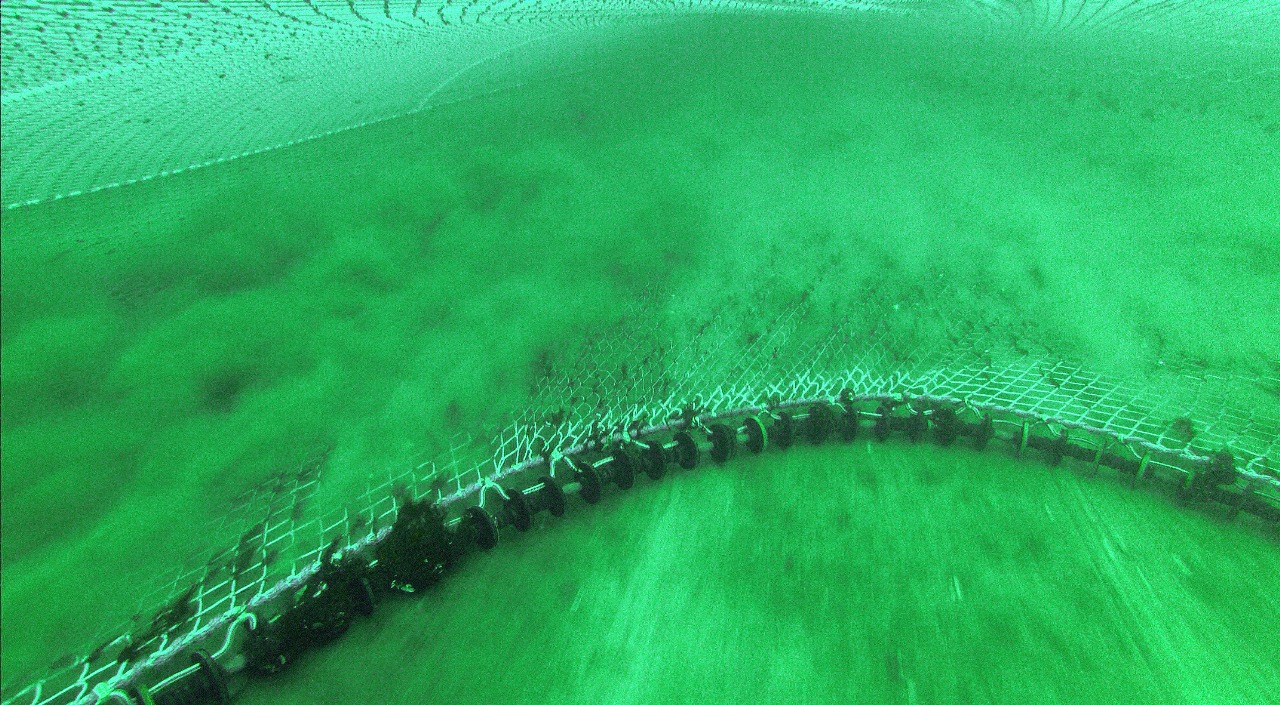
Trawling fishing, as Flores explained, causes severe damage: “It is akin to plowing the seafloor. It destroys corals, sponges, and other three-dimensional structures that serve as shelter for numerous species. When those structures are removed, a large part of the biodiversity that depends on them also disappears”.
Trawling lacks selectivity: it captures not only the desired species but also all others in its path, and furthermore, fragments habitats. “Instead of a continuous ecosystem, isolated patches remain, interrupting connectivity and complicating the recovery of populations,” he added.
Juan Coustet, from the Sin Azul No Hay Verde Foundation, summed up the danger as follows: “If this expedition had taken place in an area of intensive fishing, what we would have witnessed would be a submarine desert. That is why the broadcast of these images is so impactful: it shows what we still have to protect”.
Science as the basis for decision-making
For Flores, scientific research in deep-sea environments plays a strategic role: “Many of these ecosystems have not been explored. Science is not limited to describing new species; it also identifies threats and suggests criteria for their management. This evidence is crucial for decision-makers to establish closures, create protected areas, or regulate activities such as fishing and deep-sea mining”.
In addition to the collected organisms, the expedition has generated hours of recordings that will be used as analysis material. “The work ahead is immense. There are studies that could take a decade. Others, like the first taxonomic or genetic results, could be available in one or two years. We expect to discover new species and to characterize in detail the different environments of the canyon,” he anticipated.
 Schmidt Ocean Foundation Ship
A window into the world of invisible biodiversity
Once the observations were completed, Soledad Leonardi, director of the Institute of Marine Organism Biology at CENPAT-CONICET, emphasized that the live broadcast was a requirement imposed by the Schmidt Ocean Foundation, owner of the ship and the ROV.
“It is extremely valuable to be able to observe these environments in real-time, to see how organisms are in their natural state, how they interact. That creates an emotional bond with the sea, even for those who have never been on a vessel.”
<img class=" wp-image-112086" src="https://noticiasambientales.com/wp-content/uploads/2025/08/
Compartí esta nota

Latest news
Te pueden interesarTe pueden interesar
Astronomers discover possible exomoon in the star system CD-35 2722 at 73 light-years using the VLT in Chile

NASA+ arrives on Amazon Fire TV: free and ad-free streaming of space missions and educational content
NASA reveals how polar ice melt and atmospheric friction affect Earth’s rotation and polar wobble
A city of 60 million fish discovered under the Filchner Ice Shelf in Antarctica