



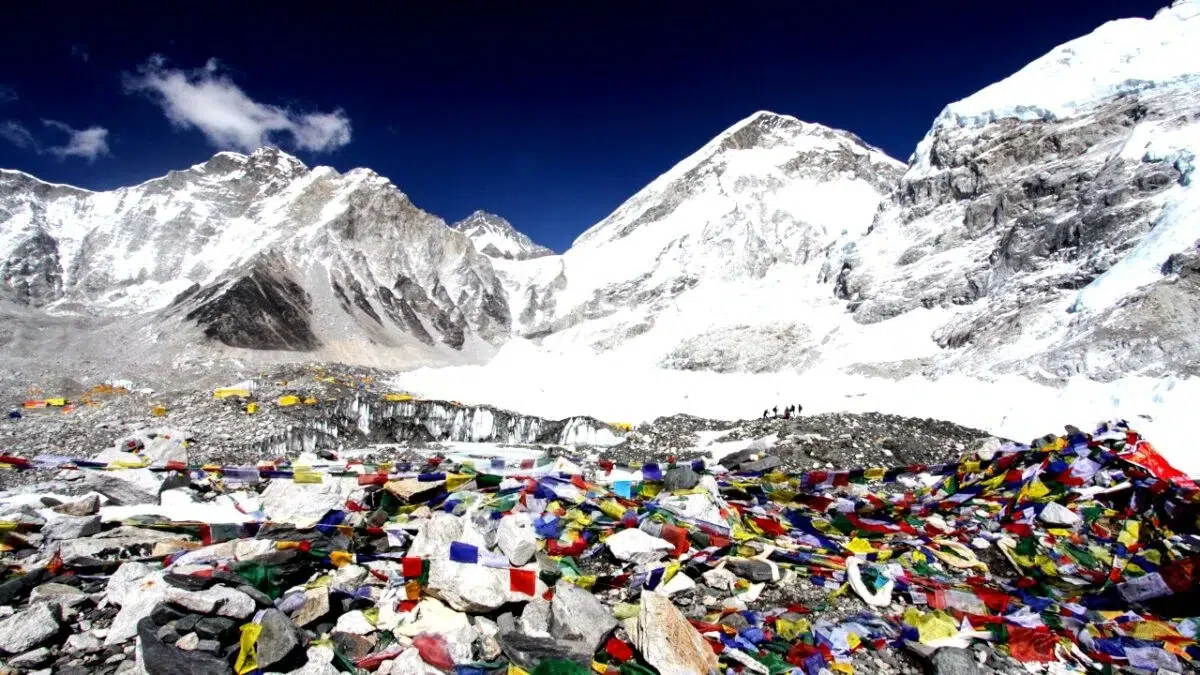
During the last **climbing season**, a team of **drone operators** joined the **mountaineers and guides** at the **Everest base camp** with a clear mission: **reduce waste accumulation** on [the world’s most emblematic mountain](https://noticiasambientales.com/medio-ambiente/el-turismo-descontrolado-en-el-everest-deja-200-toneladas-de-residuos-al-ano/).
The use of **heavy-duty cargo drones** marks a before and after in efforts to **clean the Himalayas**, where an estimated **200 tons of waste are generated annually**.
## “The highest trash can in the world”: an environmental crisis at the top
Mount Everest, a symbol of **achievement and adventure**, faces a growing [**pollution crisis**](https://noticiasambientales.com/medio-ambiente/contaminacion-del-riachuelo-acumar-endurece-sanciones-por-infracciones-ambientales-en-la-cuenca/). Among the most common waste are:
– Plastics and food wrappers
– Oxygen bottles and gas cylinders
– Abandoned tents
– Even bodies of deceased climbers
This accumulation not only affects the aesthetics of the landscape but also generates **severe environmental impacts** such as **water pollution**, **soil degradation**, and **permafrost thawing**, compromising access to water for **local communities**.
## Heavy-duty cargo drones: efficiency and safety at high altitudes
Two **DJI FC 30 drones**, designed for **heavy loads**, were sent to **Camp 1**, at **6,065 meters above sea level**, where they managed to transport **300 kg of waste** in a few days.
According to **Raj Bikram Maharjan** from the Nepali company **Airlift Technology**, this solution far surpasses traditional options such as **helicopters** or **human labor**.
“In just 10 minutes, a drone can do the work of 10 people in six hours,” explained Tshering Sherpa, head of the Sagarmatha Pollution Control Committee to the AFP agency.
## More than just cleaning: logistical support for climbers
In addition to waste removal, drones have been used to deliver essential equipment such as:
– **Oxygen bottles**
– **Ladders and ropes**
– **Technical material for climbing routes**
This has reduced the dangerous journeys through the **Khumbu Icefall**, one of the deadliest areas of Everest, improving the **safety of guides and porters**, especially for **preparation teams**.
“It saves time, energy, and lives,” stated mountaineer **Nima Rinji Sherpa**, the youngest to summit the **14 highest peaks in the world**.
## Climate technology with humanitarian impact
The drones used, valued at **$20,000 each**, were **donated by the Chinese manufacturer** to support the operation and promote their brand. The rest of the costs were partially covered by **local authorities**.
“Drones are not only for war,” Maharjan pointed out. “They can save lives and protect the environment. This technology will be key for humanitarian and climate work.”
Next month, the company plans to replicate the model on **Mount Manaslu**, continuing its strategy of **cleaning and providing logistical assistance** in the **high peaks of the Himalayas**.
## Persistent challenges and future opportunities
Despite the progress, removing waste from Everest remains **logistically complex** due to the **extreme conditions**. The issue is an urgent call for:
– Greater environmental responsibility among tourists
– Effective waste management in mountain areas
– Transformation of waste into resources, such as biogas digesters
*With information from AFP*



