



In different operations carried out in the last few hours, the authorities of Misiones concluded a successful wildlife rescue. They managed to find two capybaras, a talking parrot, and two Argentine parrots that were in captivity and showed clear signs of mistreatment.
The operations, carried out in two different locations, were led by the Directorate of Environmental Defense and Rural Crimes of the provincial Police, along with the Ohana rescue center.
The animals received veterinary care and were released back into their natural habitat following conservation protocols.
How the capybaras were rescued in Posadas and Leandro N. Alem
The first procedure took place in the Belén neighborhood of Posadas, after an investigation on social media revealed that a man was keeping a capybara in his home.
There, a 52-year-old neighbor voluntarily handed over the animal, which was then taken to the Ohana center for evaluation. After the veterinary check-up, it was ready to return to its habitat.
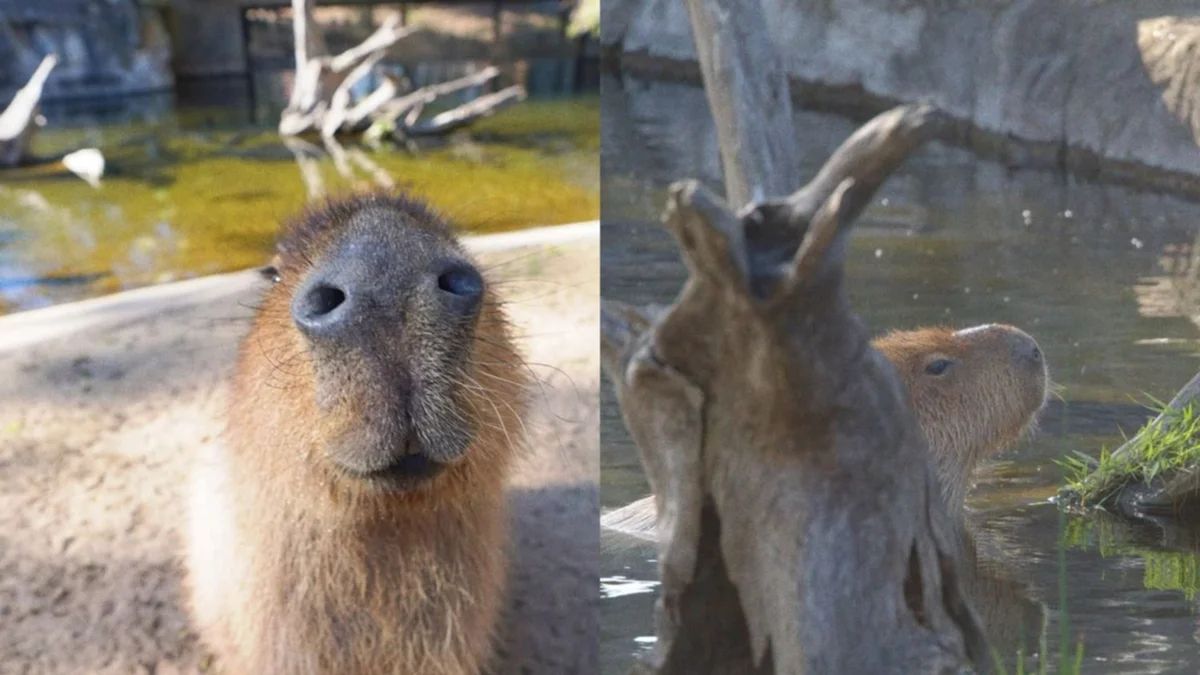
 One of the rescued capybaras. (Photo: La Voz de Cataratas).
In Leandro N. Alem, the division acted after receiving a report of wildlife pet keeping. Another capybara was found in good health at the reported home, and it was also taken to the rescue center.
After complying with biosafety protocols, specialists confirmed its controlled release in the town of 25 de Mayo.
Three birds located in Gobernador López
Simultaneously, in the municipality of Gobernador López, two interventions were carried out. In the first one, officials recovered two Argentine parrots (Myiopsitta monachus), and in the second one, a talking parrot (Amazona aestiva).
The birds were examined by professionals at the Ohana center, who confirmed they were in good health.
All of them were taken to the institution, where they will remain in controlled quarantine before being reintroduced into their natural environment, following the protocols for the rehabilitation of wildlife.
The Misiones Police reiterated that the possession of wild animals is prohibited by current legislation. They also emphasized the value of citizens’ reports as a key tool to combat illegal pet keeping and protect the province’s biodiversity.
How to stop wildlife pet keeping and illegal trading: the case of Santa Fe
The wildlife in Santa Fe is facing a crisis marked by illegal trafficking and pet keeping. Thousands of animals are taken from their natural habitat, suffer injuries, or are sold as commodities. This process disrupts their life cycles and has a significant impact on the ecosystems of the region.
 Pet keeping and the struggle in Santa Fe. (Photo: El Litoral).
So far this year, more than 400 individuals have regained their freedom after undergoing veterinary checks and rehabilitation processes. Most of them were birds, which are the most affected group by captures and commercialization. However, this number is just a fraction of the total animals that enter rescue centers.
The La Esmeralda Wildlife Rescue and Interpretation Center, in the city of Santa Fe, received over 700 specimens including birds, reptiles, and mammals. Some manage to be released, but many are condemned to live under human care due to injuries or behaviors acquired in captivity.
The entries occur in various ways: seizures in operations, road accidents, injuries from hunting, or voluntary surrenders by people unaware of the illegality of having a wild animal. This last practice often occurs with species like capybaras, which have mistakenly become popular as pets.
How to prevent trafficking and protect wildlife
The first step is to not buy or keep wild animals as pets. Each purchased individual fuels the illegal market and encourages new captures. Additionally, the law prohibits their commercialization and establishes penalties for those involved in this circuit.
If you come across an injured animal or one in irregular conditions, it is essential to report it to the environmental authorities instead of trying to care for it at home. Rescue centers have trained professionals for their recovery.
Education and community awareness are central tools to reverse this issue. Explaining to new generations the value of species like the talking parrot — capable of regenerating forests by dispersing seeds — is a way to build respect towards biodiversity. Only by letting animals be free can they fulfill their ecological role and ensure the health of ecosystems.



