



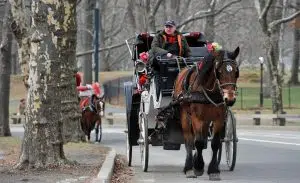
The announcement in New York regarding the elimination of horse-drawn carriages has once again sparked a global debate about the use of animals in tourism and recreational activities. The city plans to replace these traditional vehicles with electric versions starting in 2026, combining safety, modernization, and animal welfare. The measure is presented as a milestone in the transition towards a more sustainable tourism.
For decades, carriages have been part of the urban landscape of Manhattan. However, recent incidents involving collapsed horses in public areas, deaths, and accidents have raised doubts about the viability of maintaining this practice. For animal advocates, the measure marks the beginning of a cultural shift that seeks to set limits on exploitation in the name of entertainment.
The plan includes providing financial compensation to drivers, the possibility of integrating into the electric carriage system, and job retraining. The initiative not only addresses animal abuse but also aims to reduce traffic risks and enhance the tourist experience with vehicles of lower environmental impact.
What happened in New York invites reflection on local practices in countries like Argentina, where the use of horses remains present in multiple areas, from rural to touristic, with an unequal and often insufficient regulatory framework.
Towards Responsible Tourism Free of Animal Exploitation
The replacement of carriages with electric versions in New York opens the door to a model that can inspire initiatives in Argentina. Responsible tourism seeks authentic experiences that respect both culture and animal welfare. In this sense, alternatives such as ecotourism, hiking, or bike tours are becoming consolidated as viable and sustainable options.
The transition also depends on political will and a clear legal framework that unifies criteria nationwide. Strengthening the enforcement of Law 14.346, advancing in programs to replace animal-drawn vehicles, and promoting job retraining for the involved sectors are fundamental steps to prevent horses from being subjected to risky practices.
Like in New York, Argentina faces the challenge of preserving its equestrian tradition without resorting to mistreatment. The path towards sustainable tourism requires creativity and commitment, but also empathy towards animals that have accompanied human development for centuries.
The discussion is no longer just cultural but also ecological. Rethinking the use of horses in urban and touristic activities is part of a broader process that seeks fairer, more sustainable societies that are compassionate towards all forms of life.
 New York bans horse rides to combat animal exploitation. Photo: New York.
The Argentine Case: Between Tradition and Legislation
In Argentina, horses play a central role in cultural identity and in productive activities. From taming and horseback riding to rural tourism and folkloric shows, their presence remains deeply rooted. However, the debate on animal welfare grows as reports of abuse and accidents in urban environments multiply.
Several provinces have specific regulations governing the use of horses for animal-drawn vehicles. Cities like Cordoba, Rosario, and Mar del Plata have advanced ordinances that progressively ban this practice, replacing it with motorized or electric vehicles. These programs include the provision of motorized carts and work training for those who rely on animals as a means of livelihood.
Regarding touristic and sports activities, the National Law 14.346 establishes penalties against abuse and animal cruelty. However, its application is uneven and often insufficient to ensure dignified treatment. Controls depend on provincial and municipal governments, creating gaps in the oversight of equestrian shows, mass horseback rides, or traditional parades.
The contrast between tradition and modernity highlights the need to review the role of horses in urban and rural life with an ecological and ethical perspective. It is not about erasing customs but about adapting them to a context where respect for animals and the reduction of environmental impacts take priority.



