



Used cooking oil (UVO) is a household waste as common as it is dangerous.
Therefore, managing this waste is not an option, but a strategic necessity to take care of urban infrastructure and preserve the environment.
Facing this challenge, the municipality of General Pico, in the province of La Pampa, promotes a proactive solution that turns the problem into a valuable resource.
Through a system of differentiated collection and the update of its commercial registry, the goal is to optimize the management of used cooking oil.
Improper disposal of this waste generates a cascade of risks that affect the entire community. Analyzing these dangers is the first step to understand the urgency of taking action.
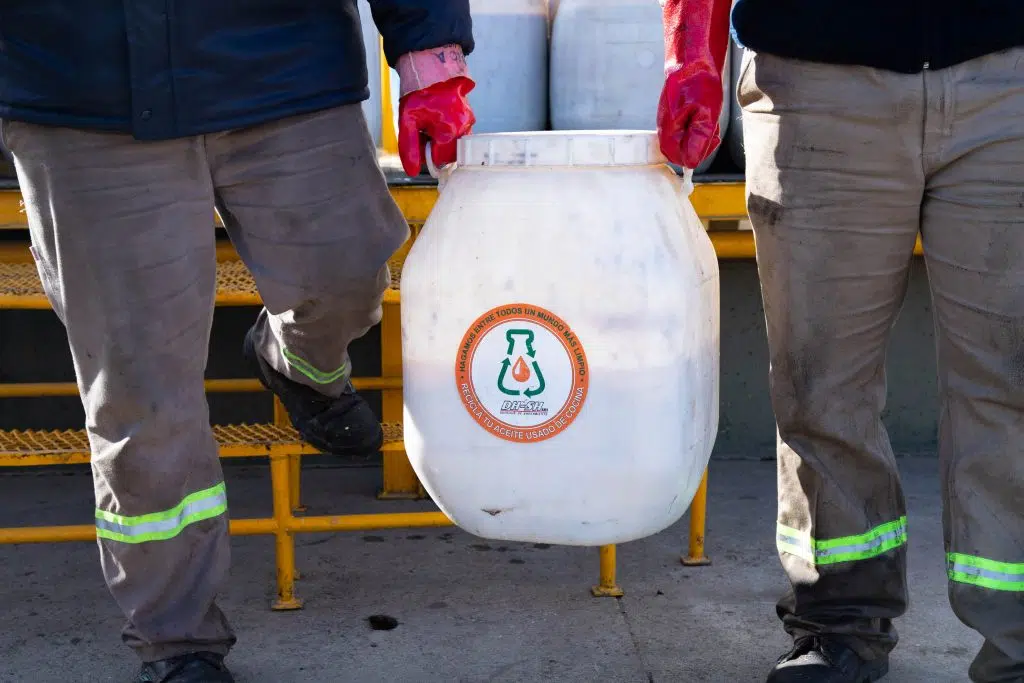
Used Cooking Oil: Why Is It Dangerous?
It is crucial to differentiate motor oils, classified by law as hazardous waste, from vegetable cooking oils.
Although they do not share the same category, the latter are “potentially dangerous if not disposed of correctly,” as warned by Melina Medus, director of Environment and Development of General Pico.
The first risk manifests in the sanitary network. When poured down the drain, the oil cools, solidifies, and adheres to the pipes.
This accumulation creates clogs that obstruct the sewer system, causing serious health crises and costly repairs.
The second is a direct ecological threat to our most vital resource.
This waste has a very high contaminating power, and as Medus emphasizes, “a very small dose of these oils thrown into a body of water or into the aquifer is enough to contaminate it.”
Finally, there is a public safety risk. Therefore, the official requests to avoid disposing of used cooking oil with household waste.
In these cases, “a garbage truck can cause a spill on the street and lead to accidents.” This represents a serious danger, particularly for motorcyclists and cyclists who may suffer falls.
How General Pico’s Used Cooking Oil Management Plan Works
The municipal program presents a dual, accessible, and free strategy designed to facilitate the correct disposal of oil for both individual citizens and large commercial generators.
For Individual Residents
Any resident can contribute by following these simple steps to dispose of their used cooking oil:
- Wait for the used oil to cool completely.
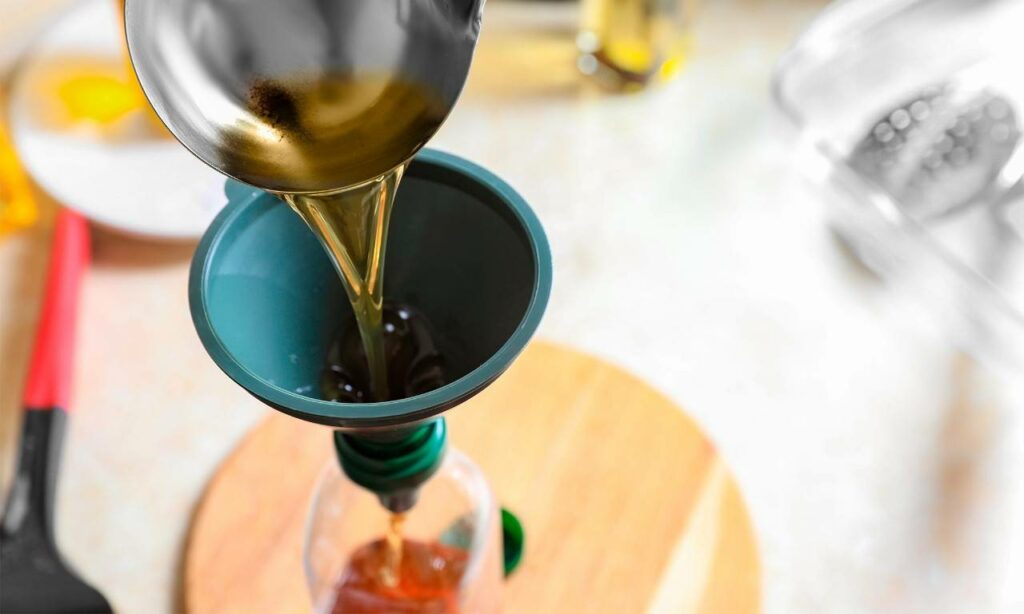
- Carefully pour it into a clean plastic bottle and close it with its cap.
- Take the bottle to the Northern Transfer Station (CAT), where there is a specific space for collection.
For Large Generators (Businesses and Gastronomy)
Businesses with high volumes of UVO, such as rotisseries or restaurants, have a tailored solution through a free agreement with the company RSE Ambiental (Ecopor), which carries out monthly collections.
For this, the municipality is actively updating its registry of generators.
“We are currently in a stage of updating this registry, so the merchants we visit should not be alarmed; it is simply to offer them this management alternative,” clarified Medus.
This organized system ensures that the collected used oil starts a new and valuable life cycle.

From Waste to Resource: The Final Destination of the Collected Oil
The proper management of used vegetable oils in General Pico is a clear example of a circular economy, where a potentially contaminating waste is transformed into a product of high added value.
All the collected oil, from both residents and businesses, is entirely destined for the production of biodiesel, a cleaner and more sustainable biofuel than petroleum derivatives.
The current collection volume is between “20,000 and 30,000 liters annually”. Although it is a significant figure, the municipality acknowledges that the city’s potential is much greater and seeks to increase it.
However, this virtuous cycle is fragile



