



In the first ten months of 2025, Santa Fe achieved the release of 460 wild animals in a commitment to wildlife conservation.
The majority of these were rescued from situations of pet ownership and illegal trafficking.
The figure reflects a sustained policy of rescue and reintegration that returns native species to their natural habitats.
Of the total number of released specimens, 392 were birds, 61 mammals, and 7 reptiles.
All had been recovered by the Directorate of Sustainable Wildlife Management, in collaboration with the Rural Guard of the Santa Fe Police, following reports of improper possession.
“This is a programmatic action linked to a sustained provincial strategy of wildlife rescue, rehabilitation, and reintegration,” said Enrique Estévez, Minister of Environment and Climate Change of Santa Fe.
The official highlighted that this “reflects the commitment of Governor Maximiliano Pullaro and Vice Governor Gisela Scaglia to the defense and preservation of Santa Fe’s biodiversity“.
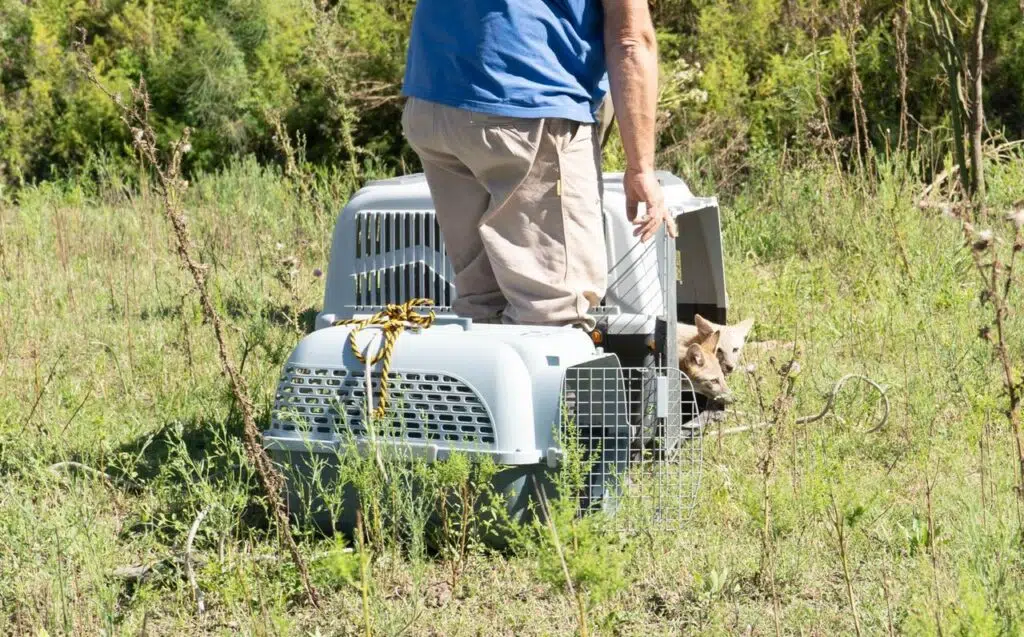
Santa Fe bets on conservation: the rescue and rehabilitation process
The rescued wild animals enter the Wildlife Rescue, Research, and Interpretation Center “La Esmeralda”, located in the city of Santa Fe.
There, they undergo a rigorous process that includes initial veterinary review, quarantine, recovery, and ethological evaluation.
Only after completing these stages are the specimens reintroduced into appropriate natural environments such as nature reserves and protected areas.
The task is carried out with the support of territorial actors and scientific institutions.
May recorded the highest number of releases of the year, with 221 animals reintroduced, mostly songbirds recovered from illegal trade.
Interventions with mammals such as capybaras, opossums, coatis, and howler monkeys are also noteworthy.

Emblematic case: the rescue of a maned wolf
One of the most significant rescues was that of a juvenile maned wolf found in the city of Coronda.
After receiving specialized veterinary care at La Esmeralda, the specimen was reintroduced into the “El Fisco” Natural Reserve in the San Cristóbal department.
The operation included the placement of a telemetry collar that will allow monitoring of its movements and generate key information for the protection of this species, declared a Natural Monument by Provincial Law No. 12.182.
“The recovery and release of this maned wolf reflect the path we are on: building a model of active conservation, with science, environmental commitment, and respect for biodiversity,” said Estévez.

Santa Fe: the transformation of La Esmeralda for conservation
The La Esmeralda Center is undergoing a profound process of institutional transformation.
The goal is to consolidate it as a public space dedicated to the care, recovery, and rehabilitation of wildlife, the generation of scientific knowledge, and environmental education.
This change represents an evolution from the historical role of the site, which functioned for decades as a zoological station with a recreational focus.
Today, it is projected as a modern center that integrates science, technology, and environmental commitment in the conservation of Santa Fe’s biodiversity.
The center is currently developing various lines of work:
- specialized veterinary care;
- reintegration of specimens;
- collaboration with universities, other wildlife centers, and local governments;
- development of long-term conservation strategies.
Estévez emphasized that “biodiversity is not an abstract concept: it is part of the fabric that sustains life in our territories”.
And he reinforced: “These numbers represent that as a society we can reverse damage and protect our biodiversity“.
The Ministry reminds that in any case of illegal possession of wildlife or pet situations, reports should be made to 911, a channel that allows activating the intervention protocol with security forces and technical teams.



