



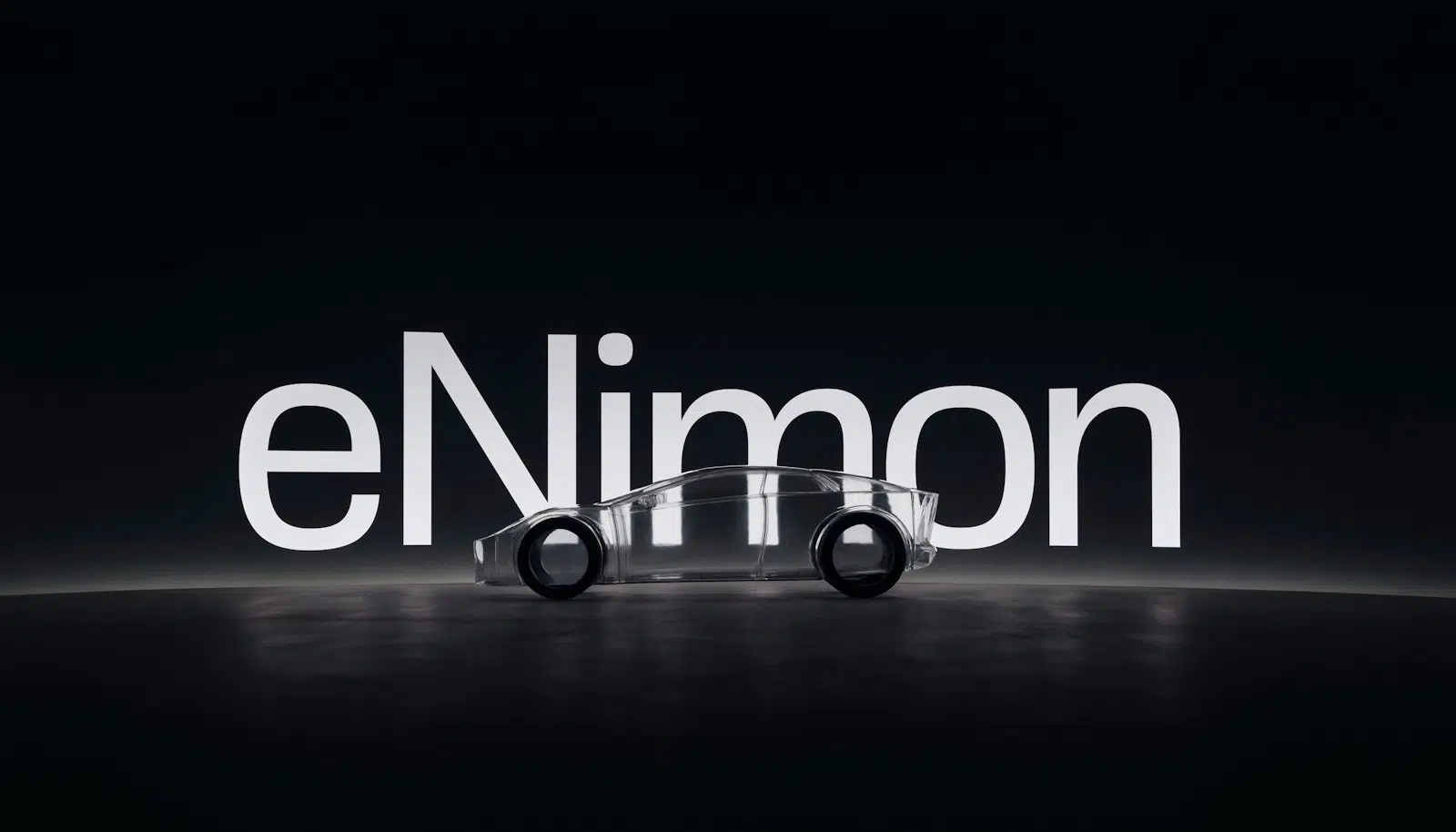
The eNimon, presented at the National Museum of Science and Technology in Stockholm, is the world’s first electric car made without any metal or mineral. The result is a transparent, immobile, and symbolic car. It has no wheels, engine, or battery, but it conveys a crucial message: without mining, no energy transition is possible.
A car that doesn’t work, but discomforts
More than 90% of the components of an electric car come from mining resources. Without lithium, there are no batteries; without copper, there is no wiring; without rare earths, there are no electric motors. The eNimon is not designed to drive but to discomfort and provoke reflection.
The installation reminds us that although electrification is presented as a sustainable solution, it depends on materials that can only be obtained from the underground. Demonizing mining without considering responsible alternatives is to ignore the material basis of green technologies.
The sustainability paradox
The paradox is clear: to reduce emissions we need clean technologies, but those technologies require critical minerals whose extraction generates environmental and social impacts. The key is not to stop extracting but to change how it is extracted.
Companies like Sandvik are driving a transformation towards more sustainable mining, with automated processes, energy efficiency, waste reduction, and the use of digital technologies to minimize environmental impact.
Innovations in sustainable mining
In countries like Sweden, Finland, and Canada, fully electric underground mines are already being developed, with intelligent ventilation systems and emission-free machinery. Other initiatives include:
- Reuse of tailings.
- Recovery of minerals from industrial waste.
- Reduction of water use through closed circuits.
These practices aim to align mining with the principles of sustainability and circular economy.
The urgency of critical minerals
The International Energy Agency (IEA) warns that the demand for minerals such as lithium, cobalt, and nickel will multiply between 4 and 6 times by 2040 if we want to meet climate goals. However, investment in exploration and development of new mines remains insufficient.
Adding to this is a geopolitical dilemma: a large part of these resources is concentrated in a few countries, increasing the risk of dependency and vulnerability. Diversification of sources, along with advanced recycling of materials, is essential to ensure security and stability in the energy transition.
The cultural challenge: rethinking mining
The great challenge is not only technological but also cultural. It is necessary to break with the vision of the “polluting miner of the past” and show what mining aligned with sustainability can be today.
This implies:
- Public education on the role of minerals in the energy transition.
- Traceability of materials to ensure transparency.
- Independent environmental certifications that endorse ethical and responsible practices.
A car that reveals the invisible
The eNimon is an immobile object, but its message is powerful: the electrification of the world depends on mining. The energy transition cannot be built without lithium, copper, or rare earths. The challenge is to transform the way we extract and manage these resources, integrating innovation, sustainability, and circular economy.
The transparent car in Stockholm reminds us that true electric mobility requires not only motors and batteries but also a change in mindset about how we produce and consume the materials that make the energy future possible.



