



Eight greyhounds were rescued in Las Heras, Mendoza, following an investigation that dismantled a network dedicated to organizing illegal races. The animals are now under judicial custody, in a process that includes their physical and emotional recovery.
After the rescue, protective organizations began working to find each one a foster home and a safe environment. This case has once again brought to light the structural violence suffered by exploited greyhounds in clandestine circuits.
The intervention helped stop a circuit operating in secrecy, driven by betting and abusive practices. The rescue also provided an opportunity to highlight the urgency of strengthening animal protection policies.

The ecological and social impact of animal exploitation networks
Illegal races not only represent a crime but also a network that affects animals, communities, and territories. Clandestine circuits often operate in rural areas where local ecosystems are disrupted and hunting is encouraged for training.
These activities promote the irregular circulation of animals, the abusive use of public space, and environmental degradation. The rescue of the greyhounds highlights the need to integrate animal protection into environmental policies.
Systematic abuse reflects an extractivist culture that uses animals as disposable resources. In this context, each operation contributes to a paradigm shift towards more responsible and respectful practices.
The harm suffered by greyhounds subjected to illegal races
Exploited greyhounds in clandestine circuits often live under extreme conditions that impact their physical and mental health. Many of these animals are subjected to forced training, insufficient diets, and long hours of exploitation without veterinary supervision.
The most common injuries include fractures, muscle tears, arrhythmias, and premature wear of joints. This physical violence is compounded by abandonment when they are no longer “useful” for competition.
Discarded animals are often abandoned, sold to hunting networks, or even sacrificed. The emotional damage is also profound: fear, chronic stress, and difficulty socializing.
The recovery process requires veterinary care, behavioral support, and loving environments that allow them to rebuild their well-being. Therefore, responsible adoption is key to reversing the vulnerability in which they were kept. Each adoptive family becomes an essential part of the recovery process.
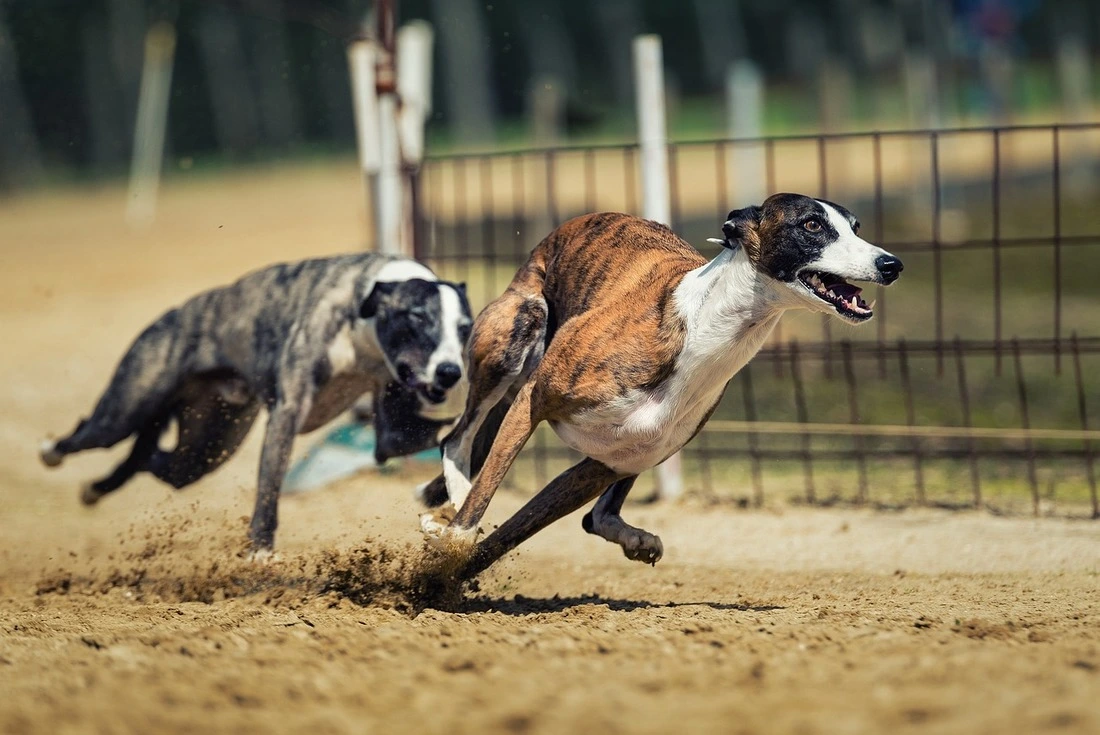
Are greyhound races a crime in Argentina? Current legal framework
Since 2016, dog racing has been prohibited throughout the national territory. The Law 27.330 establishes the absolute prohibition of organizing, promoting, or participating in races of any breed.
The law provides for penalties of three months to four years in prison and economic fines for those who break the law. Additionally, animal abuse and cruelty are penalized by Law 14.346, which sanctions those who subject animals to unjustified suffering.
The use of greyhounds for lucrative purposes, forcing them into training or competitions that affect their integrity, falls under this legislation. These laws act complementarily, reinforcing the comprehensive protection of exploited animals.
In Mendoza, as throughout the country, any activity related to racing, training for competitions or betting constitutes a crime. Authorities have the power to seize animals, close facilities, and penalize those responsible. The recent operation in Las Heras falls within this legal protection framework.
Rebuilding: towards a new life for rescued greyhounds
The eight greyhounds are under a custody regime that ensures veterinary control, proper nutrition, and a safe environment. Organizations are looking for families that understand their special needs and are willing to support them in their rehabilitation.
The goal is to ensure them a future where they can live without fear and with freedom. Adoption plays a fundamental role in the repair of the damage caused by clandestine practices. Each foster home becomes a space of transformation and care.
Rescuers emphasize that these animals, despite their traumatic experiences, are often affectionate and adaptable. The story of these greyhounds is also a call to social action against animal abuse.
Their rescue demonstrates the positive impact of citizen commitment and coordinated interventions. The challenge now is to support their new stage and sustain policies that prevent future cases.



