



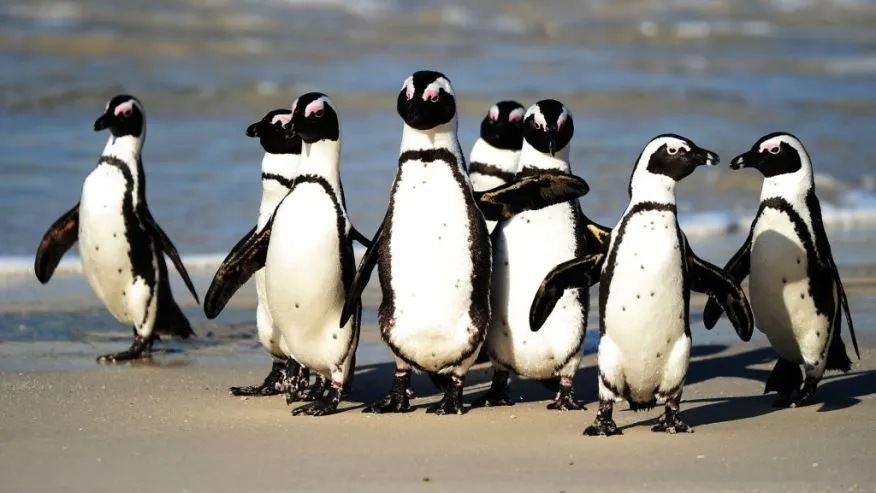
The African penguin (Spheniscus demersus) faces a serious threat that could lead them straight to extinction: the lack of food. According to a study published in the journal Ostrich Journal of African Ornithology, it is estimated that about 62,000 breeding individuals died due to this issue.
These animals, which inhabit the coasts of Namibia and South Africa, have been classified as a species critically endangered by the International Union for Conservation of Nature (IUCN) since 2024. This is because their population has been severely reduced in a short period of time.
In fact, the most affected breeding colonies are those on Dassen Island and Robben Island, considered the most important. It is estimated that around 95% of the penguins that reproduced in 2004 died within eight years.

The lack of food, a factor that could be key to their extinction
According to a study conducted by the international team of researchers from the Department of Forestry, Fisheries and the Environment of South Africa and the University of Exeter, between 2004 and 2011, the presence of sardines on the west coast of South Africa decreased by 25%.
This decline generated a severe food shortage for the African penguins. But the reason for the reduction of sardines would be found in the environmental changes that caused modifications in the temperature and salinity of the water.
Added to these factors is the overfishing that, in 2006, reached 80%, thus preventing these birds from feeding properly and preparing for their molting season.
What does this mean? Once a year, penguins change their plumage to maintain their insulation and waterproofing. During the 21 days this process usually lasts, these birds cannot eat, as they will not have the necessary protection to hunt in the sea. For this reason, it is important that, in the days prior, they can feed and gain weight to survive this period.
How to save this species that could disappear by 2035?
According to experts, one way to save African penguins from extinction would be to restore the sardine biomass in key feeding areas. This would help ensure food for these birds, as long as proper fisheries management is carried out, since in these cases it is essential.
In fact, in March of this year, the South African government decided to ban commercial net fishing in waters near the six largest breeding colonies in the region. This measure was celebrated by the Intergovernmental Oceanographic Commission (IOC) of UNESCO, as it highlighted its importance for protecting the species.
Furthermore, this same organization is carrying out different measures to save the species. One of them is artificial nests, where predators are managed and tasks of rescue, rehabilitation, and rearing of adult penguins and chicks are carried out.
What is the role of sardines in the ecosystem and how can their absence become a problem?
Sardines are crucial in marine ecosystems, as they are the base of the food chain, feeding large and small predators, transferring energy from plankton to the ecosystem.
Their absence could cause the collapse of trophic networks, affecting whales, dolphins, sharks, seabirds, salmon, and tuna, destabilizing the ecological and economic balance of fisheries.
In summary, sardines are a fundamental pillar of ocean life; their disappearance would trigger a domino effect detrimental to biodiversity and marine resources.


