



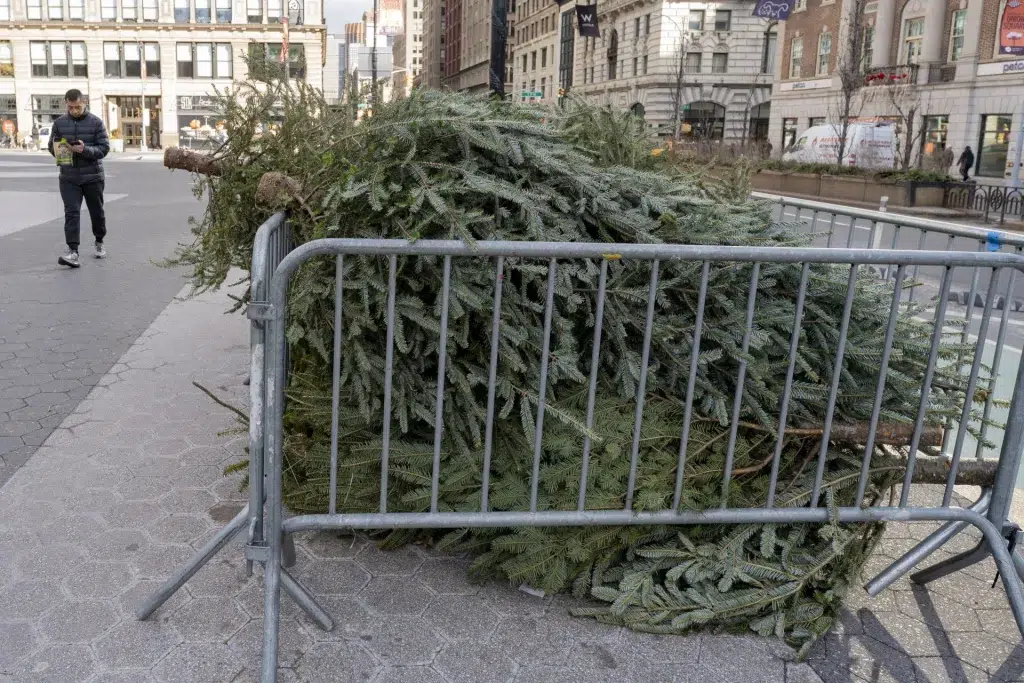
In Washington Square Park, under the iconic arch, two realities coexist: a 14-meter illuminated tree and, a few meters away, a cemetery of dry trees piled up waiting for their transformation.
Mandatory composting of Christmas trees and citizen participation
The Department of Sanitation of New York established Christmas tree composting as mandatory.
The city collects undecorated trees and Christmas wreaths on weekly compost collection days.
New Yorkers can place their trees on the curb or take them to specific collection points.
However, some less civic-minded residents abandon their trees next to garbage bags, leaving fir skeletons on the streets for days or weeks.
“I like the idea of my Christmas tree becoming mulch. That it has a second life,” said Lauren Gentry after placing her tree on the mound at Washington Square Park.
Mulchfest: see the transformation live
To encourage participation, the Mulchfest (mulch festival) is held every year.
During this event, residents can watch as the tree that crowned their living room is shredded live.
The resulting wood chips are used to nourish trees and make the city greener.
This year, the festival will be held during the weekend of January 10 and 11.
The initiative not only benefits the environment but also educates the population about the importance of organic recycling in urban settings.
The business behind Christmas tree collection in New York
Many New Yorkers hire specialized companies for the transport and collection of their used Christmas trees.
“Our company is probably going to take out about 4,000 trees,” explained Victor, a worker at NYC Trees.
César, from the same company, detailed that a client paid 500 dollars for the transport of the tree to their home, collection after Christmas, removal of lights, and transport to recycling.
Prices vary depending on the size of the tree and whether it includes removal of lights and decorations.
According to the workers, the company earned approximately 2 million dollars in 8 weeks.
The challenges of urban recycling
Gentry usually waits until after New Year’s to dispose of her tree.
However, this year she had to do it earlier because after two weeks of vacation the tree died from lack of water.
“At this point, my tree is basically firewood,” she lamented. The hardest part of the process is getting the tree out of the apartment and down the stairs, although living close to the square makes the transport easier.
The program demonstrates how large cities can implement sustainable solutions that turn holiday waste into valuable resources for the urban ecosystem.


