



The large prehistoric dinosaurs and mammoths moved at much slower speeds than had been estimated for decades. This was revealed by an international study published in Scientific Reports in August 2025.
According to the research, these colossi traveled distances at a pace similar to that of a fast human walk. This changes the view of their ecological habits and interaction with the environment.
Maximum recorded speeds
The results show figures much lower than traditional estimates:
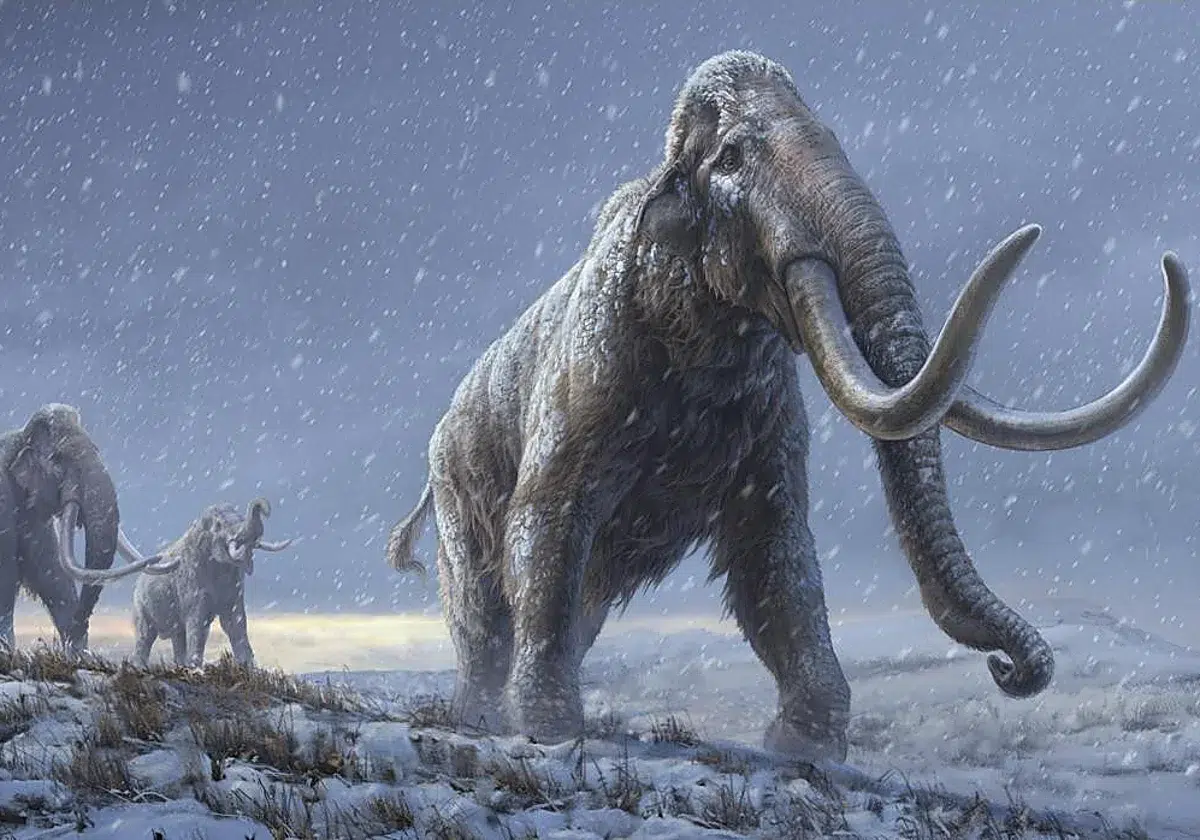
- Woolly mammoth (Mammuthus primigenius): barely exceeded 20 km/h.
- Mammut borsoni: would not have exceeded 15 km/h, despite its weight of up to 16 tons.
- Argentinosaurus hiunculensis: with its 75 tons, would not have exceeded 10 km/h.
- Turiasaurus riodevensis: discovered in Teruel, with 42 tons, reached only 11.8 km/h.
- Mammuthus meridionalis (Orce basin, Granada): maximum speed of 18 km/h, even in the specimen known as the “Titan of the Pleistocene”.
These values are very close to —and even below— the marks obtained by human athletes in fast walking, and far from the speeds of current large terrestrial runners.
Innovative methodology
The research was coordinated by Javier Ruiz (UCM) and Juan Manuel Jiménez-Arenas (University of Granada), in collaboration with the University of Queensland (Australia) and the University of Helsinki (Finland).
The comparative analysis was carried out using empirical data from current elephants, the heaviest terrestrial animals of the living fauna, which do not exceed 25 km/h. Based on these observations, the speed thresholds of the large extinct mammals were redefined.
The scientists explained that previous studies overestimated the real speed due to the use of equations that grouped animals with diverse anatomies and locomotions. This led to calculating an elephant speed up to 70% higher than the real one, generating errors in the reconstruction of the ecological behavior of extinct species.
Factors determining speed
The article emphasizes that the speed of movement depends on:
- Type of locomotion: plantigrade animals versus graviportal (with columnar legs adapted to support large weights).
- Body mass: from 100 kg, the maximum speed decreases as the size increases.
Graviportals, such as large dinosaurs and mammoths, show much lower speeds compared to digitigrades or unguligrades.
Implications for paleobiology
The new results allow paleontologists to reconstruct more accurately how large-sized species that populated the Earth moved, migrated, and used their environment.
This methodological adjustment marks a turning point in functional paleobiology, correcting errors that for years influenced the interpretation of the ecological dynamics and survival of large extinct vertebrates.
The study by UCM and its collaborators has become a reference for understanding phenomena of the remote past. By using current data from living animals, it offers greater scientific rigor to answer questions about the speed limits and locomotor capabilities of prehistoric giants, providing relevant insights for future paleontological research.


