



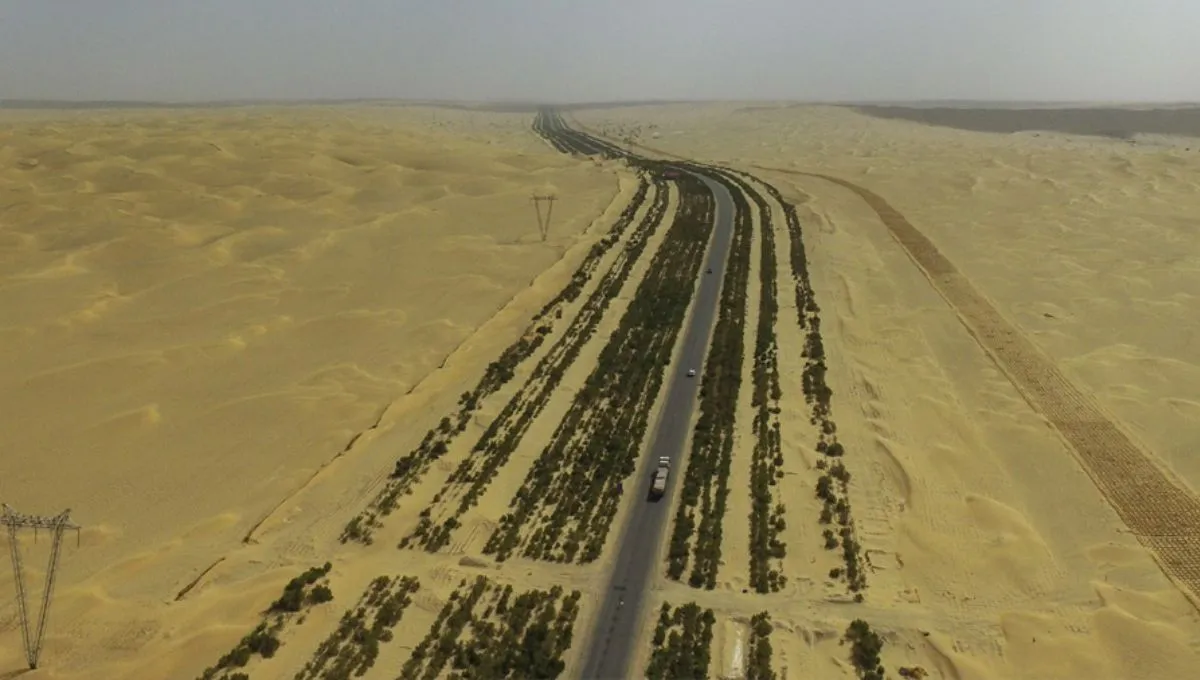
In the north of China, a silent transformation is advancing over territories historically dominated by the desert. It is not about traditional infrastructure, but a living wall formed by trees, shrubs, and vegetation adapted to aridity.
Thus, the landscape changes gradually but persistently. Where barren soil once prevailed, today green strips extend, aiming to halt the expansion of the sand and recover lost ecological functions.
This process is part of the so-called Great Green Wall of China, an initiative that redefines the relationship between human development and nature in vulnerable regions.
A program born to stop desertification
The project began in 1978 under the name of Three-North Shelterbelt Program. Its initial goal was to contain desertification and reduce the sandstorms that each spring advance from Inner Mongolia towards cities like Beijing.
To achieve this, continuous forest belts were designed around the country’s main deserts. In this way, the vegetation acts as a natural barrier that stabilizes the soil and decreases the movement of the sand.
Over time, the initiative incorporated complex technical solutions. In several areas, millions of tons of sand were removed to stabilize the terrain, combining straw barriers, controlled irrigation, and solar energy.
From the Taklamakan to the Gobi: a continental-scale wall
So far, the project has allowed the planting of more than 66 billion trees in northern China. As a result, extensive areas that were once degraded have begun to recover vegetative cover.
One of the milestones was the construction of a green barrier of 3,046 kilometers around the Taklamakan Desert. This action marked a turning point in the fight against the expansion of the sand.
Additionally, the wall extends over regions near the Gobi, strengthening a protection system that impacts both natural ecosystems and agricultural areas.
What are the environmental and social benefits of this measure?
The Great Green Wall not only seeks to halt the advance of the desert. At the same time, it helps improve the air quality and reduce the intensity of the sandstorms that affect Beijing and other cities.
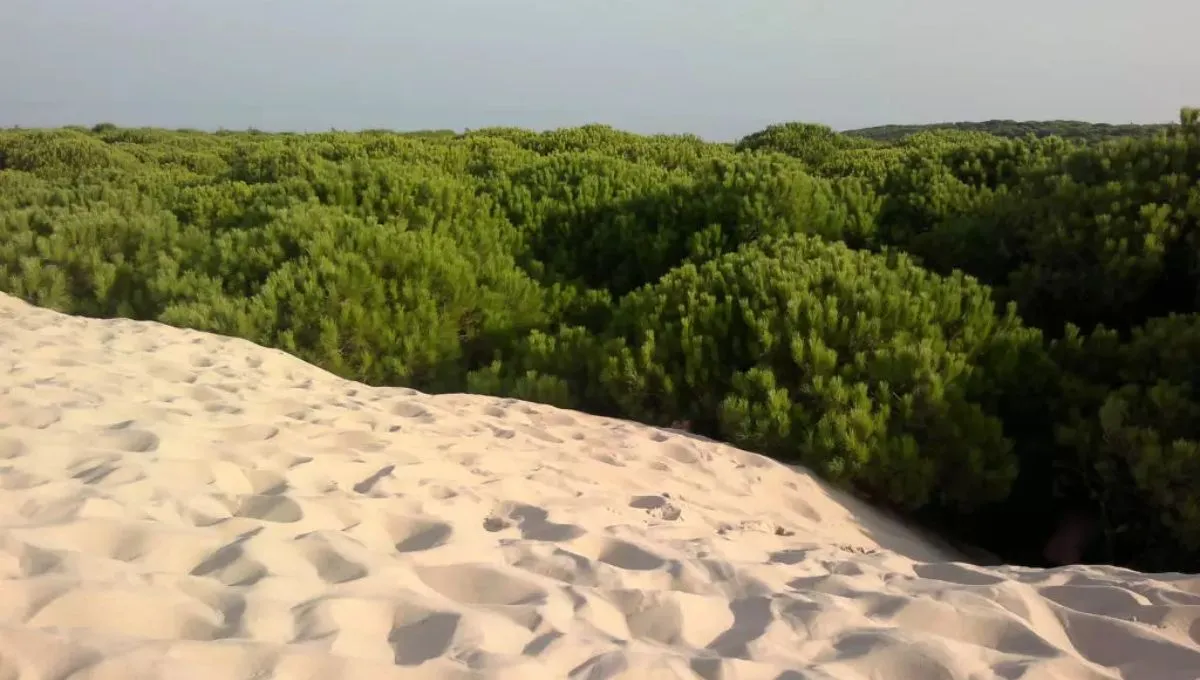
On the other hand, soil stabilization protects productive lands and favors the recovery of local biodiversity. The reappearance of birds, insects, and native plants is a sign of these changes.
Moreover, the project generates employment for rural communities, integrating environmental restoration with sustained economic opportunities.
The potential advantages of a green wall by 2050
Looking to the future, the initiative plans to extend the wall to reach about 4,500 kilometers by 2050. This would allow the consolidation of green corridors capable of withstanding extreme climate scenarios.
Among the potential advantages is greater resilience to climate change, by reducing erosion and improving the soil’s capacity to retain water.
Finally, the project offers a replicable model on a global scale, demonstrating that massive ecological restoration can be a key tool to combat desertification and protect millions of people.


