



The presence of boars in Bariloche is no longer an occasional occurrence. In various parts of the city, a symbol of Patagonian tourism, the animals have become part of the urban and rural landscape, forcing municipal and provincial authorities to design population control strategies.
The Undersecretary of Planning, Alfredo Allen, explained that the work began in the Llao Llao Municipal Park, in coordination with the Subsecretariat of Wildlife, the Subsecretariat of Livestock, and the INTA. There, a controlled hunt was implemented, which allowed the elimination of an entire herd, although the remaining specimens migrated towards the mountains in search of food.
Most Affected Areas
The situation is different in the east of the city, in neighborhoods such as Circunvalación, El Cóndor, and Las Victorias, where the boars maintain a more stable presence. Coming from watercourses like the Arroyo del Medio and the Ñirihuau, they cross into the urban area to feed on household waste.
In Llao Llao, one of the most effective tools was the installation of a trap corral, although it has not yet been implemented in the eastern area. Authorities are evaluating whether it is necessary to proceed with this system, given that the number of observed specimens is not very high.
Eradication Impossible, Control Necessary
Allen was categorical: eradication is not a realistic option. “We have to get used to living with them. As happened with the pines, we must learn to coexist and see what the best possible control is,” he stated.
The official recalled that in the Río Negro Valley the expansion of the boar has caused serious productive and environmental damage, reinforcing the need for preventive measures in Bariloche.
Although boars do not usually attack, the risk arises if they feel threatened or cornered, especially when someone gets between a mother and her young, or when they are harassed by dogs.
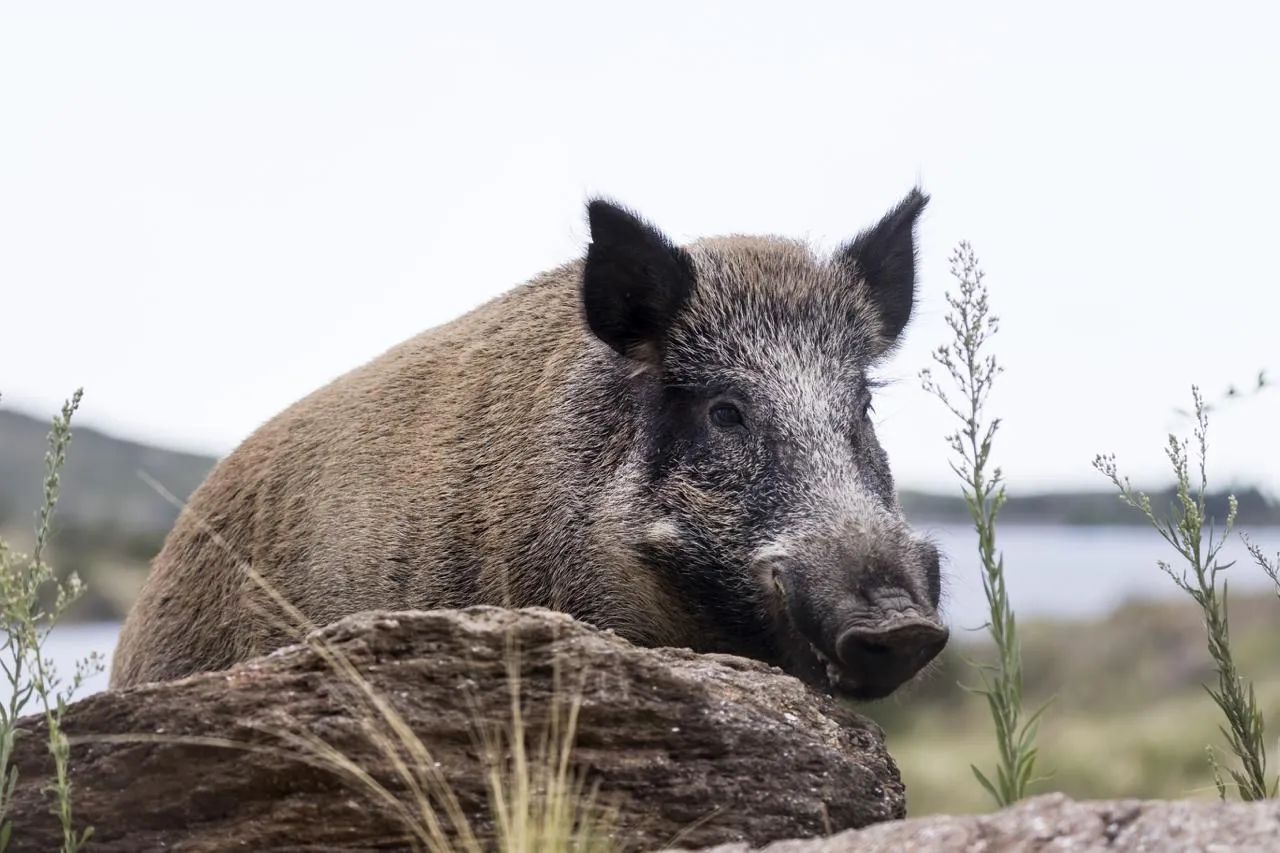
An Invasive Species in Patagonia
Boars were introduced to the region at the beginning of the 20th century for sport hunting. Without natural predators and with a high reproductive capacity, their populations grew uncontrollably.
- Introduction and expansion: they arrived in La Pampa and Neuquén between 1905 and 1922, becoming feral after the abandonment of hunting reserves.
- Lack of predators: in Argentina, they have no natural competitors to limit their growth.
- Adaptation to the urban environment: they easily access garbage, compost, and fruits in residential gardens.
- Environmental and economic impact: they destroy crops, fences, and local biodiversity by disturbing the soil, in addition to generating health risks.
Current Situation and Measures
Authorities recognize that coexistence is inevitable. The current approach focuses on:
- Population control through traps and regulated hunting.
- Urban waste management, to reduce the animals’ access to food sources.
- Citizen awareness, to avoid practices that favor their presence in residential areas.
Bariloche faces the challenge of coexisting with an invasive species that arrived more than a century ago and adapted to the urban environment.
The key lies in responsible control, community waste management, and risk prevention, to minimize environmental and economic impact without falling into the illusion of an impossible eradication.



