



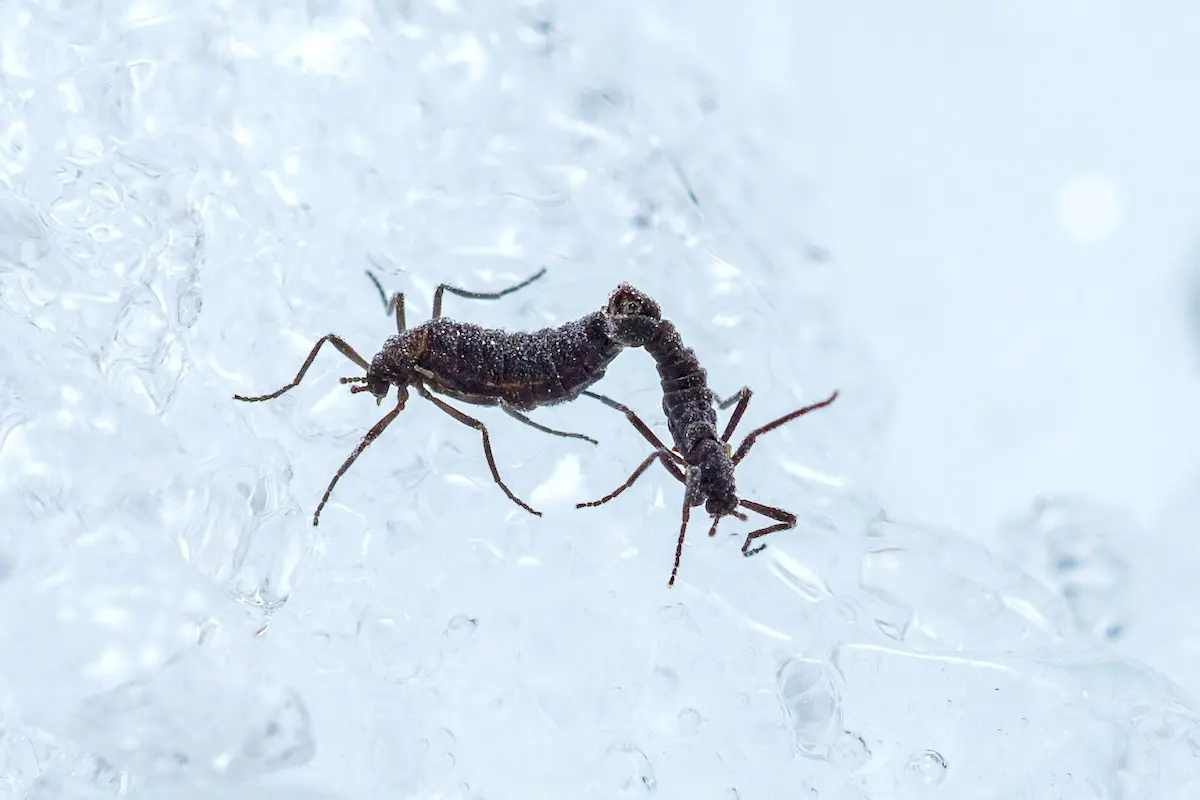
An international investigation led by the University of Kentucky and published in Science of the Total Environment confirmed for the first time the ingestion of microplastics by Belgica antarctica, the only native insect of Antarctica and the southernmost terrestrial animal on the planet.
This wingless mosquito, the size of a grain of rice, is capable of surviving extreme conditions: below-zero temperatures, dehydration, ultraviolet radiation, and salinity variations. Its larvae inhabit moss and algae mats on the Antarctic Peninsula, where they play a crucial role in nutrient recycling and soil health.
Impact on Survival
Experiments revealed that although larvae exposed to high concentrations of microplastics maintained their survival rate and basic metabolism, they suffered a significant reduction in their fat reserves.
- Fat functions as an “energy battery” to withstand prolonged winters.
- Without these reserves, their ability to complete the life cycle or withstand environmental stress is compromised.
This finding is alarming because it shows that even highly resistant species can have their survival affected by plastic pollution.
Field Evidence
Researchers analyzed larvae collected from 20 sites on 13 islands of the Antarctic Peninsula. Using chemical imaging techniques, they detected microplastic fragments in the digestive system of wild specimens.
- Two particles were found in 40 larvae analyzed.
- Although the number is low, it constitutes an early warning signal: it confirms that plastics have already penetrated the terrestrial food chain in Antarctica.
Scope of the Problem
Plastic pollution in the region is not limited to insects:
- A study by the University of Canterbury found an average of 29 microplastic particles per liter in freshly fallen snow on the Ross Ice Shelf.
- The detected debris includes textile fibers, PET, and synthetic rubber.
- They arrive via ocean currents and atmospheric transport, even from Patagonian cities.
Environmental Consequences
Microplastics generate multiple impacts:
- Acceleration of ice melting: they reduce albedo, alter surface roughness, and stimulate microbial activity.
- Marine ecosystem: they are ingested by birds, fish, and krill, causing suffocation, reduced food intake, and genetic alterations.
- Terrestrial ecosystem: they affect the insect Belgica antarctica, demonstrating that even the most isolated environments are not free from pollution.
Ongoing Research
Organizations like the IAEA and CONICET monitor the magnitude of this pollution to understand its long-term impacts. The study underscores the urgent need to:
- Measure plastic levels in polar soils.
- Analyze interaction with other risk factors, such as climate change, which makes the region warmer and drier.
- Implement global plastic reduction policies, as no region of the planet is free from these residues.
The presence of microplastics in Antarctica, even in its only native insect, demonstrates that plastic pollution is a global and cross-cutting problem. What was once considered an untouched sanctuary already shows signs of degradation.
Protecting polar biodiversity requires urgent actions to reduce plastic use and curb its spread in the most remote ecosystems on Earth.


