



The commercial court declared the bankruptcy of Plunimar S.A., the operating company of the Aquarium of Mar del Plata. Consequently, the process revealed an issue that goes beyond financial matters: the sale of animals.
Currently, 66 animals remain on the premises under judicial administration. Among them are penguins and sea lions that require constant attention.
Additionally, the case is being processed in the National Commercial Court No. 20. Thus, a scenario has opened where the priority is not only economic but also environmental.
Captive Fauna as Asset and Responsibility
Within the establishment there are 56 Magellanic penguins, two king penguins, four rockhopper penguins, and four sea lions. Therefore, daily maintenance is essential.
However, the company acknowledged economic limitations to sustain this structure. Consequently, the care of the animals has become an urgent challenge.
Furthermore, twelve employees have been assigned exclusively to feeding, health, and security tasks. This minimal structure aims to prevent further deterioration.
On the other hand, the animals are part of the judicial asset. This means that any transfer or assignment must be authorized by the court.
Attempts to Sell and Complex Market
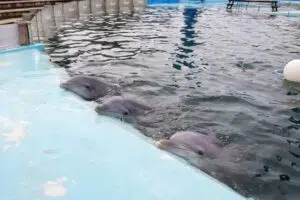
Before the bankruptcy, the company attempted to sell several specimens. Among the completed operations, the transfer of dolphins to Egypt for a sum of $800,000 stands out, which, as stated in the case, was used to pay salaries, feed the animals, and cover other operating expenses.
Additionally, there were proposals from Mexico, China, and São Paulo. However, none were finalized. This is partly due to environmental and sanitary regulations. Therefore, the trade of marine fauna involves complex and highly controlled processes.
Consequently, the fate of the animals remains undefined. Now, the resolution depends on the progress of the judicial file.
Causes of the Closure of the Aquarium of Mar del Plata
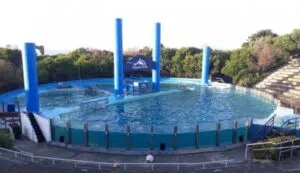
The economic deterioration accelerated after the closure of the park in March of last year. At that time, the company failed to renew the lease of the premises.
As a result, it lost its main source of income: ticket sales. Additionally, there was the added obligation to vacate the space.
Moreover, the company declared cessation of payments in January. This included salary and financial defaults.
Furthermore, the crisis of the Dolphin group, its international controller, worsened the situation. The lack of support ultimately created a scenario of unviability. Consequently, the combination of closure, debts, and lack of financing led to the bankruptcy.
Environmental Consequences and Social Debate
The case reignites the debate on the use of animals in captivity. Indeed, it questions the exhibition models with recreational purposes.
Moreover, the presence of fauna in closed facilities generates environmental concern. The need to ensure their well-being becomes a priority.
On the other hand, the process highlights tensions between economy and conservation. The management of these spaces requires sustainable criteria.
Additionally, the situation prompts wider social discussions. The future of aquariums and zoos is under review.
An Uncertain Future Under Judicial Control
As the process progresses, the priority is to maintain the care of the animals. However, the available resources are limited.
Furthermore, the premises must be vacated within a limited timeframe. This adds pressure on the decisions to be made.
Therefore, the court must define viable alternatives. Among them, possible transfers to specialized centers.
Finally, the case of the Aquarium of Mar del Plata leaves a key lesson. The conservation of fauna requires planning, responsibility, and solid environmental policies.



