



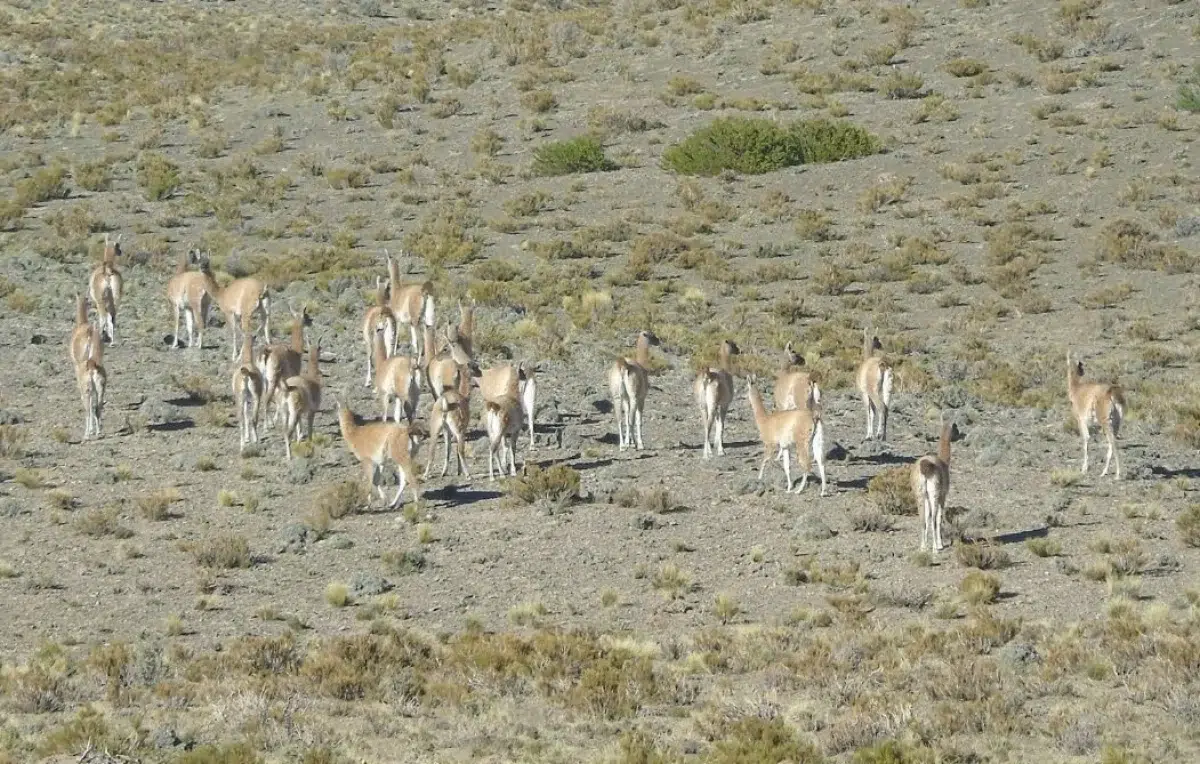
In March, a new survey of the guanaco (Lama guanicoe) population was conducted in the El Leoncito National Park, San Juan. This annual monitoring is key to assessing the species’ status and strengthening conservation strategies in the region.
The study consisted of traversing transects distributed across different environments of the park, using a compass and rangefinder to accurately measure the distance to observed groups. These methodologies ensure reliable records on the number and distribution of the animals, providing essential information for conservation decision-making.
The survey also included an evaluation of fence adaptations designed to reduce impact risks on guanacos and promote their safe movement within the ecosystem. Park agents emphasized the importance of maintaining such studies to preserve local biodiversity and ensure the long-term conservation of the species.
Tourism and Conservation
In parallel with scientific tasks, the park recorded a significant influx of visitors during the long weekends of March and Easter 2026.
More than 1,100 people visited the protected area, of which 505 were provincial visitors, 565 national, 75 local, and 53 foreign. Additionally, 117 people chose to camp within the park, consolidating the tourist proposal in direct contact with nature.
Ecological Role of the Guanaco
The guanaco is considered the “gardener of the Andes” as it disperses seeds while feeding and contributes to the maintenance of grasslands, wetlands, and high mountain meadows. Its role as a key herbivore helps redistribute nutrients and serves as food for predators like the puma, condor, and fox.
In the central-western region, populations are smaller and more fragmented than in Patagonia, making them more vulnerable and a priority for conservation. Therefore, initiatives like those of El Leoncito National Park and studies in the Don Carmelo Reserve are fundamental to preserving the species.
Persistent Threats
Guanaco populations in San Juan face risks from illegal hunting, competition for forage with domestic livestock, and habitat fragmentation. These threats reinforce the need to maintain active monitoring and conservation programs.
The survey in El Leoncito confirms the importance of sustaining systematic studies to ensure the conservation of the guanaco in the region. Its protection not only ensures the survival of an emblematic species but also preserves the health of Andean ecosystems and the balance of local biodiversity.


