



The World Meteorological Organization (WMO) warns that by the end of 2026, the strongest El Niño episode ever recorded could develop, intensified by climate change.
This phenomenon threatens to cause extreme droughts in the Amazon, global floods, and an increase in heatwaves in various regions of the planet.
Meteorologist Jeff Berardelli anticipates: “We are going to see weather phenomena that we have never seen before in modern history.”
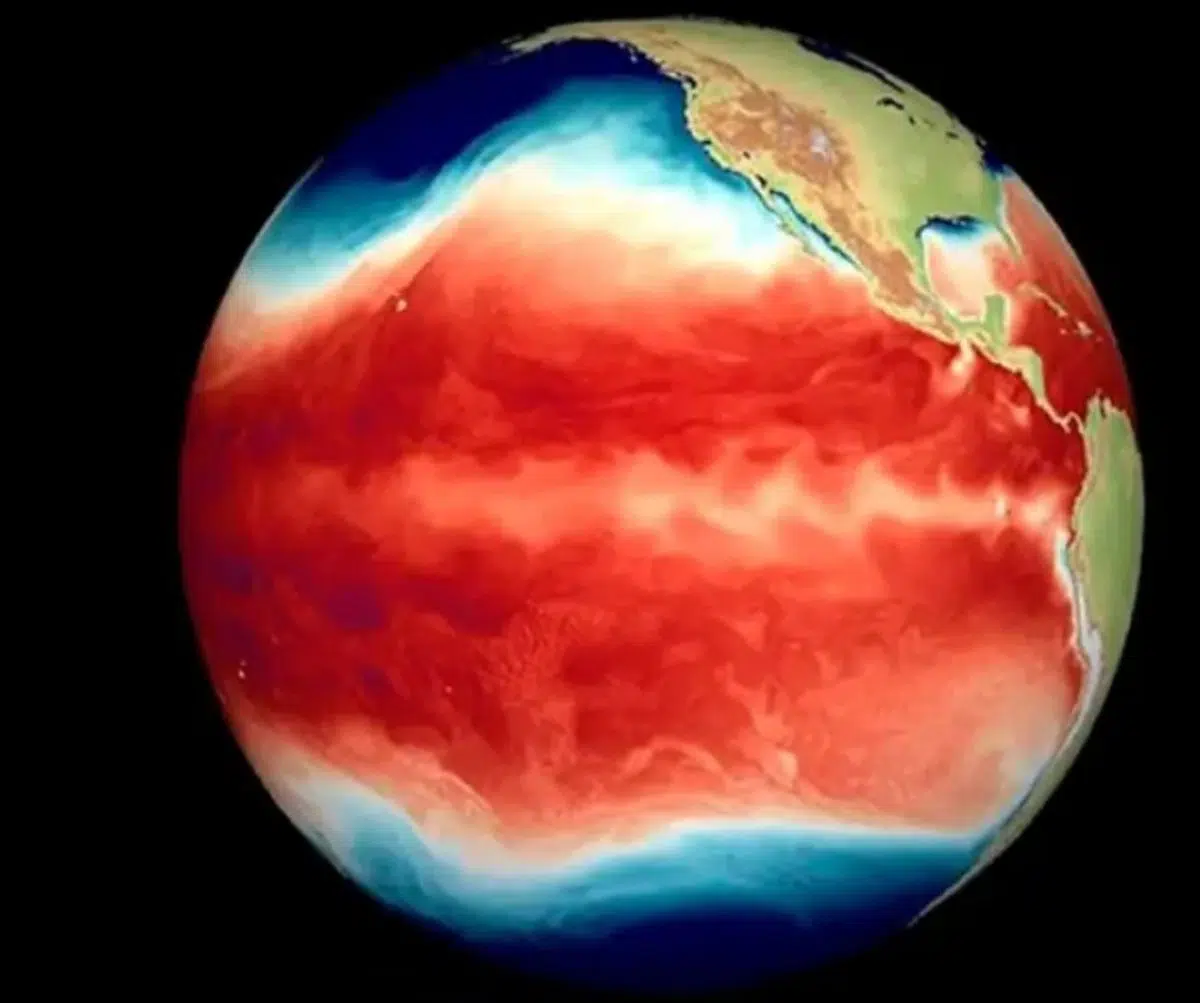
What is El Niño
- El Niño: anomalous increase in the surface temperature of the equatorial Pacific.
- La Niña: its counterpart, characterized by cooler waters.
- Typical duration: between 9 and 12 months, recurring every 2 to 7 years.
El Niño redistributes the planet’s heat, altering rainfall and temperature patterns on a global scale.
Signs of intensification
- Subsurface heat in the Pacific moves eastward and rises to the surface.
- The warm water pulses are among the largest observed in historical records.
- The probability of formation between May and July 2026 is 61%, according to Zero Carbon Analytics.
- A doubling of extreme El Niño episodes is projected as global temperatures rise.
Expected impacts
- Droughts in the Amazon: will worsen forest degradation, already affecting 40% of the region.
- Global floods: more moisture in the air will intensify storms and precipitation.
- Forest fires: excess heat will increase the risk of severe fires, as warned by Imperial College London.
- Atlantic hurricanes: reduced cyclonic activity, with a drier Caribbean.
- Record heatwaves: global average temperatures could reach historic highs.
Health and environmental risks
Forest fires, intensified by El Niño, not only destroy ecosystems but also deteriorate air quality and cause health problems:
- In Australia (2019), smoke from fires caused 417 additional deaths and thousands of hospitalizations.
- Between 1975 and 2024, potential combustion hours increased by 36%, and extreme days by 81% to 233%.
Climate change and El Niño
Climatologist Michael Mann reminds us that El Niño is a natural phenomenon, but climate change amplifies its effects. Dr. Friederike Otto emphasizes:
“El Niño comes and goes. Climate change worsens as long as we continue to burn fossil fuels. That is the real reason to panic.”
Political and scientific context
- The WMO warns that the planet is “more unbalanced than at any other time in observed history.”
- World leaders have backtracked on climate commitments, softening language and reducing ambition.
- In April 2026, Colombia hosted the first high-level conference to discuss the abandonment of fossil fuels. The next meeting will be COP31 in November.
El Niño 2026 could become the most intense in modern history, with devastating impacts on ecosystems, economies, and public health.
Although we cannot control natural phenomena, it is possible to mitigate their effects by reducing fossil fuel use and strengthening environmental policies. The key is to transform scientific warning into political and social action.



