



The climate negotiations held in Bonn, Germany, concluded with significant disagreements among the participating countries, leaving unresolved one of the most sensitive issues on the international environmental agenda: the financing intended for developing nations to adapt to the effects of climate change.
During the semi-annual meetings organized within the framework of the United Nations Framework Convention on Climate Change, the delegations extended the discussions beyond the scheduled timeline. However, the differences between industrialized countries and emerging economies prevented reaching consensus on concrete financial support mechanisms.
Additionally, the debates revealed deep divisions regarding shared responsibilities in the face of the climate crisis. While some blocs demanded greater commitment from countries with the highest historical emissions, others insisted that obligations should be distributed equitably.
As a result, several central issues remained pending for the next negotiation instances leading up to COP31, scheduled for November in Turkey.

Concerns about the influence of interests linked to fossil fuels
One of the aspects that generated the most concern during the summit was the alleged influence of sectors related to the fossil fuel industry in some technical discussions.
Various delegations, especially from small island states and countries vulnerable to climate change, expressed concern about attempts to downplay scientific conclusions related to global warming. According to their reports, certain positions sought to block references to studies on climate tipping points and temperature increase scenarios.
Furthermore, disagreements arose regarding the role of international scientific bodies such as the Intergovernmental Panel on Climate Change (IPCC). While many countries advocated for strengthening support for scientific evidence, others felt that certain formulations could limit technical debate.
On the other hand, the discussion once again highlighted the tensions between those promoting a rapid reduction of fossil fuels and those countries whose economies remain heavily dependent on oil, gas, or coal.
The energy transition remains a global challenge
Despite the disagreements, some progress was made regarding the concept of a just transition, a strategy that seeks to ensure that the transformation towards low-carbon economies does not generate negative social impacts.
In this context, countries explored alternatives to promote clean energy, protect jobs, and facilitate the conversion of productive sectors highly dependent on fossil fuels.
However, the lack of consensus on financing reappeared as one of the main obstacles. Many nations believe it will be impossible to accelerate the energy transition without sufficient resources to implement clean technologies and strengthen resilience against extreme weather events.
Meanwhile, small island nations continue to warn about the risks posed by rising sea levels, more intense storms, and alterations to coastal ecosystems.
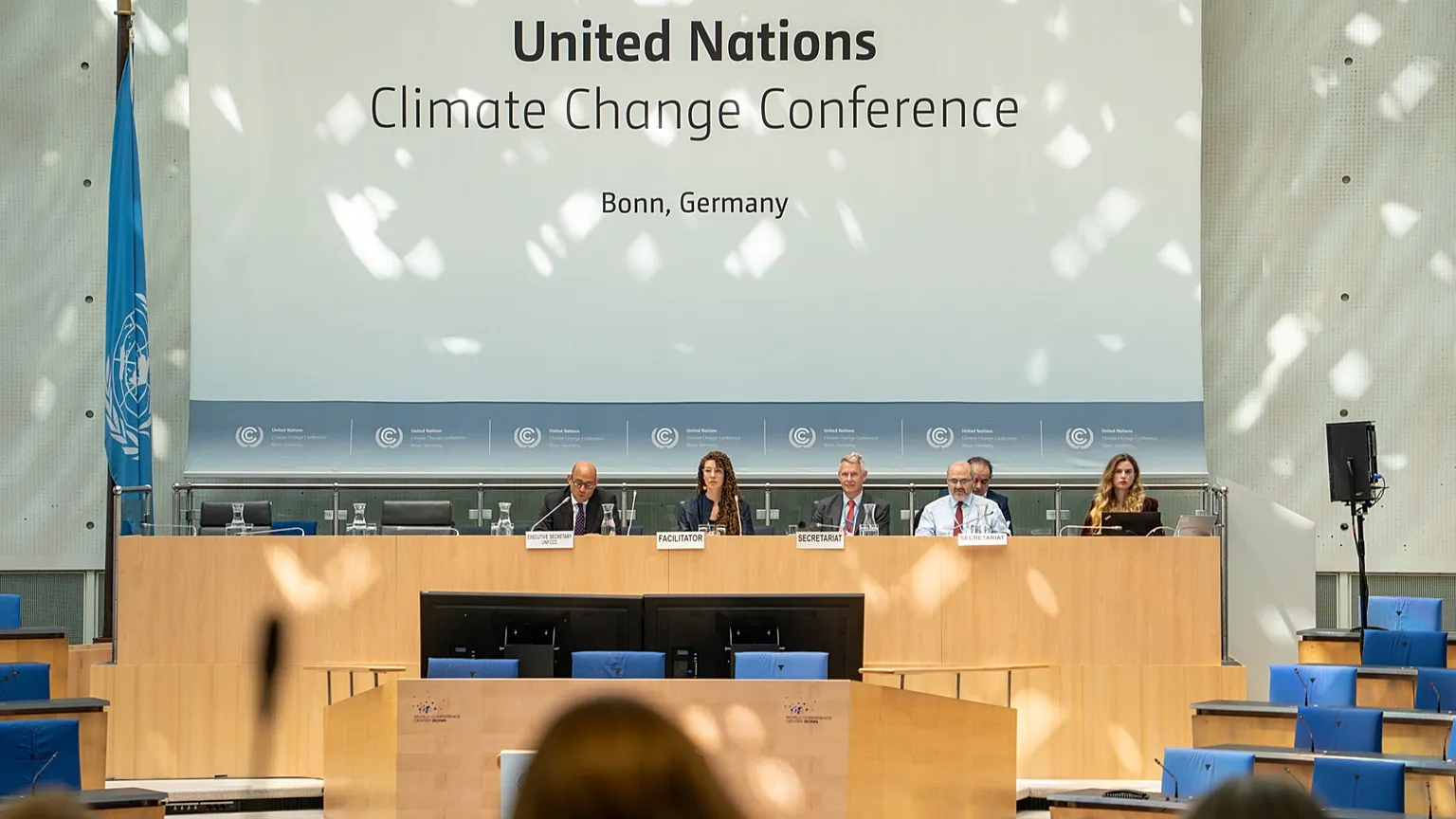
What is the Bonn Summit and why was it created?
The Bonn summits are technical and political meetings organized annually by the United Nations Framework Convention on Climate Change. They serve as a preparatory instance for the Conferences of the Parties (COP), where the main global environmental agreements are negotiated.
Their creation responded to the need for permanent dialogue spaces that allow for evaluating progress, reviewing commitments, and coordinating international actions against climate change. Additionally, these summits facilitate the exchange of scientific information, the discussion of financial mechanisms, and the development of proposals that are later submitted to the COP for approval.
Over the years, Bonn has become one of the main environmental negotiation arenas in the world. Governments, scientific organizations, representatives of indigenous communities, civil society entities, and multilateral organizations converge there to build coordinated responses to an increasingly complex climate crisis.
Looking ahead to COP31 in Turkey, the results from Bonn show that the international community still faces significant challenges in reaching agreements capable of reducing emissions, protecting biodiversity, and ensuring an effective adaptation of ecosystems and the most vulnerable populations in the face of advancing climate change.


