



During the first days of June 2026, the Antarctic Peninsula recorded temperatures of up to 15.4 °C, an extraordinary value for the middle of the southern winter.
In a region where it is usual for thermometers to remain below zero, this episode raises questions about the atmospheric mechanisms that can generate heatwaves in one of the coldest places on the planet.
Recorded Anomalies
- A large part of the peninsula showed temperatures far above normal, with anomalies of more than 10 °C compared to the climatological average.
- The historical series confirms that, although there is interannual variability, the value of 2026 clearly stands out above the usual.
- The phenomenon did not affect the entire Antarctic, but mainly the peninsula, more exposed to the influence of air masses from mid-latitudes.
Atmospheric Factors
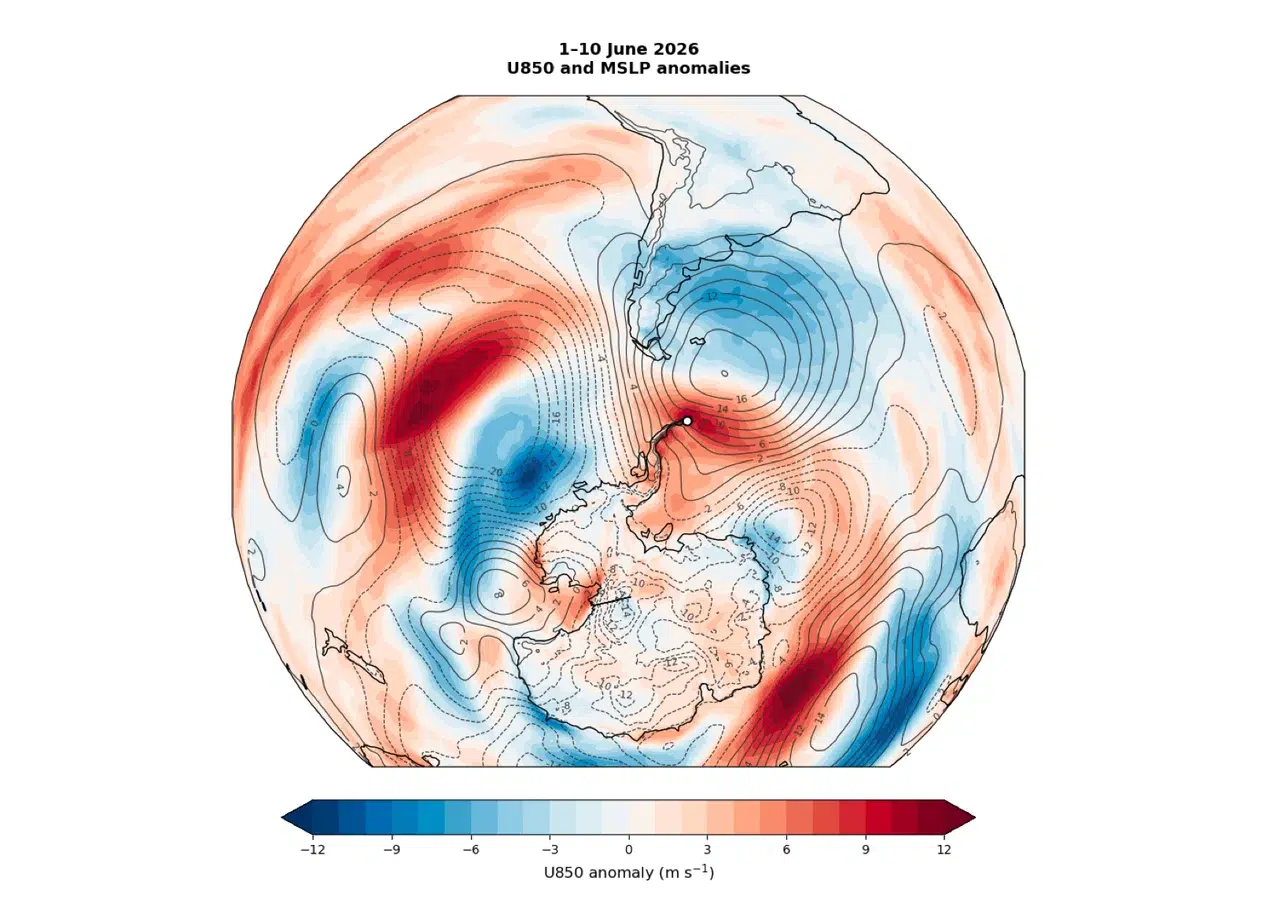
The event was associated with a particular atmospheric circulation configuration:
- Warm air transport from mid-latitudes to the peninsula.
- Possible föhn effect: moist air ascends the western slope, loses moisture, and, descending the eastern side, compresses and warms rapidly.
- This mechanism has already been described in other intense warm episodes in the region.
The Role of Sea Ice
Another hypothesis points to the deficit of ice in the Bellingshausen Sea:
- In June 2026, about 650,000 km² of winter ice was missing.
- The reduced coverage may have decreased the cooling of air masses advancing from the north, allowing them to retain higher temperatures upon reaching the peninsula.
- Although still under study, this factor could be key to explaining the intensity of the event.
Implications of the Phenomenon
This episode does not mean that Antarctica is losing its cold character, but it does highlight the region’s climatic vulnerability. Heatwaves in the middle of winter:
- Disrupt the balance of local ecosystems.
- Affect the dynamics of sea ice and glaciers.
- Serve as warning signs about the effects of climate change in polar areas.
The June 2026 heatwave in the Antarctic Peninsula is a reminder that even the coldest places on the planet can experience extreme episodes.
The combination of atmospheric circulation, föhn effect, and sea ice deficit offers clues about how this event occurred, adding to the evidence of an increasingly unstable climate with global impacts.



