



The American mink (*Neogale vison*) is native to North America. However, humans introduced it to various regions worldwide, such as Europe, Asia, and South America.
Over the years, this has become a problem for the local biodiversity in many regions, as is the case in Bariloche, Río Negro.
Now, its presence in native forests and urban areas is a cause for concern.
## What’s happening with the American mink in Bariloche
The American mink is a semi-aquatic species of mustelid. Its arrival in Argentina dates back almost a century when the fur coat trend led to the proliferation of breeding farms worldwide.
A 2014 study details that, specifically in the case of the mink, the Argentine Ministry of Agriculture promoted its breeding to diversify the rural economy.
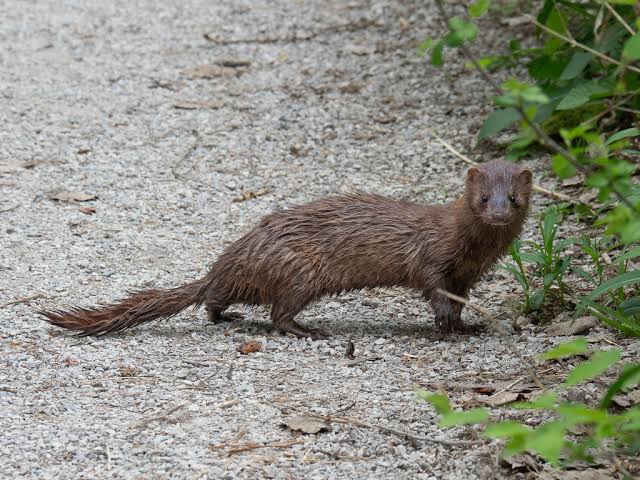
Thus, the southern part of the country became an important hub for the fur industry, with farms that housed up to 30,000 animals.
## Why it got out of control
However, not all farms had adequate security levels. Therefore, frequent escapes of specimens and later, the closure of farms without any control over the fate of the animals, gave rise to wild populations that today represent a serious environmental problem.
In a dialogue with *El Cordillerano*, Alfredo Allen, the Planning Secretary of the municipality of Bariloche, expressed his concern about the presence of the species in native forests and urban areas.
“We have a very serious problem with the invasion of the American mink. It is a very aggressive invasive species that attacks waterfowl, chicks, eggs, trout, and ichthyofauna such as pejerrey and puyen,” he pointed out.
“The diversity of birds in Lake Moreno is being lost,” he said. “The mink is not a native species and was released by a farm that was in the area,” Allen stated.
As he listed, these animals can currently be seen “on the coast of Ñireco, at the mouth,” which shows their territorial expansion and their ability to adapt to different environments in the region.



