



The biodiversity of Australia faces an unprecedented crisis particularly affecting the populations of reptiles and amphibians.
Since 1985 to the present, the population of these threatened species has decreased on average by 96%.
This is revealed by the first national monitoring of these groups conducted by the University of Queensland.
The study, published in The Conversation, documents this collapse through the Threatened Species Index (TSX). The results highlight urgent challenges for conservation in the country.
The biodiversity crisis in Australia: the first national analysis reveals devastating losses
The monitoring represents the first national compilation on the relative abundance of threatened and near-threatened frog and reptile species.
Specialists from across the country contributed field data collected over decades to analyze the loss of biodiversity of reptiles and amphibians in Australia.
The team reviewed published and unpublished scientific literature. They also extracted information from tables and graphs monitoring remote areas.
The analysis covered 28 species of frogs and 24 of reptiles, with 894 time series of monitoring.
Although this number is small compared to the more than 20,000 records of birds, the authors consider it a solid starting point.
Diseases, invasive species, and habitat loss
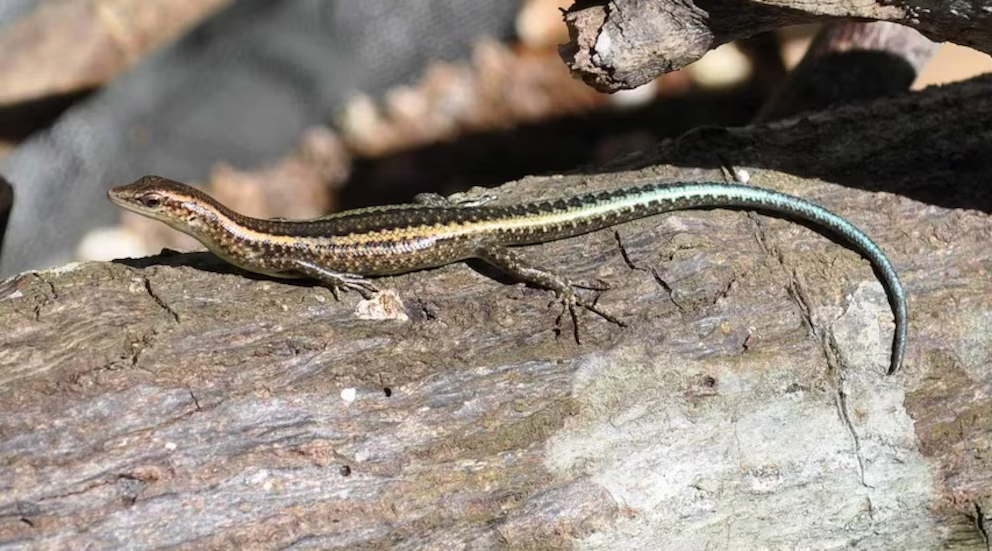
The report highlights the extinction of the Christmas Island forest skink, the only Australian reptile officially declared extinct.
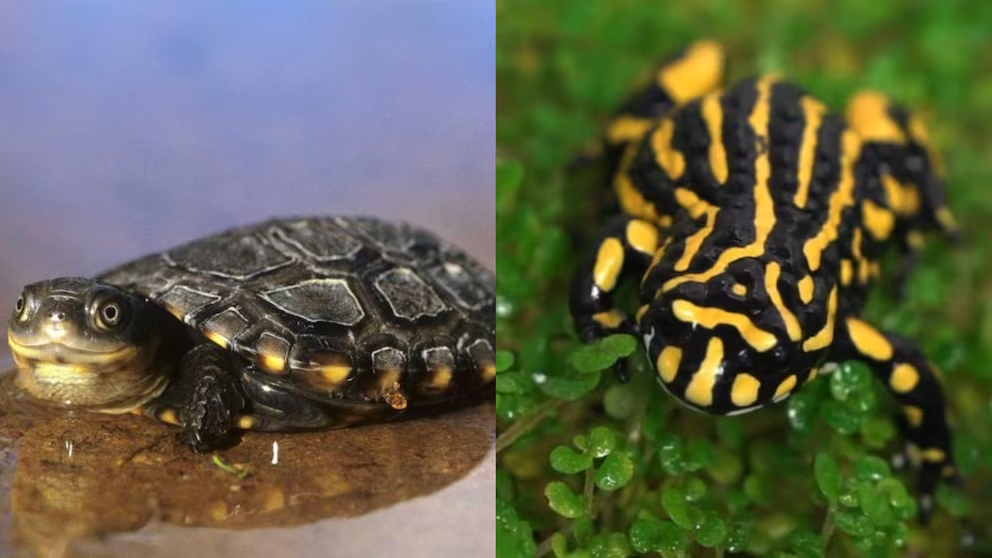
Among the frogs, seven are considered lost, including the only two known species of gastric-brooding frogs.
The main threats identified include:
- Emerging diseases: the chytrid fungus, introduced in the 1980s, caused the disappearance of several frog species
- Invasive species: toxic cane toads reduced the populations of northern water monitors
- Habitat loss: agricultural expansion and deforestation affect grassland reptiles
- Wildfires: exacerbate the decline of populations not impacted by the fungus
The Bellinger River turtle declined sharply due to an emerging virus.
Water monitors like Merten’s and Mitchell’s have seen their populations reduced by the arrival of cane toads.
According to the researchers, these threats have produced devastating effects and exacerbated the decline of numerous species.
“The collapse of reptile and amphibian biodiversity in Australia is due to emerging diseases, introduction of invasives, and habitat loss,” they state in the study.
The situation is more severe when compared to other animal groups.
While mammals with conservation support decreased by only 18% since 1990, plants under active management even grew by 2% in the same period.
Species without intervention fell much more: up to 81% in the case of some plants. This comparison highlights the magnitude of the biodiversity crisis in Australia.
Biodiversity crisis in Australia: cases of hope and collective action
Despite this scenario, there are encouraging examples. The Great Desert skink has shown signs of recovery thanks to fire management by indigenous communities.
Continuous monitoring and cooperation between scientists, managers, and citizens are fundamental to protect biodiversity.
Citizen science programs like FrogID and iNaturalist allow for valuable observations.
The study’s authors — Dr. Geoffrey Heard, Dr. Sarah McGrath, and Tayla Lawrie, all from the University of Queensland — emphasize the importance of gathering more data.
Strengthening monitoring programs will allow identifying recovering species and preventing new extinctions.
The Australian experience shows that with proper management and collective action, it is possible to restore the ecological balance.
Collaborative work can ensure a future for the country’s biodiversity.

