



In the Serengeti ecosystem, the cheetah faces a constant struggle for survival. Although it is recognized as the fastest feline in the world, its speed does not always compensate for its fragility against more robust rivals.
Explorer Bertie Gregory, associated with National Geographic, documented the dynamics among large predators. His records show that the cheetah occupies a low rung compared to lions and hyenas.
Unlike these carnivores, it lacks the necessary strength to defend its catches. Therefore, it avoids direct confrontations and prioritizes cunning and strategic mobility.
Competition, fragmentation, and constant pressure
The presence of lions and hyenas represents a double threat. They not only compete for the same prey but frequently snatch the catches obtained after intense chases.
Consequently, the cheetah adapts its schedules and opts to hunt during the day. This strategy reduces direct competition, although it does not eliminate the risk of losing food.
Added to this is the fragmentation of habitat. Human expansion and the reduction of ecological corridors limit their movements, affecting genetic diversity and access to safe territories.
Hunting techniques in open fields
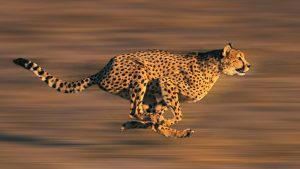
The cheetah specializes in brief and explosive chases. It stealthily approaches in open spaces and launches a final sprint that can exceed 90 kilometers per hour.
However, it can only maintain that speed for a few seconds. If the attack fails, it is left exhausted and vulnerable to other predators.
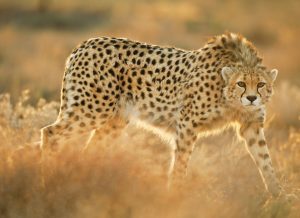
Unlike hyenas, which hunt in groups, or lions, which ambush in teams, the cheetah acts alone. Its strategy depends more on precision than on brute force.
Technology and observation without interference
To record these behaviors, the teams at National Geographic use high-speed cameras and stabilized drones. These tools allow documenting chases without altering the natural behavior.
Likewise, thermal technology facilitates tracking in conditions of low visibility. In this way, key information is obtained to understand their ecology.
This type of documentation contributes to scientific dissemination and strengthens global awareness about the need to conserve large African landscapes.
Conservation status and future challenges
The African cheetah is classified as vulnerable according to international conservation organizations. Their populations have declined due to habitat loss, conflicts with humans, and prey reduction.
In the Serengeti, important nuclei still persist, although they depend on active protection policies and the maintenance of ecological corridors.
Additionally, responsible tourism plays a key role. While it generates income for conservation, it requires strict rules to avoid disrupting hunting or caring for offspring.
Ultimately, the survival of the cheetah combines speed and resilience. However, its future will depend on the preservation of open ecosystems and a balanced management between nature and human activity.



