



Between August 27 and 29, the Huilo Huilo Biological Reserve in Chile hosted the First Workshop Seminar for the Reintroduction of the Huemul. A binational coordination space that brought together specialists from Argentina and Chile committed to the conservation of this iconic species of the southern Andes.
Conservation Center and new rescue space: concrete advances in Huilo Huilo
The meeting began with a visit to the Huemul Conservation Center, where the progress of the breeding and reintroduction project was presented.
As part of the day, the Rescue and Rehabilitation Center was symbolically inaugurated, which will expand the capacities for the care and recovery of specimens in critical situations.
Shared experiences: monitoring, threats, and reintroduction
Technical teams presented field results and active conservation strategies.
During the seminar, the following topics were discussed:
- Population monitoring and specimen tracking
- Threat control plans such as poaching and invasive species
- Habitat restoration projects and reintroduction in key areas
Argentinian participation: institutional structure and cross-border cooperation
Representatives from the National Parks Administration (APN) of Argentina actively participated, including professionals from the Nahuel Huapi, Lanín National Parks, and the Regional Directorate of Northern Patagonia. The following were presented:
- Conservation Program for the Natural Monument Huemul
- National Plan for Conservation and Recovery of the Huemul
- Argentinian-Chilean Binational Action Plan
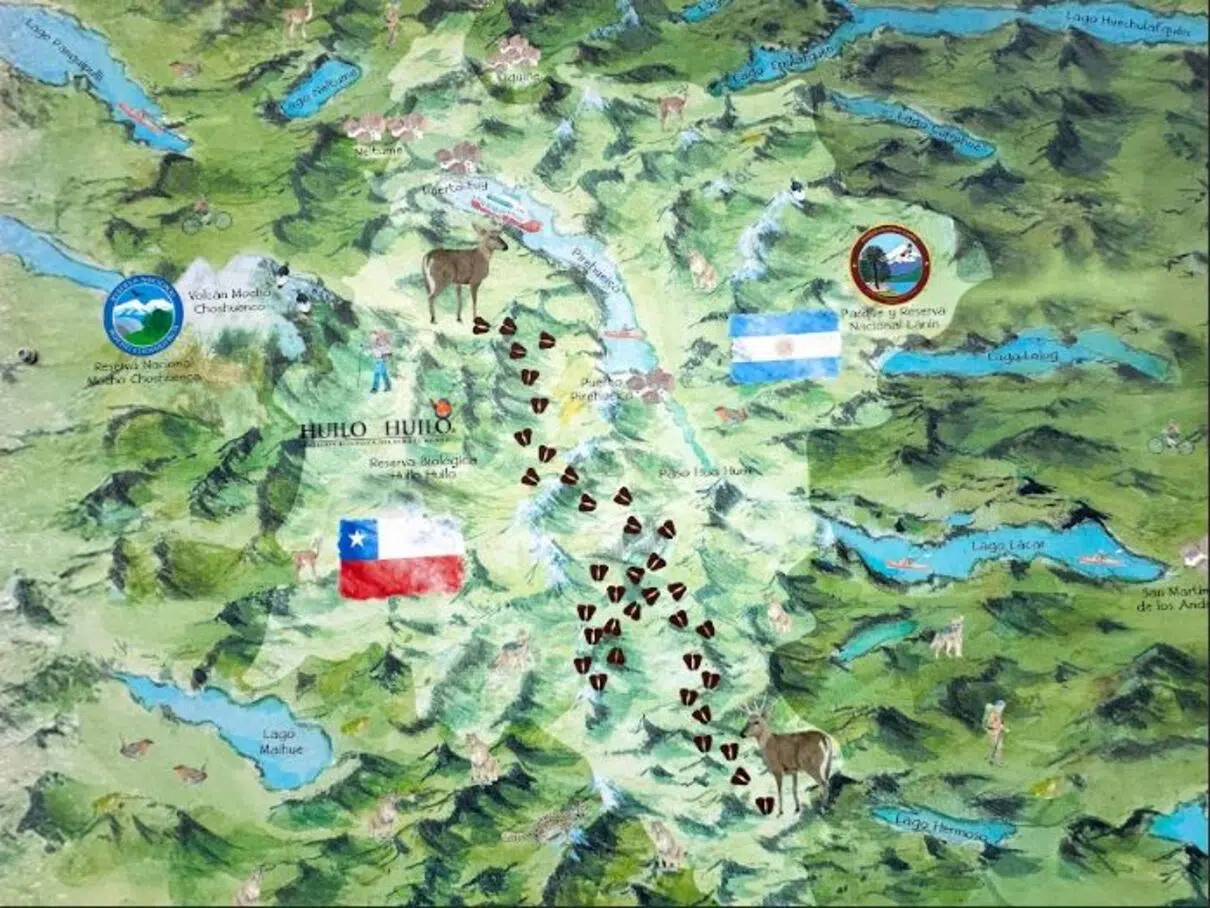
Cross-border project: habitat recovery between Huilo Huilo and Lanín
One of the highlighted projects was the “Improvement of habitat and addressing threats for the natural recolonization of the huemul”, which articulates actions between the Huilo Huilo Biological Reserve and the Lanín National Park, with emphasis on:
- Restoration of Andean environments
- Monitoring of specimens like Newenche
- Interaction with local communities and tourism stakeholders
Integrated governance and collective commitment: key to repopulation
The seminar defined three priority actions to advance in the species’ recovery.
Local communities as protagonists
- Environmental education, territorial identity, and leadership
- Sustainable practices and conservation as a source of progress
Active conservation and ecological restoration
- Rescue, breeding, and reintroduction
- Biological corridors and threat control
Sustainable human development
- Well-managed nature and culture tourism
- Integration between conservation and local economy (CQC concept: Know to Love to Conserve)
These actions are conceived as a virtuous circle, where conservation, communities, and tourism mutually reinforce each other.
Huemul Natural Monument: a species of special value in the Patagonian forests
The huemul (Hippocamelus bisulcus) is a native deer of the Andean-Patagonian forests of Argentina and Chile, declared a Natural Monument by National Law No. 24,702.
In Argentina, its historical distribution ranged from northern Neuquén to Santa Cruz, but today its populations are small and fragmented, concentrated in protected areas such as:
- Lanín, Nahuel Huapi, Lago Puelo, Los Alerces, Los Glaciares, and Perito Moreno
Next steps: working group and new seminar in 2026
It was agreed to strengthen the network of actors and advance in long-term planning.
The meeting concluded with the signing of a collective canvas as a symbol of binational commitment.
It was proposed to form a permanent working group to organize a new seminar in 2026, consolidating public-private, scientific, and community cooperation to ensure the effective repopulation of the huemul.



