



The Municipality of Río Grande, Tierra del Fuego activated a preventive health protocol after detecting endangered birds. At least 50 dead birds, mainly cormorants, were found on the Atlantic coast of the town.
The measure aims to rule out the presence of bird flu and protect public and environmental health.
Personnel from the Secretariat of Environment and the General Directorate of Biodiversity and Conservation patrol the coast and areas of the provincial reserve to assess the situation. So far, technicians have identified over 50 dead birds without confirming the cause of the phenomenon.
In coordination with SENASA, samples were taken for the analysis of possible avian diseases, including bird flu viruses.
Endangered Birds in Río Grande: what the community should do
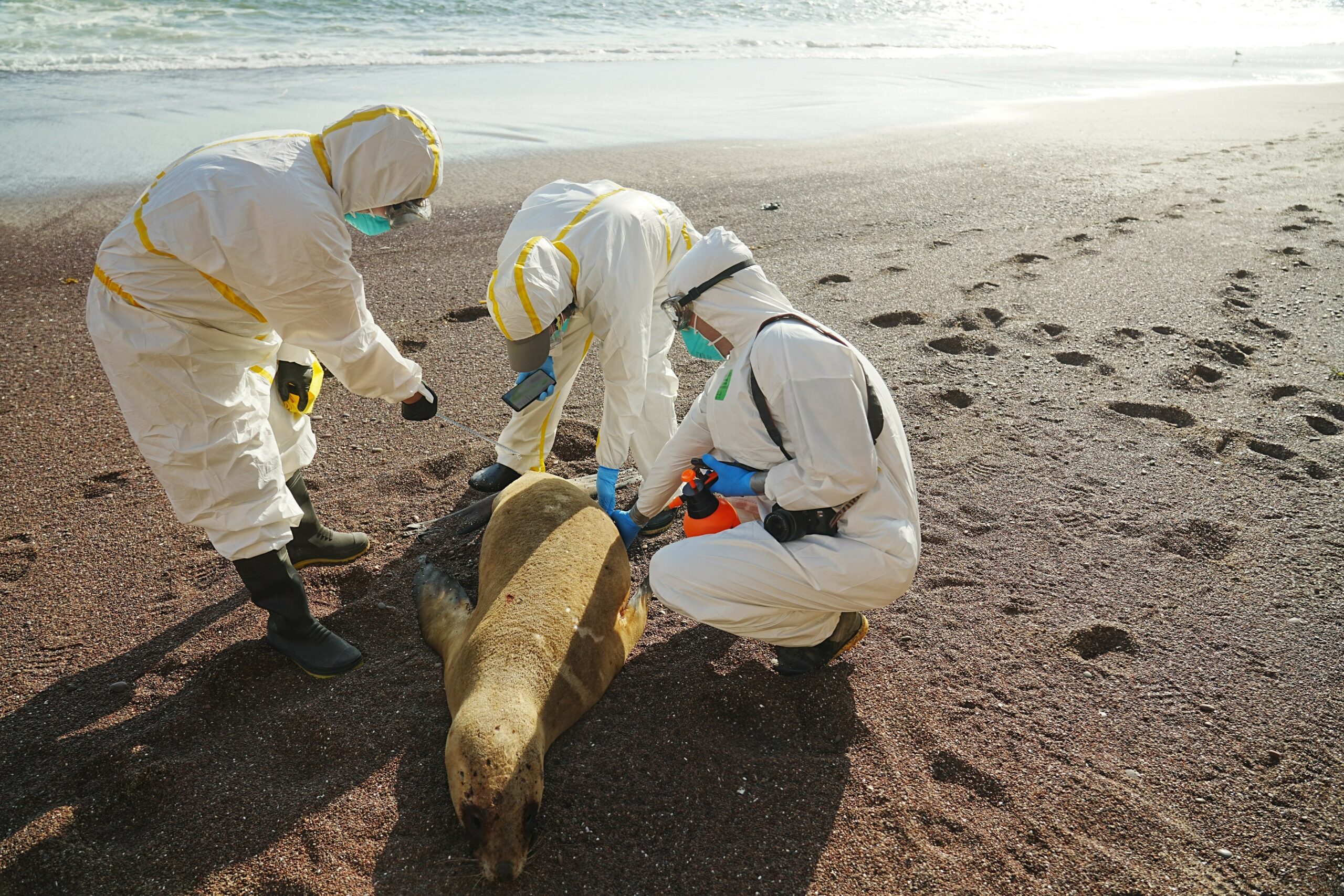 Bird flu can also affect other animals.
In response to the activation of the bird flu protocol as a preventive measure, the community should take some precautions:
- Avoid approaching or touching dead birds or those in poor condition.
- Prevent pets from entering contaminated areas.
- Report sightings to emergency services (911 in Ushuaia, 103 in Río Grande)
By implementing the protocol, the goal is to discard health risks from zoonotic diseases; preserve environmental balance, avoiding the spread of pathogens; and ensure public health by keeping people and pets away from potential contaminant sources.
Consequences for the Ecosystem
The massive detection of dead birds may indicate:
-
Outbreaks of infectious diseases (such as bird flu).
-
Environmental contamination by toxins or pathogens.
-
Natural factors like abrupt temperature changes or contaminating tides.
Therefore, early intervention is key to preventing contagion and irreversible ecological damage.
The Municipality and the Secretariat of Environment maintain teams in the field and constantly monitor the discovery of new specimens. Laboratory results will determine next steps and potential closures of public spaces.
What is bird flu
 How bird flu is transmitted.
Bird flu, also known as avian influenza, is a highly contagious viral disease that mainly affects birds.
It can also infect other animals and humans. So far, there have been no reports of person-to-person transmission caused by avian influenza viruses worldwide. Over 19 years, from 2003 to 2022, only 868 cases in humans were reported.
Symptoms
Symptoms, according to the American Veterinary Medical Association, include:
- Low energy
- Swelling of body parts
- Lack of coordination
- Diarrhea in pet birds
<li class="paragraph inline-placeholder vossi-paragraph" data-uri="en.cms.cnn.com/_components/paragraph/instances/cm54eh0s5000e356mxlvtq14b@published" data-editable="text" data-component-name="paragraph" data-article-gutter="true" data-analytics-observe



