



Dozens of golden frogs were reintroduced into their natural habitat in Panama after being isolated for years, many of them in the United States. The measure aims to recover populations affected by a lethal fungus that almost drove them to extinction.
The initiative was coordinated by the Smithsonian Tropical Research Institute, which began releasing specimens into carefully selected habitats. However, for security reasons, the exact release sites were not specified.
During 2025, a hundred individuals were transferred from specialized centers in the United States and spent 12 weeks in facilities replicating wild conditions. Subsequently, the survivors were returned to the wild.

The impact of the fungus and the drastic population reduction
The golden frog had not been seen in the wild since 2009 due to the action of a devastating fungus that affects its skin. This microorganism interferes with the exchange of salts and water with the environment, disrupts vital functions, and can cause death by cardiac arrest.
Additionally, the pathogen, detected in Panama in the early 1990s, also impacted other amphibians such as toads and salamanders. Consequently, the aquatic and riparian ecosystems suffered a significant imbalance.
Four decades ago, the species was abundant in streams and rivers in the province of Coclé, about 150 kilometers southwest of Panama City. However, the spread of the fungus reduced the population to less than 3,000 individuals, necessitating the implementation of rescue programs and captive breeding.
Trials, losses, and scientific learnings
The reintroduction process was not without difficulties. Approximately 70% of the transferred frogs died due to the fungus during the controlled trial, highlighting the persistence of the threat in natural environments.
However, the data obtained from the deceased specimens provide a better understanding of the disease’s dynamics. They also offer information on how the animals recover the protective toxicity of their skin when resuming a wild diet.
Therefore, each phase of the program combines active conservation and the generation of scientific knowledge. Continuous monitoring will be key to evaluating the adaptation of the released individuals and the potential recovery of the species.
A symbolic species of Panama and its ecological value
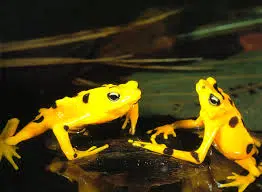
The Panamanian golden frog, scientifically known as Atelopus zeteki, is an endemic species and a national symbol of the country. It is characterized by its intense yellow color with black spots and measures less than eight centimeters.
Besides its cultural value, it plays a fundamental ecological role as an insect regulator and as an indicator of environmental health. Amphibians, due to their permeable skin, are especially sensitive to pollutants and climate changes.
Consequently, protecting the golden frog also means safeguarding the freshwater ecosystems where it lives. Its return represents a hopeful, albeit fragile, step in the restoration of Panamanian biodiversity in the face of emerging threats.



