



Unlike humans, who often say goodbye with hugs, kisses, or words, dogs do not have equivalent verbal language or gestures. However, their non-verbal communication is full of body signals, postures, and microgestures that serve essential social functions.
Understanding these signals not only improves coexistence but also strengthens the emotional bond between humans and dogs.
Dog’s Body Language: More Than Movements, a Way of Connection
Sniffing, wagging the tail, and relaxing the ears are gestures that convey friendly intentions.
When a dog meets another dog or a person, they engage in a series of ritualized interactions that include:
- Exploratory sniffing
- Relaxed tail wagging
- Neutral ear position
- Gentle physical contact
These behaviors, as per studies published in the journal Animals, reduce the likelihood of conflict and establish friendly intentions.
Farewell Signals: How Dogs Mark the End of an Interaction
Although often overlooked, dogs also express the end of an interaction through signals known as appeasement behaviors. Some of these include:
- Turning the head or looking away
- Yawning during or after contact
- Repeatedly licking the lips
- Sniffing the ground as a distraction
- Shaking as if wet
- Walking away or turning around
These actions, according to research in Animal Cognition, smooth the closure of the momentary bond and help avoid unnecessary tensions.
Mutual Benefits: A Relationship that Improves Health and Well-being
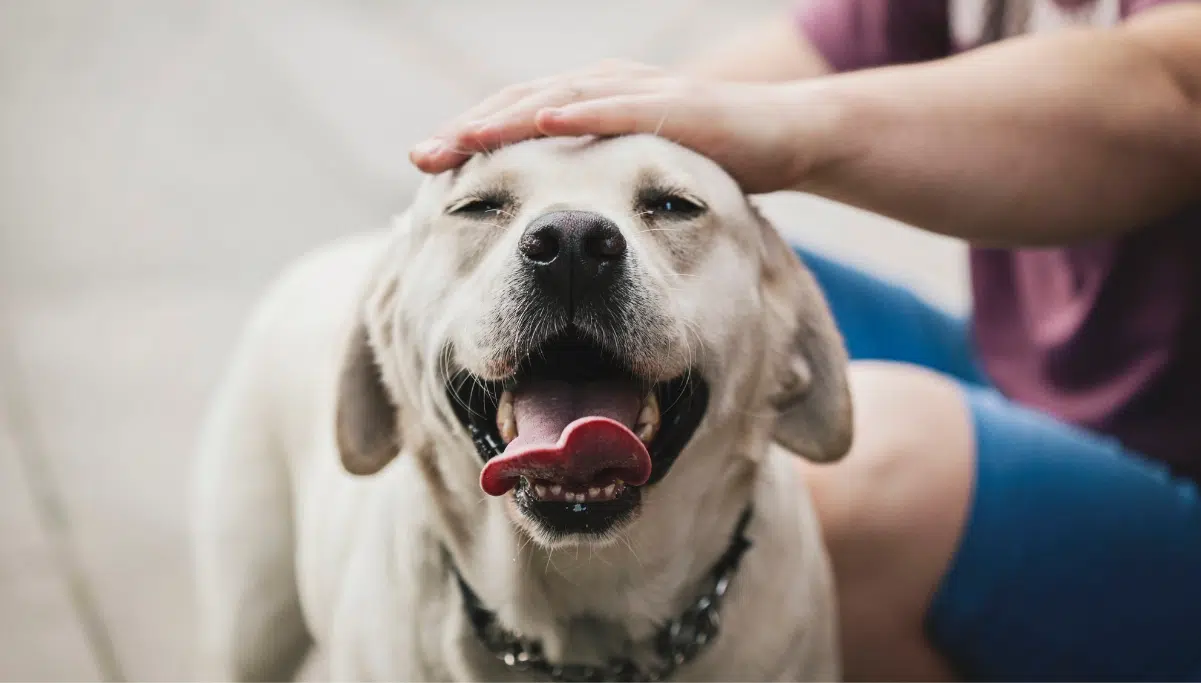
The human-canine bond provides emotional, physical, and social balance for both.
The relationship between humans and dogs generates mutual benefits that go beyond affection:
For humans:
- Improved mental health: reduces stress, anxiety, and loneliness
- Cardiovascular health: encourages physical activity through walks and play
- Emotional support: provides comfort and unconditional companionship
For dogs:
- Emotional well-being: positive interactions lead to happiness
- Care and security: receive affection and a stable environment
- Mutual trust: builds a relationship based on empathy and communication
Communication and Empathy: The Foundation of an Authentic Bond
Interpreting their signals is key to respectful and enriching coexistence.
Dogs develop a unique communication with their humans, based on mutual observation, empathy, and respect for each other’s timing and gestures. Recognizing their greeting, farewell, or calming signals allows for a sensitive response, strengthening a relationship that is, fundamentally, a deep and transformative emotional alliance.



