



In a new environmental control operation, the Directorate of Natural Resources and Inspection, along with the National Gendarmerie and the Buenos Aires Environmental Control Brigade, carried out a raid on a private tourist property on National Route No. 12, in the Gualeguay department, where they rescued 17 wild birds.
The measure was ordered by the Federal Court of Victoria following reports of illegal possession of native and exotic wildlife species, a practice that continues to threaten Argentine biodiversity.
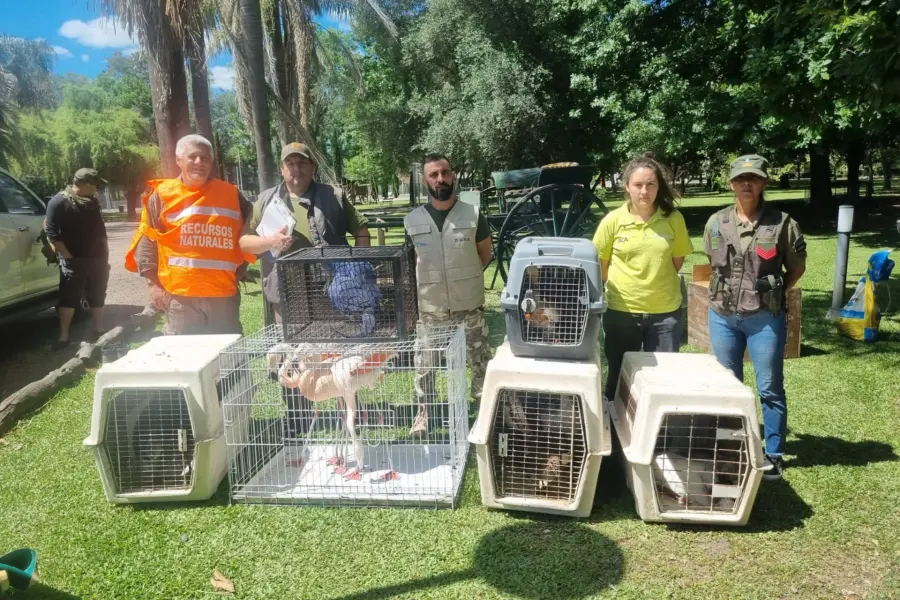
The procedure was carried out with the participation of specialized teams in animal rescue and relocation, ensuring the safety and well-being of each specimen found on the site.
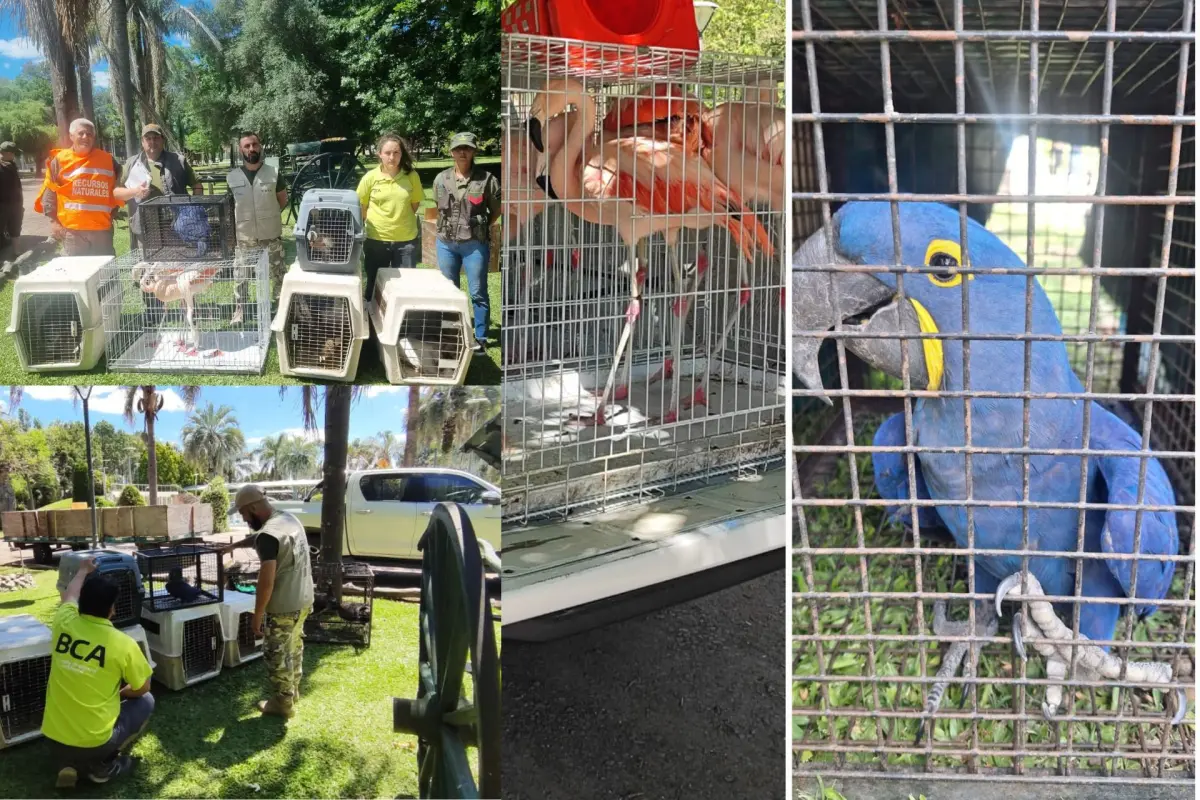
Rescued Birds and Safe Relocation
During the operation, 17 birds were seized belonging to different species, both native and foreign. Among them were a blue macaw (Anodorhynchus hyacinthinus), a chajá (Chauna torquata), six flamingos (Phoenicopterus roseus), three common geese (Chloephaga picta), four peacocks (Pavo cristatus), and three black-necked swans (Cygnus melancoryphus).
Most of the birds had wing cuts, a cruel practice that prevents them from flying and surviving on their own, hindering their future reintegration into nature.
The specimens were transferred to refuges authorized by the Directorate of Natural Resources, where they receive veterinary care and health checks to assess their recovery and eventual return to their natural habitat.
Wildlife Trafficking: A Silent Threat
The illegal trafficking of animals is one of the most widespread environmental crimes in the country and is part of a global business that moves millions of dollars annually. In Argentina, this issue particularly affects native species, many of which are endangered.
Among the most affected animals are talking parrots, toucans, flamingos, turtles, caimans, howler monkeys, macaws, and pumas, captured to be sold as pets or displayed in private collections.
This practice not only causes the death and suffering of thousands of specimens but also disrupts the balance of ecosystems and promotes the loss of biodiversity. Therefore, national and provincial legislation prohibits their capture, possession, and commercialization, although control remains a constant challenge.
The Importance of Protecting Wildlife
Each rescue operation represents an opportunity to reflect on the relationship between people and nature. Protecting wildlife means defending the ecosystems that sustain life and ensuring the continuity of the species that inhabit them.
Birds, for example, perform vital functions: pollinate, disperse seeds, and control natural pests, contributing to the balance of environments. When they are removed from their environment, an ecological chain that has taken decades to build is broken.
The work of environmental agencies and security forces aims not only to punish the crime but also to educate and raise awareness about respecting wildlife as a natural and cultural heritage of all Argentines.
Where to Report Animal Trafficking
Citizen collaboration is essential to stop wildlife trafficking. Those who detect cases of illegal pet ownership or possession of wild animals can contact the Directorate of Natural Resources and Inspection at the phone numbers (343) 4207882 or 4208897.
Each report helps rescue animals from captivity and strengthens public conservation policies. Caring for wildlife also means caring for the ecosystems that sustain our life.



