



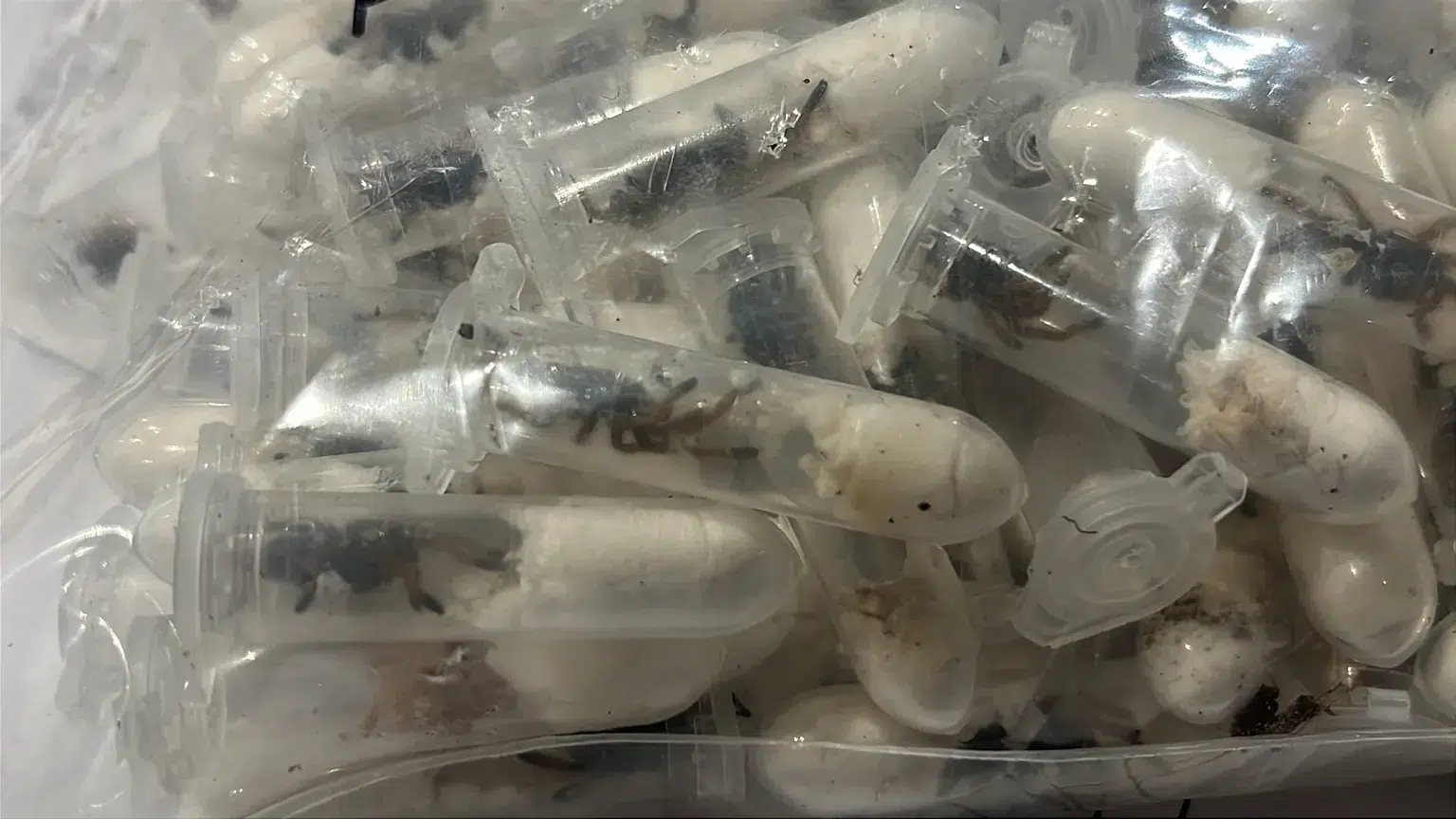
During a routine inspection at the Cologne Airport (Germany), customs officials came across a finding as unexpected as alarming: over 1,500 live tarantulas hidden inside biscuit packages.
The shipment, originating from Vietnam, had been carefully prepared to evade security checks, using airtight jars with ventilation holes, disguised among the luggage.
Wildlife Trafficking: A Global Impact Clandestine Business
Although the final destination of the shipment has not yet been confirmed, German authorities are investigating whether it is an isolated case or part of an organized network.
The illegal trade of exotic animals is the third most lucrative illicit activity in the world, only behind drug trafficking and arms trade.
Ecological and Health Risks of Introducing Uncontrolled Species
Beyond the visual impact, the introduction of non-native species represents a serious threat to biodiversity and public health. Although tarantulas are not usually lethal, they can cause allergic reactions and local injuries. Additionally, they could carry parasites or pathogens that may affect other species, both animals and humans.
For this reason, the European Union requires specific permits for the transport of flora and fauna for commercial, scientific, or personal purposes, and maintains strict biosecurity regulations.
Environmental Crime: Severe Sanctions in Europe for Species Trafficking
France considers up to five years of imprisonment and hefty fines for these types of violations.
Attempting to bring animals without authorization is considered a serious crime in most European countries.
In France, for example, penalties can reach five years in prison and fines of up to one million euros, especially if it is proven that the specimens were intended for commercialization or if the operation is part of an international network.
Animal Cruelty and Mortality in Transit: The Dark Side of Species Trafficking
The majority of captured animals do not survive clandestine transport. In addition to being illegal, wildlife trafficking involves a high level of animal suffering.
In many cases, the species do not survive the journey due to extreme concealment conditions, lack of oxygen, stress, and absence of basic care.
Technology and Surveillance: The Role of Customs in Environmental Defense
In response to these crimes, border controls have been strengthened in recent years, incorporating advanced technology and specialized equipment.
In the case of Cologne, agents detected an abnormal density in the biscuit packages during a visual inspection, leading to the opening of the wrappings and the discovery of the shipment.
An Urgent Reminder: Customs as a Barrier Against Environmental Crime
This case serves as a warning about the risks of wildlife trafficking and as recognition of the work of customs, which not only intercept illegal products but are also at the forefront of defense against environmental crimes.



