



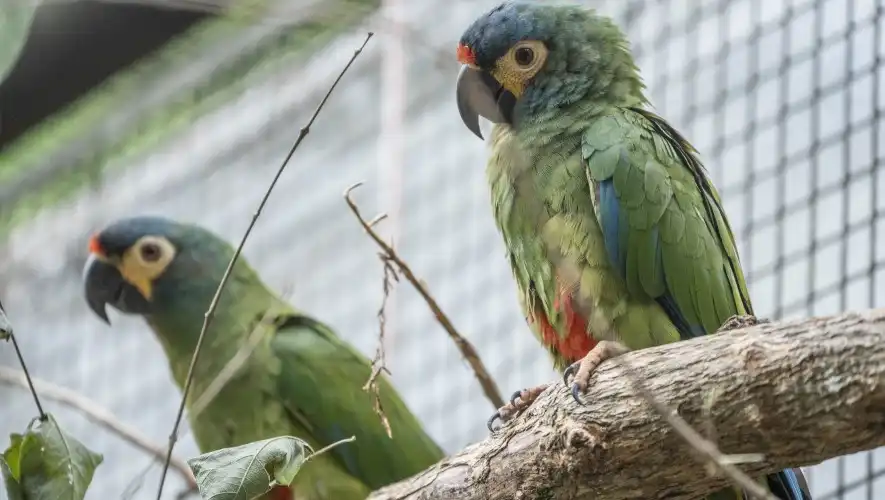
The Parque de la Biodiversidad de la Municipalidad de Córdoba, together with Policía Ambiental and Aves Argentinas, relocated a specimen of red-backed macaw to the Reserva El Puente Verde, in Misiones.
The bird, identified as Primolius maracaná, had entered in January following a confiscation related to pet trade. Since then, it had been under evaluation and veterinary treatment.
This movement is part of a conservation strategy aimed at reversing decades of population decline. Thus, it strengthens a project that aims to return the species to its natural habitat.

A species on the brink of extinction in Argentina
The red-backed macaw was historically abundant in the Misiones jungle. However, it is currently virtually extinct in Argentina.
For over twenty years, no individuals have been recorded in the wild in the country. Estimated causes include the loss of large trees for nesting, capture for illegal trade, and direct persecution.
It is a medium-sized macaw with intense green plumage and reddish tones on its back. Additionally, it depends on fruits and flowers from the Atlantic Forest, making it a key seed disperser.
Quarantine, health, and training for wildlife
Upon entering the rescue center, the specimen was subjected to a psittacosis test, which came back negative. It also received treatment for an inflammation in one wing and blood tests to assess its general condition.
It was later transferred to the Reserva El Puente Verde, where it joins the reintroduction project developed by Aves Argentinas along with the Ministry of Ecology of Misiones and other institutions.
In the reserve, quarantine, environmental enrichment, and feeding with native fruits are carried out. Additionally, the bird is trained in a 20-meter-long and over six-meter-high cage, designed to strengthen muscles and flight skills.
The Reserva El Puente Verde and the Atlantic Forest corridor
The Reserva Natural El Puente Verde is located in the Península de Andresito, 70 kilometers from the Iguazú Falls.
It covers 183 hectares of jungle in good conservation condition. It is home to 240 bird species and 28 mammal species, including the aguará popé, the red brocket deer, and the jaguar.
The area is part of the corridor that connects the Iguazú National Park with its counterpart in Brazil and other protected areas. Consequently, its strategic location makes it a fundamental ecological bridge to restore populations and strengthen the biodiversity of the Atlantic Forest.



