



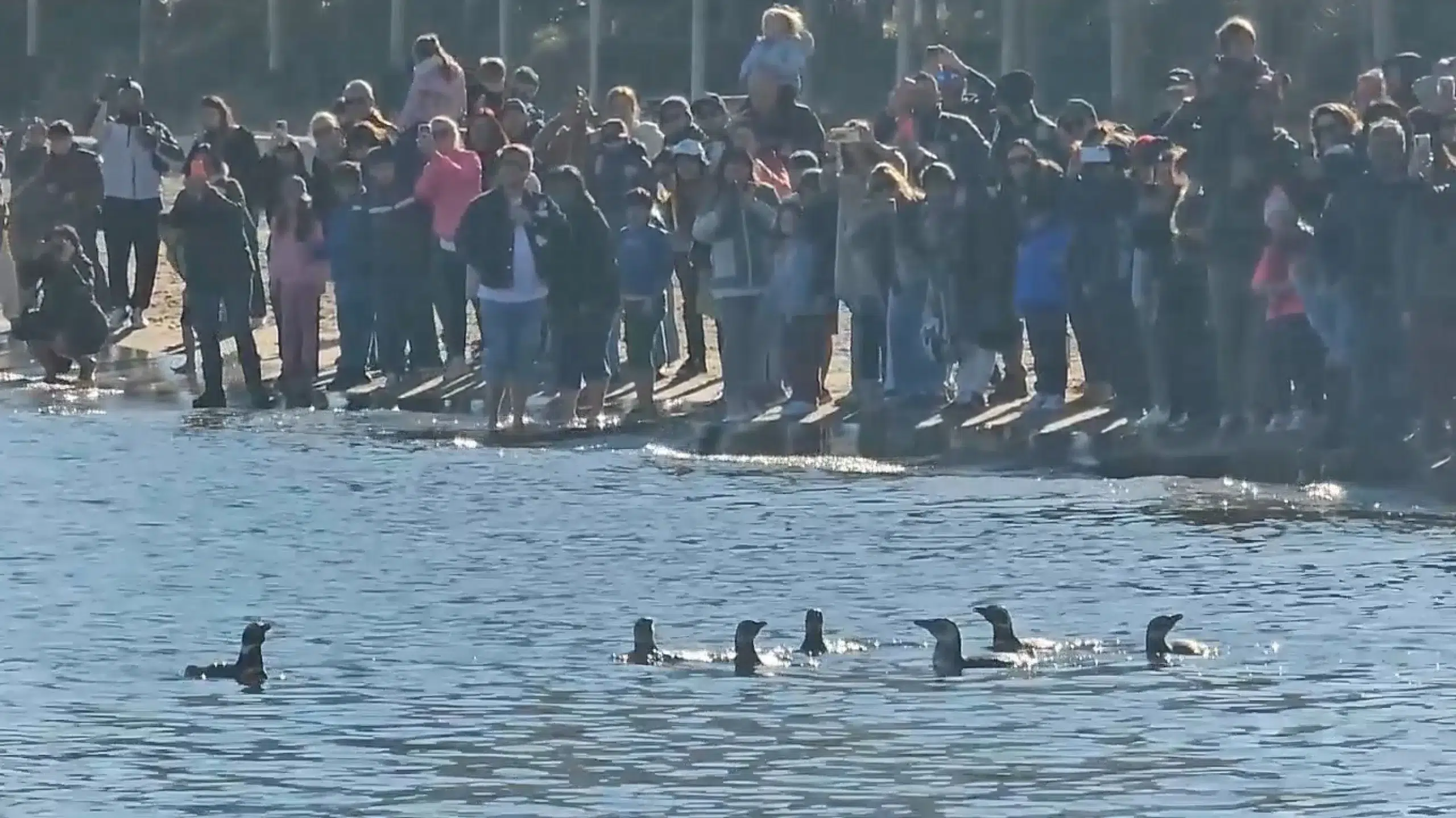
At the Mansa Beach in Punta del Este, seven Magellanic penguins were released after an extensive rehabilitation process. The activity, organized by the Society for the Conservation of Biodiversity of Maldonado (Socobioma), attracted dozens of people who witnessed the return of the birds to their natural environment.
These penguins had been rescued months ago in critical conditions, mainly affected by human activity and the consequences of environmental impact. After about five months of care, they managed to regain the necessary health to return to the sea.
The release took place early Sunday morning and it is expected that the birds will begin a journey that could last up to ten days towards Patagonia, their natural habitat. Socobioma will continue to monitor their adaptation to wildlife.
The organization’s work is not limited to these releases, as other groups of penguins are still in the rehabilitation process, waiting to be reintegrated into their ecosystem.
A Vital Task for Marine Fauna
The return of these birds to the ocean reflects a sustained effort by rescuers and volunteers. Most animals assisted in rehabilitation centers arrive injured or weakened due to pollution, bycatch, and other factors caused by humans.
The Magellanic penguins, common visitors to the coasts of the southern Atlantic, face increasing threats, from the decrease in their food sources to pollution from plastics or hydrocarbons. Their release in good health is essential to sustain the balance of marine populations.
Each individual that returns to the sea represents not only an achievement for conservation organizations, but also a call to consciousness about human responsibility in preserving biodiversity.
Rehabilitation programs require a great economic and human effort, which limits the number of animals that can be cared for and reintegrated into their natural environment.

What Penguin Release Entails
The release of rehabilitated penguins is a process that goes far beyond simply letting them go into the sea. It requires months of veterinary care, controlled feeding, and health evaluations to ensure their adaptation capacity.
Once recovered, the birds are released in optimal conditions and in strategic locations, close to their migratory routes, to facilitate their reintegration into the natural environment. This process includes subsequent monitoring to verify their adaptation and survival.
Reintegration also prevents animals from becoming accustomed to human contact, something that could compromise their survival and reproduction capacity in the wild. Therefore, release actions are always carried out under strict guidelines of ethical and environmental management.
The work of organizations like Socobioma emphasizes the importance of protecting marine ecosystems and raising awareness of the damage that human activities cause to wildlife. Each release is not only a return home for the species, but also an opportunity to reflect on human impact on nature.



