



Six young elephants, rescued after being orphaned or injured, were released in the Udawalawe National Park in Sri Lanka. The release took place after a recovery process at the Elephant Transit Home rehabilitation center, dedicated to the preservation of the species.
The elephants, two females and four males aged between five and seven years, were transported by trucks to the Mau Ara forest, where they were deemed ready to reintegrate into the wild.
This group is part of the program initiated in 1998 by local authorities, aimed at rescuing and rehabilitating individuals that, due to various reasons, were isolated from their herds. With this release, the number of reintegrated elephants reaches 187.
During their stay at the center, the animals had minimal contact with humans, a strategy aimed at promoting their adaptation to wild life and their eventual integration into herds in the wild.
 Elephant calf released in Sri Lanka. Photo: AFP.
Conservation of the Asian Elephant: Challenges and Efforts
The Elephant Transit Home program has become a key tool for the protection of the Asian elephant in Sri Lanka. Every year, dozens of calves are rescued after being separated from their families due to human conflicts, accidents, or predator attacks.
The center currently houses 57 elephants that receive medical care, specialized nutrition, and constant monitoring before being released in protected areas such as Udawalawe. This policy contributes to the conservation of the species and the reduction of conflicts with local communities.
The responsible management of these rescues not only aims at the survival of individuals, but also at the strengthening of wild populations, ensuring the preservation of biodiversity in the island’s natural reserves.
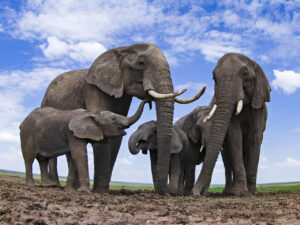 Elephant life.
The Asian Elephant: A Giant in Danger
The Asian elephant (Elephas maximus) is classified as an endangered species by the International Union for Conservation of Nature (IUCN). Habitat loss, territorial fragmentation, and conflicts with human activities seriously threaten its future.
Unlike its African relatives, the Asian elephant has a much smaller population and faces greater pressures due to agricultural expansion and poaching. Its role in ecosystems is crucial: it disperses seeds, opens paths in the jungle, and regulates the natural balance of its environment.
Programs like the one in Udawalawe demonstrate that active conservation and rehabilitation are essential to ensure the survival of this emblematic species. Cooperation between authorities, communities, and conservation organizations is key to preserving the Asian elephant and its valuable ecological role in the region.



