



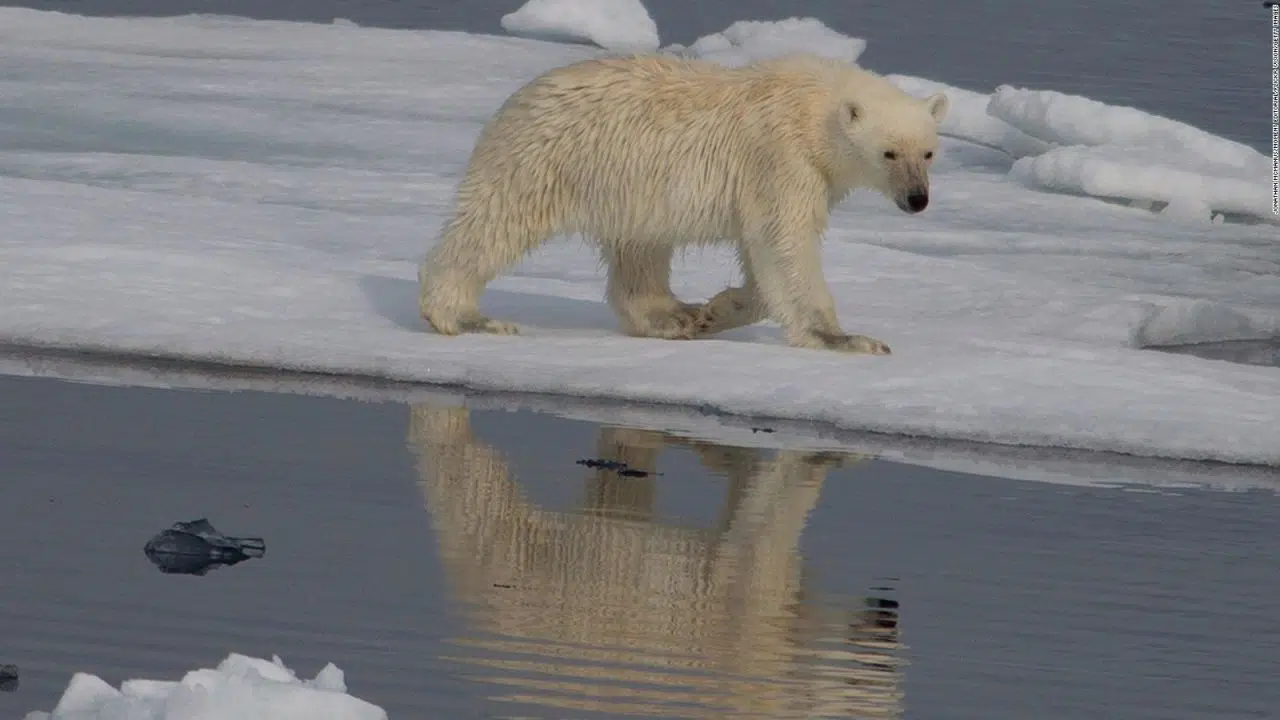
The southeast Greenland polar bears live in a very different environment from what is usually associated with the classic Arctic. There, large expanses of continuous ice do not prevail, but rather mountains, deep fjords, and a changing climate. This territory serves as a window into the future of the species, as it reflects conditions that could extend to the rest of the Arctic in the coming decades.
While northeast Greenland maintains a colder and more stable climate, the southeast faces higher and more variable temperatures, complicating hunting and daily survival. Additionally, this population has remained relatively isolated for centuries due to ocean currents, making it a key case for studying genetic changes associated with climate.
The Scientific Study
The research, published in Nature Communications, compared polar bears from northeast and southeast Greenland. The team used historical records from the Danish Meteorological Institute, which confirmed that the southeast is warmer and more variable.
Unlike studies focused on inherited DNA, this work analyzed genetic activity in the blood, that is, which genes are active or inactive in the present. This allows observing how the organism responds to the current environment.
Transposable Elements: The “Jumping Genes”
A key finding was the transposable elements, DNA fragments capable of activating and modifying other genes. In polar bears, they represent more than a third of the genome. They are usually controlled, but environmental stress can alter that balance.
Scientists analyzed blood samples from 17 adult bears from both regions. Although the number is small, they detected clear patterns:
- The southeast bears showed greater activity of transposable elements, with about 1,500 fragments behaving differently compared to those from the northeast.
- Most belonged to the LINE family, common in mammals.
- Many were genetically “young,” suggesting recent activity and not functionless remnants.
The activity concentrated in specific regions of the genome, reinforcing the idea of an organized body response to the warm environment.
Other Genetic Changes Detected
In addition to transposable elements, variations were observed in:
- Heat shock genes, which help cells function under pressure.
- Genes linked to metabolism and aging, indicating bodies facing a more demanding environment.
- Immune system genes, suggesting that environmental stress may influence the organism’s defenses.
In some cases, these genes coincided with areas where transposable elements were active, pointing to possible interactions.
Limitations and Scope
The study does not demonstrate that polar bears are evolving to survive global warming. It analyzes current body responses, not heritable changes. The samples come from blood, a somatic tissue, and to speak of evolution, germline DNA data would be necessary.
The sample size —17 bears— also limits the scope, but the observed patterns are consistent and offer valuable clues about how Arctic heat impacts the species’ biology.
The southeast Greenland polar bears show that climate change affects not only ice and hunting but also the genetic activity of animals. This trophic and molecular rewiring reflects how organisms respond to warmer and more variable environments. Although it is not evolution, it is a sign that global warming is leaving deep marks on the biology of one of the Arctic’s most emblematic species.


