



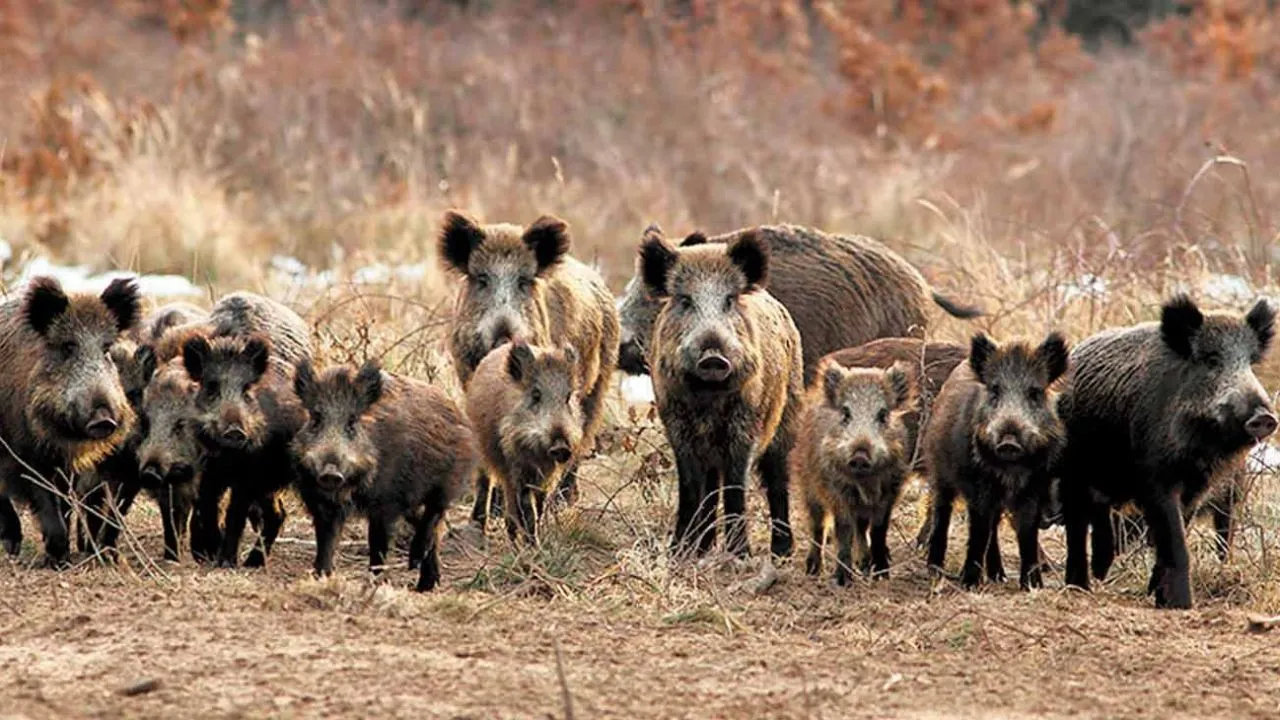
For two decades, the European wild boar (Sus scrofa) has become one of the most aggressive invasive exotic species in the Argentine and Chilean Patagonia. Its high reproductive capacity, the absence of natural predators, and its adaptation to cold climates have driven their populations to unprecedented densities.
Beyond the damage to livestock and traffic accidents, these animals are causing deep and possibly irreversible alterations in the soils and in the regeneration of native forests of lenga, ñire, coihue, and cypress in the mountain range.
Scientific evidence of impact
A study by the Department of Forest Protection and Wildlife Management at the University of Brno (Czech Republic), published in Human-Wildlife Interactions, analyzed the impact of wild boars in European temperate forests. Its conclusions match what park rangers and scientists are observing today in Chubut, Río Negro, Neuquén, and Tierra del Fuego.
- In Europe, 4.49% of the 180 million forest seedlings planted in 2019 were destroyed by wild boars, reaching up to 80% damage in some plots.
- In Patagonia, records from National Parks and INTA show that in sectors of Los Alerces, Nahuel Huapi, Lanín, and Tierra del Fuego, the destruction rates of young trees frequently exceed 70% in the first three years after planting or after fires.
Soil and water alterations
While searching for earthworms, larvae, and roots, wild boars remove the topsoil layer with an intensity comparable to a deep mechanical plowing. This habit breaks the organic crust, accelerates erosion on mountain slopes, and modifies the microtopography of the terrain.
In Andean-Patagonian volcanic soils, rich in ash and pumice, the loss of the top layer facilitates compaction and drastically reduces the water retention capacity. Studies by the CIEFAP (Andean Patagonian Forest Research and Extension Center) have measured decreases of up to 40% in water infiltration in plots with high wild boar density.
Young trees and forest regeneration at risk
Young lenga and ñire trees less than 50 cm are particularly vulnerable. Wild boars:
- Uproot or break seedlings while rooting.
- Consume almost all of the seeds that fall during the winter.
This prevents the natural regeneration of forests. In burned areas from 2014-2015, such as the fire in Cholila or Lago Puelo, the massive presence of wild boars has caused more than 60% of planting projects to fail, according to reports from the National Fire Management Plan.
Control strategies and limitations
The Czech researchers were blunt:
“Currently, we do not know of any 100% effective method of protection against this damage.”
Electric fences, chemical repellents, and individual protectors are unfeasible on a large scale. The only strategy with proven results is the drastic and sustained reduction of populations through:
- Professional hunting.
- Massive trapping.
- Monitoring with camera traps.
In Argentine Patagonia, provincial control plans are already being implemented. Chubut declared the wild boar a “harmful species” in 2023 and allows hunting year-round, but the population density continues to grow.
A risk scenario for the southern forest
Patagonia faces today the same scenario that Europe warned about a decade ago. If decisive action is not taken, the native forests that take centuries to form could forever lose their ability to regenerate naturally.
The wild boar not only brings swine fever: it brings the silent end of the southern forest as we know it.
The advance of the European wild boar in Patagonia is a large-scale ecological threat. Its effects on soil, water, and forest regeneration endanger unique ecosystems and multi-million dollar restoration projects. The scientific evidence is clear: without sustained population control, the future of the southern forests could be irreversibly compromised.



