



At the beginning of July, an unusual shipment raised suspicions at Roissy Charles-de-Gaulle airport in France. Coming from Costa Rica, the package contained nearly 500 shiny feathers of macaws and quetzals. Its destination was Italy, but customs authorities intervened in time.
The seizure uncovered a network of illegal trade that directly threatens protected species from the American continent. In total, eight quetzal feathers and 481 macaw feathers were found, birds whose survival is already severely compromised.
Both species are protected by international regulations due to the risk of extinction. The Convention on International Trade in Endangered Species of Wild Fauna and Flora (CITES) prohibits the sale and export of their parts. However, the trafficking continues, driven by the demand for luxury items.
The aesthetic appeal of these feathers does not justify the environmental damage involved in their extraction. This case not only reveals the persistence of smuggling but also the profound disregard for wildlife and biodiversity in the tropics.

### Birds in Danger, Ecosystems on Alert
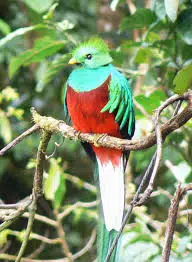
The macaw belongs to the parrot family, known for its colorful plumage, ability to mimic sounds, and high intelligence. The quetzal, on the other hand, stands out for its iridescent hues and strong symbolic value in Mesoamerican cultures.
Both species inhabit tropical forests and rainforests. Their role in the ecosystem is crucial, as they participate in seed dispersal and environmental balance. However, their population is drastically decreasing due to multiple threats.
Among the most serious causes are deforestation, climate change, and especially illegal trafficking. This is compounded by the expansion of human activities in their habitats, such as the construction of industrial farms or invasive urban projects.
The loss of these birds would not only be a biological tragedy but also a cultural one. In countries like Guatemala, the quetzal has been a national symbol since the 19th century. Its figure is present on flags, coins, and legends, representing freedom and spirituality.
### The Dark Market of Feathers
The commercialization of macaw and quetzal feathers hides a cruel reality. The birds do not naturally shed the most coveted feathers, meaning they must be captured, mutilated, or even sacrificed to extract them.
This type of practice involves pain, stress, and death for the animals. Many specimens do not survive the process, and those that do suffer irreparable physical and emotional consequences. The black market completely ignores these dimensions.
Additionally, the systematic extraction of feathers disrupts the balance in ecosystems, affecting the reproduction and survival of populations. The cumulative impact can be devastating, leading entire species to collapse.
Despite existing laws, trafficking continues driven by collectors, fashion or decoration industries, and markets for exotic souvenirs. Quick profit seems to weigh more than the preservation of life.
### A More Respectful Vision of Nature
Biologist Janine Benyus, promoter of the concept of biomimicry, proposes a radical change: leaving behind the extractivist model and adopting strategies that mimic the intelligence of nature. Her approach is based on observing how ecosystems function to apply those principles to sustainable solutions.
According to this perspective, the key is not to exploit natural resources but to learn from them. Collaboration with the environment replaces domination, and respect becomes the foundation of any development.
The feather trade is just one example of the limits of the current model. To ensure future life, it is necessary to transform priorities. The beauty of a bird should not depend on human greed but should be celebrated in freedom, in its natural environment.
Reversing this situation involves collective responsibility: controlling trade, protecting habitats, educating the population, and rethinking our relationship with biodiversity. Nature can teach us to live better, but first, we must stop destroying it.



