



In less than a decade, the **Cañadón Caracoles**, located in the **northwest of Santa Cruz**, went from being a silent wetland to becoming a **vibrant refuge for coypus and biodiversity**.
Thanks to an ecological restoration project promoted by [Parque Patagonia](https://noticiasambientales.com/animales/parque-patagonia-el-escenario-de-un-registro-historico-odisea-la-hembra-de-gato-del-pajonal-al-fin-se-dejo-ver/), more than **50 coypus (Myocastor coypus)** returned to inhabit this territory, transforming the landscape and offering **a sign of hope for Patagonian wetlands**.
## Diagnosis and recovery: restoring before reintroducing
Understanding the causes of disappearance was key to **bringing life back to the wetland**.
According to **Emanuel Jacquier**, a member of the conservation team, the first step was to **identify the causes of the coypu’s disappearance**, which included **environmental modification and indiscriminate hunting**.
Then, work was done to **redirect streams**, restore **native vegetation**, and **prohibit the hunting of wildlife**, restoring the natural conditions of the wetland.
## Reintroduction and monitoring: applied science to conservation
Eight coypus were transferred from Cañadón Deseado and [monitored with specialized technology](https://noticiasambientales.com/multimedia/el-impenetrable-el-santuario-natural-de-chaco-que-se-convirtio-en-el-hogar-de-la-yaguarete-nala-y-su-cria/).
The reintroduction began with the **translocation of eight individuals** from a healthy population. They remained in **pre-release enclosures** to acclimate and were then released in strategic areas.
Each individual was **monitored with telemetry, camera traps, and microchips**, allowing to **track their adaptation, reproduction, and territorial expansion**.
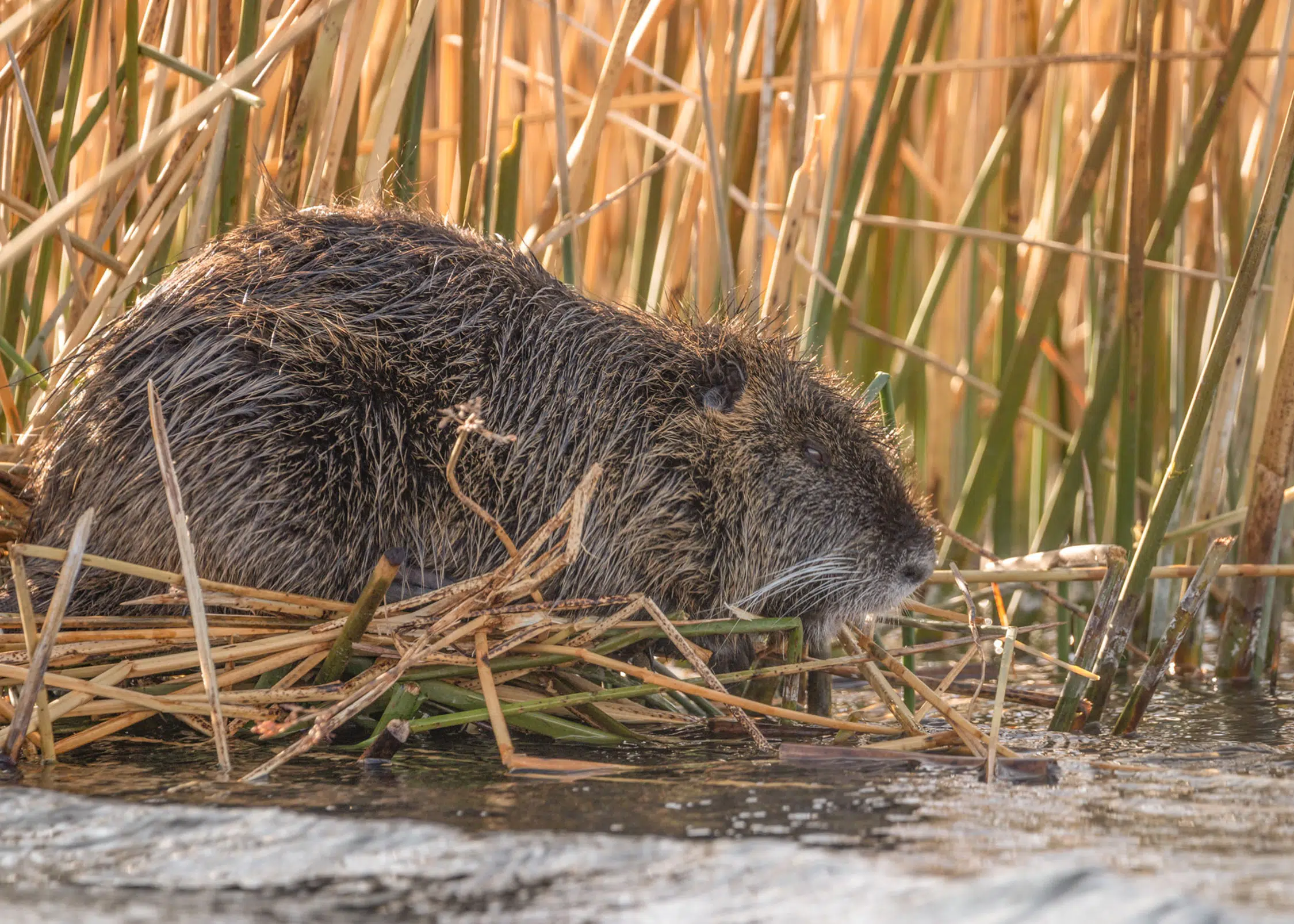
## Population growth and territorial expansion
**More than 50 coypus identified**, with births in spring and summer.
Field campaigns carried out in **July and August** allowed to **capture, mark, and record** new specimens.
**Females with up to six offspring** and **two reproductive events per year** were observed, indicating a **healthy and expanding population**. The presence of coypus in more distant areas from the release site confirms that **the wetland is being recolonized**.
## Ecological role of the coypu: wetland architect
Its activity favors **vegetation, biodiversity, and water flow**.
The coypu plays a key role in the **wetland dynamics**. By moving and feeding, it **shapes the vegetation**, builds **burrows that serve as shelter for other species**, and **keeps water channels open**, favoring the **penetration of sunlight** and the development of **microorganisms and invertebrates**. Additionally, it is an **important prey in the food chain**.
## Regional projection: restoring to multiply
The goal is for Caracoles to become a source for other **steppe wetlands**.
The team projects that the **coypu population in Caracoles** could **expand to other restored wetlands** in the region.
“Our effort is focused on recovering these key ecosystems, which are the **wetlands of Patagonia**,” says Jacquier. What seemed like a dream is now a **tangible reality**: the wetland is beating again, and with it, **the hope of a more alive and resilient Patagonia**.



