



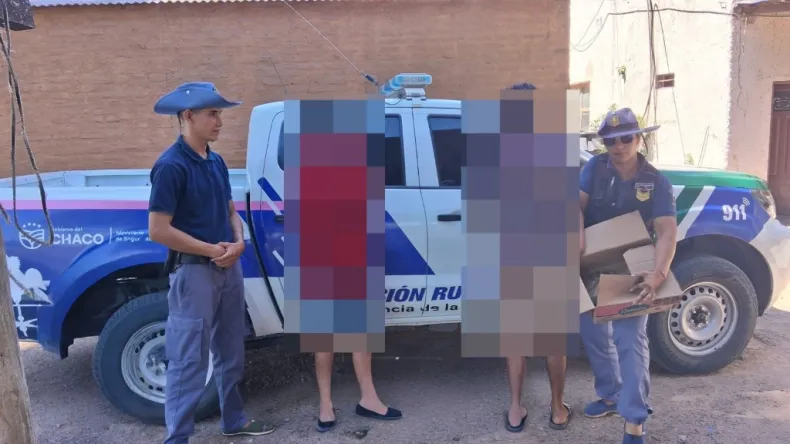
An operation against illegal wildlife trafficking allowed the rescue of two specimens of South American coati that were being offered for sale clandestinely. The intervention was carried out by officers of the Rural Section in the town of Presidencia de la Plaza, Chaco.
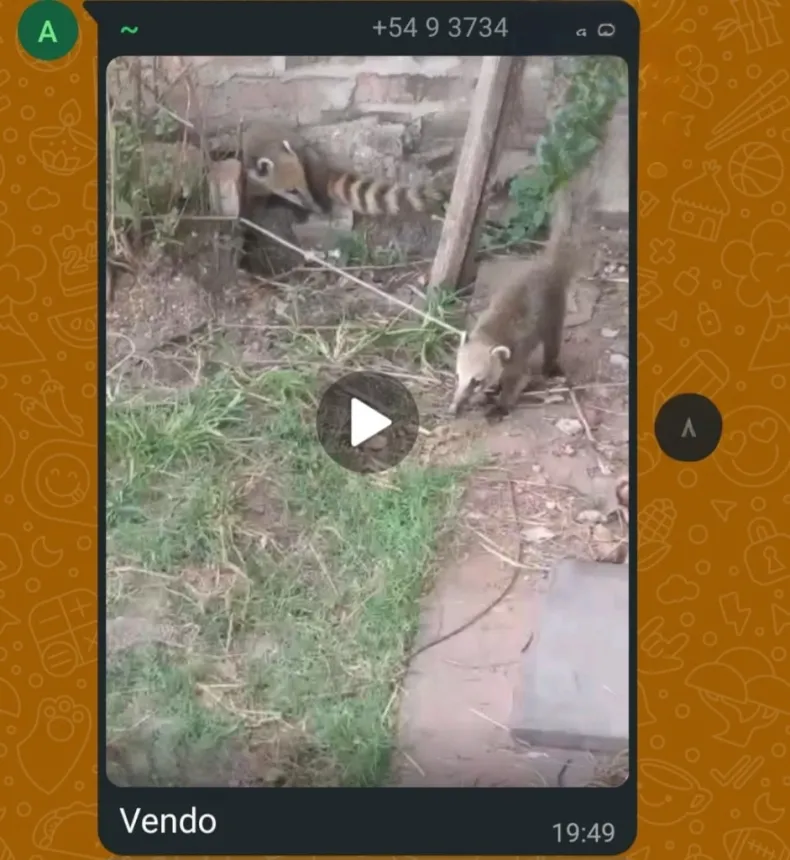
The procedure began after detecting posts in messaging groups where “coati pups” were being offered. This type of trade is prohibited by Argentine legislation due to its impact on biodiversity.
In particular, the sale and capture of wildlife is regulated by the Wildlife Conservation Law 22.421.
The rescue of the animals once again highlighted the persistence of illegal trafficking of native species in different regions of the country.
An operation that began with monitoring on networks
The investigation began from the monitoring of social networks and messaging applications. During this monitoring, agents identified posts offering young coati specimens for sale.
After tracking the user responsible for the offer, the authorities located the point where the animals were found.
The procedure was carried out at Quinta N° 76, where officers intercepted two people transporting a box with the specimens.
It was a 22-year-old young man and a 14-year-old minor who were taken to the police station to continue with the proceedings. At the same time, the animals were seized to ensure their protection and subsequent recovery.
Health evaluation and return to the environment
After the rescue, the specimens were examined by a police veterinarian to assess their health status. This procedure is essential to determine if the animals can return to their natural environment without risks.
In many cases, captivity or improper transport causes stress, dehydration, or nutritional problems. For this reason, specialists conduct thorough checks before authorizing release.
The case was left in charge of the Rural and Environmental Prosecutor’s Office of San Martín. From that office, it was ordered that the coatis be returned to their natural habitat once the health check is completed.
The coati and its conservation status
The South American coati is a mammal native to the forests and jungles of South America. It is characterized by its long snout, ringed tail, and social behavior, as it often moves in family groups.
In Argentina, it mainly inhabits jungle and forest regions in the north of the country, where it plays an important ecological role. Its diet includes fruits, insects, small vertebrates, and eggs, contributing to the balance of ecosystems.
Additionally, by feeding on fruits, it participates in the dispersal of seeds that help in the regeneration of forests.
Although it is not among the most threatened species on the continent, illegal trafficking and habitat loss pose growing risks to its populations. For this reason, its capture and commercialization are prohibited under Argentine legislation.
The impact of illegal wildlife trafficking
The clandestine trade of wild animals is one of the main threats to biodiversity. Many species are captured to be sold as pets or transported out of their natural environment.
This process often involves precarious transport conditions that lead to a high mortality rate. Additionally, the extraction of young specimens disrupts the reproductive dynamics of wild populations.
Therefore, rescue operations and control are essential to protect native wildlife. The recovery of the coatis in Presidencia de la Plaza reflects the importance of reinforcing vigilance and promoting environmental awareness to curb the illegal trafficking of species in the country.



